

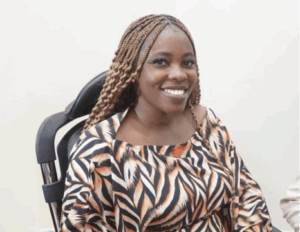
By Hafsat Muhammed Ibrahim and Victoria Ogechukwu
WHEN WikkiTimes reporter Victoria Ogechukwu sought budget documents in Bauchi, she says the official offered her cash, then a hotel room. “He kept asking how much I would accept per night,” she recalled.
“I am used to these advances. It has made me uncomfortable with meeting sources at their offices for interviews. I insist on phone interviews most of the time,” she added.

Last year, after repeated visits to the agency’s office, Ogechukwu was finally granted an interview. What she described as a routine journalistic inquiry became an uncomfortable exchange.
“He told me to come into his office. He tried giving me money at first, but I declined, informing him it is against my professional ethics. Then he started talking about how if I weren’t a journalist, he would have had me for the night.” Ogechukwu was livid with anger, but she was desperate to get the data requested.
In a separate encounter at a government ministry, she said she claimed to be married to deflect similar attention.
“I had a similar experience at a ministry in Bauchi. I had to lie that I was married to save myself because I realised people respect marriage a lot,” she added.
Ogechukwu also recalled a story she published in 2023 about a budgeted town hall project being relocated from the original community. Following publication, she said individuals who identified themselves as aides to a former Senator accused her of bias and threatened her safety.
“I interviewed the senator when I was doing the report, but after it was published, some people who claimed to be the Senator’s boys threatened me, saying I have been paid to make their senator look bad and that God will punish me and I won’t go scott free,” she recounted.
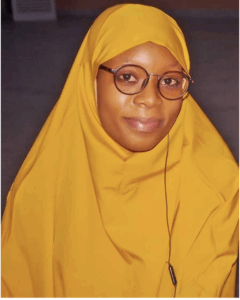
Like Ogechukwu’s story, another WikkiTimes reporter, Hafsah Muhammed, learned early how swiftly official pushback can escalate. After her story pointed out police inactivity on social-media.
“I received eight missed calls on my phone from the spokesperson minutes after my editor published the report. The frequency of calls panicked me, and I reported to my Editor, who asked me to call the officer back.
“Before I could call back, I started receiving a series of text messages from him accusing me of publishing false claims about the Police command. One of the text messages said he would find me, a direct threat to me.”
“That experience always made me feel anxious when contacting any Police Officer. I had to fight it, but it took a while,” she added.
In another instance, Muhammed said she narrowly escaped a robbery while heading to submit a Freedom of Information request in Gombe. Her tricycle was intercepted by machete-wielding men said to be campaigning for a major presidential candidate.
“Luckily, we narrowly escaped as the tricycle driver deftly drove away from the scene while we watched others being robbed,” she recalled.
Despite these experiences, Muhammed, says she remains committed to the work. “Investigative journalism is not for the weak. I have witnessed my superiors within the newsroom go through worse experiences and emerge stronger and better. I feel honoured to be part of this team. It’s a circle of brave journalists.”
Field violence and election coverage
During the 2023 general elections, TheCable reporter Bolanle Olabimtan said she was harassed while covering the polls. “They came and took my phone, went through my private chats… They threatened me, and this was under the rain, and I was shivering,” she recounted.
She was one of at least five female journalists who reported being attacked while covering Nigeria’s 2023 elections. Her phone was confiscated and footage she recorded was deleted by political thugs she noted. Olabimtan’s ordeal is part of a disturbing pattern: from physical assaults in the field to sexual coercion in newsrooms and vicious cyberbullying online.
Even routine assignments can turn violent. At the 2021 #EndSARS memorial, Adefemi Akinsanya of Arise TV was filmed shielding her crew from officers intent on seizing their drone. “Get away from me,” she pleaded. She later described the incident as traumatic.
Inside newsrooms, similar challenges persist. Fauziya Lawal-Dawai, a former contract announcer at Katsina State Radio, said she experienced repeated sexual harassment during her decade-long tenure which ended with her sudden dismissal in November 2023; the station blamed a missed meeting, while NAWOJ called the sacking retaliation, and Katsina’s governor ordered an inquiry.
In Abuja TV presenter *Khadija described a boss who piled extra chores on her, publicly berated her, and erupted when she declined weekend errands, forcing her eventual transfer and near exit from journalism.
In Kano, senior editors told veteran broadcaster Khadija Abdullahi that she appeared in the spotlight “too often.” “Does it always have to be Khadija?” she overheard before self-doubt and cyber-abuse pushed her off flagship programmes.
“I became used to doing roles that were expected to be carried out by him. I was overworked. Subsequently, I realised he was only using me to achieve his interest,” she narrated.
“One day, I came to the office on a day off to finish up some tasks, and he asked me to do something for him, and I declined. I said no, today is my day off, and I only came at will. He suddenly started screaming and hurling insults at me. I had to report him to the management, and my department was changed. But even at that, he later kept bad-mouthing me to whoever cared to listen,” she said.
The devastating experience significantly reduced her productivity, leading to poor morale.
“My advice to any female journalist out here facing any kind of harassment as such; don’t let anybody clip your wings or cripple you. Do not give room for manipulation,” she advised.
Despite making up 48.4 per cent of Nigeria’s workforce in 2024, according to the World Bank, women across sectors still face harassment, intimidation, and stigma despite ongoing advocacy for stronger legal protections.
Online abuse: a growing battleground
Nigerian women journalists are fighting “hidden battles” online, facing torrents of cyber-abuse that can be as vicious as any physical attack. Women journalists, particularly those covering sensitive beats like politics or corruption, report being targeted with threats and derogatory comments.
A UNESCO-ICFJ study involving Nigerian journalists found that 73 per cent of female reporters had experienced online harassment. One in five respondents reported that online abuse had escalated into offline threats or attacks, while 18 per cent were threatened with sexual violence as a result of their reporting.
These findings echo the experiences of journalists like Kiki Mordi, who after reporting on sexual harassments in universities, became the subject of online smear campaigns. A report on state of safety of women journalists in Nigeria points out that story themes linked to women’s rights or politics & election often trigger attacks.
Those who persist often beef up personal security or seek psychological counselling to cope with relentless abuse. The mental toll – anxiety, depression, even PTSD – can be devastating. “I haven’t watched the video [of my assault]in years… it’s quite traumatic,” Akinsanya admitted.
Breaking barriers amid stigma, stereotype and harassment
For over a decade, Khadija Abdullahi carved a place for herself in northern Nigeria’s broadcast journalism scene, defying a deeply patriarchal newsroom culture. Yet, her rise wasn’t without pain.
From the onset, family disapproval shadowed her career. “They felt the exposure that came with the job wasn’t meant for women,” she told WikkiTimes.
She added that her confidence faltered as male colleagues viewed her growing visibility as a threat. They said she was in “too often.” After a meeting she once overheard the remark “Does it always have to be Khadija?”
“They felt I was always in the spotlight, and it shouldn’t be so. That particular incident broke me. I felt I was the problem; maybe I was taking one too many steps at a time. It took a lot of counselling to redeem my self-confidence,” she said.
Online, the attacks continued. Inappropriate messages and sexualised compliments about her voice disrupted her on-air focus. Eventually, she stepped down from anchoring shows that triggered such reactions.
She urged women journalists to maintain professionalism and integrity because, “There are people out there waiting to take advantage of you as a woman. It is left to you to decide whether to maintain your integrity as a woman or otherwise, for worldly gains.”
Hadiza Musa Yusuf, an investigative journalist, encountered similar abuse in 2021. An elderly source in Kano’s civil service repeatedly dodged her interview requests. When she returned alone the next day, he proposed to her instead of answering questions. “Hard as I tried, he avoided my questions on the report and diverted the conversation, complimenting how pretty I was and my willingness to be his girlfriend…I was shocked because this man was obviously in his 60s. I eventually had to give up the interview.”
For Sadia*, gender and ethnic bias were daily realities. Newly hired at a television station, she noticed how the newsroom’s default greeting—”Gentlemen of the press”—excluded her. She added that her editor, a middle-aged man, routinely dismissed her work while making stereotypical assumptions based on her background. When she requested to host a show that had run for 12 years she met resistance. She said she was told she can’t because she is a woman. She persisted, broke the barrier, and was finally recognised. Over time, more women joined the newsroom, slightly easing the discrimination. But another challenge lingered: sexual harassment. Editors often tied professional opportunities to personal favours.
Ruqayya Yusuf Aliyu, a scholar and former journalist, emphasises that both institutional policy and individual conduct are important. “It is obvious that female journalists most often face harassment outside the newsroom, especially. They need to improve in conducting themselves responsibly and professionally to avoid being taken advantage of.
- Source: https://www.icirnigeria.org/behind-the-byline-how-female-journalists-confront-threats-harassment-on-the-job/
Facebook Comments

GIPHY App Key not set. Please check settings