

(EOB Editorial Report)
By Ewere Okonta
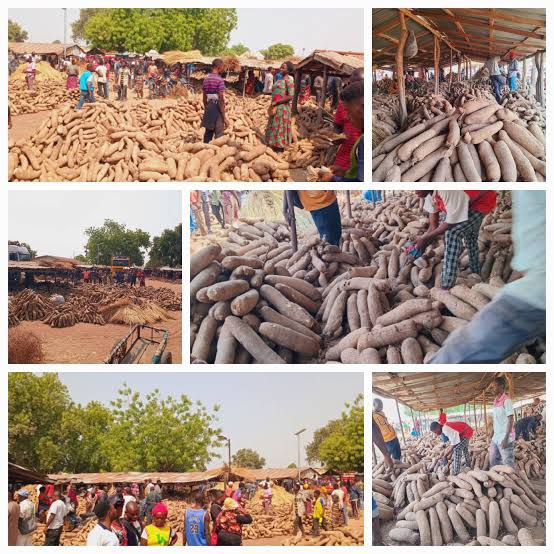
Once upon a time in the agrarian town of Abavo, Delta State, there was a market so famous, so vibrant, so economically strategic, that it attracted traders and buyers from the farthest ends of Nigeria. It was not just a marketplace; it was a movement, a phenomenon, an economic lifeline that turned a quiet Ika-speaking community into a thriving hub of commerce. That market was Oyoko.
From Kano to Calabar, Sokoto to Asaba, Oyoko Market rang a bell. It was where Nigeria came to shop for food. It was the supermarket of the South-South and beyond. Fresh yams, golden garri, oil-rich plantains, palm oil straight from the press, vegetables so green they told stories of virgin soil, and okra that danced in the pot – Oyoko had it all.
But today, Oyoko market is a shadow of itself. The stalls are fewer, the foot traffic lighter, and the once loud call of hawkers has grown eerily faint. What happened to this legendary market? Who murdered the dream? Who buried the pride of Abavo?
These are not rhetorical questions. They are urgent calls for reflection and action.
Oyoko Market: From Fame to Flameout
In its prime, Oyoko Market was not just Abavo’s pride, it was Delta’s treasure. It fed families, created instant jobs, and turned young hustlers into breadwinners. The wheelbarrow pusher, the roadside food vendor, the Okada man, the ice cream boy, and the lorry driver all found their hustle at Oyoko. It was where enterprise met opportunity, and where agriculture became dignity.
The market attracted traders from the North – Kano, Kaduna, Maiduguri, and even far-flung Sokoto. Our brothers from the Southwest – Lagos, Ibadan, Abeokuta, Ilesha, and Osogbo – were no strangers to Oyoko. From Port Harcourt to Yenagoa, from Benin to Asaba, and from every surrounding Ika village, Oyoko Market was the common destination.
But now? The story is different. The market is in visible decline. The once-booming economic activity is dwindling. The smell of roasted corn, the sight of piled tubers, and the sound of haggling voices are slowly disappearing.
Who Killed Oyoko Market? The Suspects Are Many
Let’s not beat around the bush. One of the chief culprits in the tragic fall of Oyoko Market is the Agbor-Warri Road. This once-vibrant artery that connected traders and farmers to Oyoko has become a death trap. It’s no longer a road; it’s a series of craters masquerading as a pathway. Trucks break down, small cars avoid it, and buses now detour to more accessible markets. With a collapsed transport route, the market is literally cut off from life.
Second is the scourge of insecurity. Once, farmers in Abavo woke up before sunrise to head to the farms with confidence. Today, fear goes before them. Kidnappings, armed robbery, and violence on rural roads have become too frequent. Even traders from other states think twice before setting out for Oyoko market. Commerce cannot thrive in a climate of fear.
The Silent Killers: Greed and Poor Governance
Let’s not blame only the roads and the guns. Another dagger in Oyoko’s back comes from within; multiple levies, extortion, and greed. Traders are harassed by local government officials and some community leaders who see Oyoko not as a communal asset but a personal cash cow.
Why should a poor woman from Umunede pay four different levies just to sell pepper? Why should a farmer from Ewuru be taxed for parking, for stall space, for entrance, and for “community dues”? These levies – often undocumented and arbitrarily enforced, are not only exploitative but also drive traders away to more trader-friendly markets.
And the most painful part? Many of these levies are enforced not by faceless thugs but by our own local government officials and community leaders. When the protectors of the people become their extortionists, collapse is inevitable.
Where Is the Government? Where Are the Leaders?
Oyoko Market’s decline is not just a community issue; it is a failure of governance at all levels. Where is the Delta State Government? What is the Ika South Local Government Council doing? And why have federal lawmakers whose constituencies benefit from this market gone mute?
How does a government sleep well when one of the largest food markets in its region is dying a slow death? How do council officials justify collecting levies from traders without fixing toilets, cleaning drains, or building decent stalls?
More baffling is the conspicuous silence of the Abavo elite. From professors to politicians, technocrats to business moguls; many of whom were fed, clothed, or trained by the proceeds of Oyoko market – there is an eerie quiet. Why is no one raising alarm? Why are they not forming coalitions, organizing town halls, or pressuring the authorities?
The Path to Redemption: It’s Not Too Late
Oyoko Market can still be restored. But it will take deliberate, urgent, and honest effort. Here’s what must be done:
1. Fix the Agbor–Warri Road. If the full rehabilitation cannot be done immediately, then let the government initiate palliative measures to make the road motorable. Commerce cannot flow without mobility.
2. Address insecurity. Security agencies must step up patrols in rural areas, while community-based vigilantes should be trained and supported to protect farmers and commuters.
3. Eliminate multiple levies. All charges must be streamlined, documented, and regulated. There should be a central system for market dues, with full transparency and accountability.
4. Improve market infrastructure. Build more stalls, repair existing ones, construct clean toilets, and dig boreholes for potable water. Sanitation should never be an afterthought in a market of such significance.
5. The Abavo elite must rise. This is not the time for WhatsApp commentary or social media nostalgia. It’s time for town hall meetings, coordinated advocacy, public-private partnerships, and direct community investment. Oyoko Market can be restored, but not by silence. Community development is not the job of government alone. The elites, home and abroad must rise to defend Oyoko’s legacy.
Final Word: Oyoko is More Than a Market
The collapse of Oyoko Market is not just the story of a failed market, it is the story of a community in retreat. It is what happens when bad roads, insecurity, greed, and neglect converge at the door of a people too proud to beg but too exhausted to shout.
Restoring Oyoko is not just about economic revival; it’s about reclaiming identity, restoring community pride, and securing food systems.
Because when a market like Oyoko dies, it’s not just the traders who suffer. A whole region loses a lifeline. A nation loses a food basket. And a generation risks forgetting what once made it great.
The time to act is now. Not tomorrow. Not when another trader gets kidnapped or another road collapses. Now.
*Ewere Okonta is the CEO of EOB Media. He writes from the Department of Business Administration, University of Delta, Agbor.
#EOB #SaveOyokoMarket
#FixAgborWarriRoad
#SayNoToExtortion
#RestoreAbavoPride
#DeltaDeservesBetter
* Ewere Okonta can be reached on
08037383019
ewere.okonta@unidel.edu.ng
www.ewereokontablog.org.ng
Facebook Comments

GIPHY App Key not set. Please check settings