

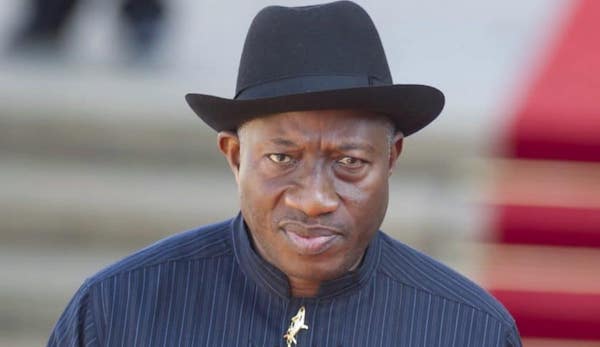
A lawyer has approached the Federal High Court in Abuja seeking an order to stop former President Goodluck Jonathan from contesting the 2027 presidential election.
While no date has yet been fixed for hearing of the case, the suit marked FHC/ABJ/CS/2102/2025, and filed by Mr. Johnmary Chukwukasi Jideobi, is asking the court to issue a perpetual injunction restraining Jonathan from presenting himself to any political party for nomination and barring the Independent National Electoral Commission (INEC) from accepting or publishing his name as a presidential candidate. The Attorney-General of the Federation (AGF) was also joined as a defendant.
The case raises a single constitutional question: whether, under the provisions of Sections 1(1)-(3) and 137(3) of the 1999 Constitution (as amended), Jonathan is eligible “under any circumstances whatsoever” to contest for the presidency again.

The plaintiff is asking the court to make four key declarations and orders:
- That Jonathan is constitutionally ineligible to contest or occupy the office of President again.
- That INEC lacks the legal power to accept or publish his name as a presidential candidate in 2027 or beyond.
- That Jonathan should be permanently restrained from seeking nomination from any political party.
- That the AGF should ensure full compliance with the court’s eventual decision.
Argument: Jonathan Has Exceeded Constitutional Tenure
In an affidavit deposed by Emmanuel Agida, the plaintiff argued that Jonathan, having first assumed office as President on May 6, 2010, following the death of President Umaru Musa Yar’Adua, and later serving a full term after the 2011 election, has already exhausted the constitutional limit of two presidential terms.
The plaintiff said he filed the suit after media reports indicated that Jonathan was considering running in 2027. He argued that without judicial intervention, a political party could nominate Jonathan, in violation of the Constitution.
“If the 1st defendant enters the 2027 presidential race and wins, it would mark the third time he would take the oath of office as President,” the affidavit stated. “This would exceed the maximum eight years allowed under the Constitution.”
The plaintiff cited constitutional provisions stating that anyone sworn in as President to complete another person’s term “shall not be elected to that office more than once.”
He further argued that allowing Jonathan to contest would undermine the supremacy of the Constitution and amount to a seizure of power “in a manner not contemplated by law.”
“As a lawyer and crusader for the rule of law, I do not wish to be governed by any person who assumes power outside constitutional limits,” he said, adding that the suit was filed in the public interest to defend democracy and preserve constitutional order.
The plaintiff also maintained that he had the legal standing to bring the suit, as it is part of his duty as a lawyer to prevent constitutional violations.
Facebook Comments

GIPHY App Key not set. Please check settings