

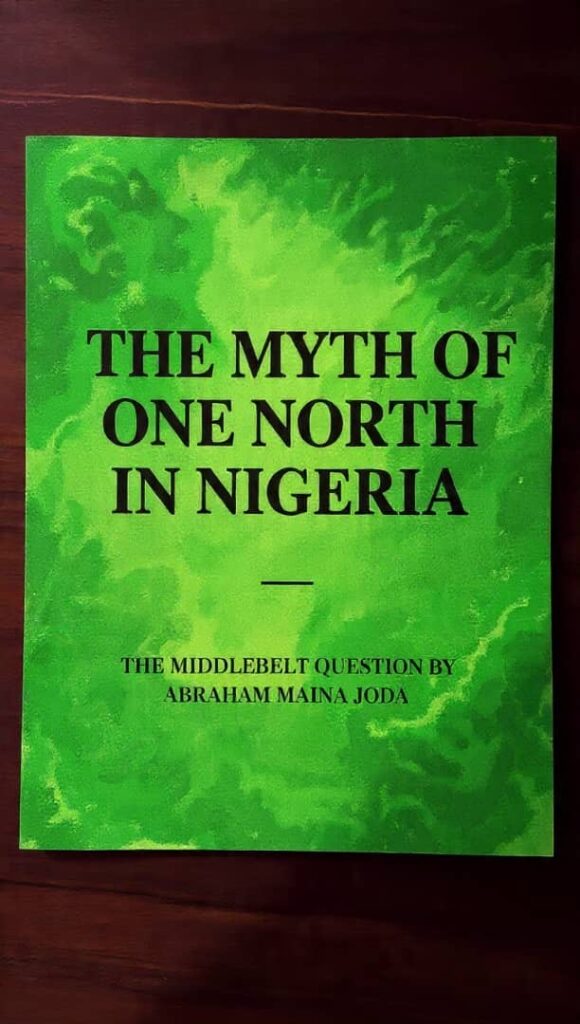
By Abraham Maina Joda
For decades, Nigerians have been told that the North is one indivisible political bloc — a region bound by common interests, culture, and religion. But this idea of “One North” is one of the greatest falsehoods in our political history. It was conceived and sustained by the political elites of the core North — largely Hausa-Fulani — as a bargaining tool to consolidate power and privilege, while millions of others within the old Northern Region are neither seen nor heard at the negotiating table.
This myth has enabled a few elites to control the political and economic direction of the entire North, while the rest — the Middle Belt peoples — continue to suffer exclusion, underrepresentation, and underdevelopment.
Understanding the Middle Belt: Geography and Identity
The so-called Middle Belt stretches across central Nigeria, forming a natural bridge between the Muslim-dominated North and the Christian-majority South. It is not officially defined in Nigeria’s constitution, but geographically, it covers much of the North-Central zone and parts of the North-East and North-West. States often considered part of the Middle Belt include Plateau, Benue, Nasarawa, Kogi, Niger, Taraba, Adamawa, the FCT, and parts of Borno, Gombe, Bauchi, and Southern Kaduna.
This region is one of the most ethnically and linguistically diverse in Africa; home to over 200 ethnic groups speaking more than 400 languages. These include the Tiv, Jukun, Berom, Idoma, Nupe, Igala, Gbagyi, Bachama, Birom, and dozens of others. It is also religiously plural — roughly balanced between Christians, Muslims, and adherents of traditional beliefs although data shows that it has a Christian majority.
The Middle Belt’s geography and diversity make it Nigeria’s true “heartland.” Its fertile land, rich minerals, and central position give it the potential to serve as both a bridge and a buffer for national unity, yet it has been deliberately left behind in the politics of “One North.”
Historical Roots of Marginalisation
In the pre-colonial era, the peoples of the Middle Belt existed as independent kingdoms and chiefdoms — from the Jukun Kingdom in Wukari to the Nupe and Igala polities — that resisted domination by the Sokoto Caliphate. But when the British colonialists took over, they lumped these diverse and independent societies under the Northern Protectorate, ruled indirectly through the emirate system that favoured the Hausa-Fulani elite.
This administrative decision, more than anything else, created the structural foundation for today’s false “One North.” It submerged the Middle Belt under a political structure dominated by people with whom they shared neither culture nor history.
By the 1950s, Middle Belt leaders like Joseph Sarwuan Tarka and Isaac Shaahu rose in resistance, forming the United Middle Belt Congress (UMBC) to demand recognition and autonomy for the region’s minorities. The UMBC gave voice to millions who had been silenced by the northern political establishment, declaring that “the North is not one.”
Although Nigeria’s later state-creation exercises (from 1967 onward) broke up the old Northern Region, the political mentality of domination and manipulation survived.
The Elite Manipulation of “One North”
The concept of “One North” has since been weaponized by the political elite to sustain hegemony. In practice, the region’s political, economic, and religious decisions are taken largely with the interests of the Hausa-Fulani and the Muslim-dominated parts of the North in mind — leaving the rest of the so-called North politically invisible.
Appointments, budgets, employment, and representation are often calculated to satisfy the “core North,” while the diverse Middle Belt is only remembered during elections or political negotiations — when its votes and resources are needed.
Worse still, many Middle Belt politicians and technocrats have failed to rise to the challenge of representing their people’s true interests. Too often, when they attain power or appointments, they choose complacency over courage — preferring to please the northern establishment rather than challenge the injustice of the existing order.
The Weakness of Middle Belt Leadership
The Middle Belt Forum (MBF) and similar socio-political groups were established to protect and advance the collective interests of the region’s minorities. Yet, in recent years, they have lost their credibility and assertiveness. Rather than leading national conversations on equity and justice, they have become reactionary — issuing press statements that change little, or aligning themselves with southern or northern blocs instead of defining an independent path.
We must ask hard questions:
Who are the leaders of the Middle Belt today? How were they chosen? Do they command the respect, intellect, and grassroots influence required to lead millions? Many of them cannot even sway the political outcomes of their constituencies, let alone shape national direction. The Middle Belt needs leaders who are visionary, credible, and capable of commanding respect both at home and nationally.
The Religion Question and the Need for Inclusion
One of the most urgent issues confronting the Middle Belt movement is religious inclusivity. The region’s advocacy groups have often been dominated by Christian voices, inadvertently alienating Muslims within the Middle Belt who equally suffer marginalisation from the “One North” agenda.
To build a truly united front, the Middle Belt must open its doors to all its sons and daughters — irrespective of faith. The struggle for justice, equity, and recognition cannot be fought as a sectarian cause; it must be pursued as a collective human and regional cause.
A Call for a Middle Belt People’s Conference
It is time for a Regional Conference of Ethnic Minorities in the North — a historic gathering to define who we are, what we want, and how we can achieve it. Such a conference must bring together traditional rulers, scholars, youth, women, religious and community leaders from all parts of the Middle Belt.
This forum must:
Define the geographical and political scope of the Middle Belt.
Develop a charter of unity and development for the region.
Establish an intellectual think-tank for political strategy and economic empowerment.
Create mechanisms to hold Middle Belt politicians accountable.
The Middle Belt and the Security Crisis
For more than two decades, the Middle Belt has suffered untold insecurity — villages burned, farms destroyed, and communities displaced by terrorists, bandits, and herders. Most of these violent actors are linked to the Fulani militia groups that have terrorized all parts of Nigeria with impunity.
Under former President Muhammadu Buhari, the indifference to these atrocities was alarming. The lack of empathy and political will to protect affected communities deepened despair and mistrust among the region’s people.
A telling example of this neglect was the Forest Guards Bill sponsored by Hon. Danjuma Usman Shiddi of Taraba State — a former DSS officer turned lawmaker — who sought to create a federal framework for securing Nigeria’s forests against bandits. Though the bill passed the third reading and received national acclaim, it was quietly sabotaged by the same “northern interests” who claim unity under “One North.” Hon. Shiddi lamented that the bill was deliberately stalled at the public hearing stage under the pretext of “lack of funds.”
This betrayal speaks volumes: even initiatives that could save northern lives are sacrificed on the altar of political control.
The Way Forward: Reclaiming the True North of Diversity
The Middle Belt is Nigeria’s most naturally endowed and demographically strategic region — the nation’s food basket, rich in minerals, talent, and potential. Its diversity is its greatest strength, not its weakness. But until the people of this region unite beyond religion, ethnicity, or political manipulation, they will continue to be tools in the game of others.
We must:
Reclaim our identity from the shadows of “One North.”
Reorganize our leadership with transparency and vision.
Reinforce our unity across faiths and ethnic lines.
Reassert our voice in national politics through credible representation.
The duty of everyone who wants a safer and more developed Middle Belt begins with ensuring that the best among us are elected and appointed into positions of power to bring meaningful development to the region. We must also begin to promote our cultures and traditions in a diverse but united way that would open up the enormous potentials of this God-blessed land and people.
The myth of “One North” has outlived its usefulness. It has become a burden — a lie used to silence the many for the benefit of a few. The time has come for the Middle Belt to rise, define its destiny, and lead Nigeria’s rebirth from the center — the true heart of the nation.
• Abraham Maina Joda
An ethnic minority of Wurkum extraction from Taraba State.
📞 07038543606
Facebook Comments

GIPHY App Key not set. Please check settings