

By Etim Etim
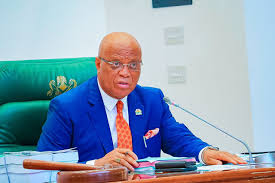
Gov. Umo Eno of Akwa Ibom State announced recently that the state government is acquiring a large parcel of land in Abuja to develop a housing estate where houses would be sold to Akwa Ibom indigenes who reside in the city. The announcement, typically, has generated varied commentaries, but the most surprisingly uninformed one came from Jimi Disu, a veteran journalist who now works as a host in a Lagos radio station. Disu had earlier worked as a print journalist, holding various editorial positions, including a columnist in Vanguard newspaper. He’s older than me in the business, and that’s why I am a little taken aback at his comments on the governor’s proposal. His main thesis is that the proposed estate is a waste because it is not sited in Akwa Ibom. ‘’Has the governor finished building estates in Akwa Ibom? Why is he building in Abuja?’’, he queried on his radio show Friday, before adding, ‘’let the governor concentrate on paying salaries and pensions’’. Should a governor’s business only be restricted to payments of pensions and salaries? Disu must be living in the past.
Just to be clear, the state government has no problems with payments of salaries and emoluments of its workers. The Eno administration in particular has been paying down on the backlog of gratuities and pensions it inherited. In terms of housing development, the administration is currently developing six different housing estates in Uyo designed for various categories of people: the one near the airport is for aviation workers; there’s one for judiciary workers; one for other civil servants; and another for middle-income. There is also the Dakkada Estate on Airport Road for high-income earners which was started by the previous administration as a site and scheme development.

But the proposed estate in Abuja is strictly a commercial investment from which the government would generate profit, increase its IGR and diversify its economy. Profits earned from such investments would then be used to fund socioeconomic developments like health, education, infrastructural and rural development in the state. Akwa Ibom indigenes who invest in the proposed estate will thank Gov. Eno in years to come, just as I am grateful to former governor Victor Attah for building Shelter Afrique estate in Uyo. Shelter Afrique has become one of the most important pieces of real estate in the state. Those of us who bought homes and land there when it was established 25 years ago are now proud of their investment decisions. Property investment is one of the most lucrative businesses as property value and income tend to increase over time, making it a good long-term investment. The Abuja estate would therefore be good for the state’s economy and Akwa Ibom people who would invest in it. There are well over 300 different gated residential estates in Abuja established by private investors for commercial purposes. I live in one of them. It is a lucrative form of investment for any state government or private developer. The government may sell off the homes, but maintains ownership of the estate and continues to earn fees on it.
With a paltry monthly IGR and without help from the federal government, Akwa Ibom State government has over the years been eager to diversify the state’s economy. While the federal government has been responsible for all the infrastructural development in the South Western part of the country from which Disu hails, Akwa Ibom State has had to provide everything for itself since its creation in 1987. We built our airport with an MRO facility and established an airline which is now the nation’s most preferred domestic carrier. Akwa Ibom State-owned FIFA-rated stadium, the only one of its kind in the country, has saved Nigeria from eternal shame and embarrassment. Without the football stadium in Uyo, Super Eagles would have been playing their home matches in Cotonou! I recall that then-Gov. Akpabio was heavily criticized for building the stadium by commentators who do not see beyond salaries and pensions when he first mooted the idea of the stadium in 2012.
Gov. Umo Eno has been particularly intentional about building the state’s real estate portfolio for commercial reasons. The government is currently building an 18-storey residential and office complex in Victoria Island, Lagos. On completion in the next few years, the apartments would be sold and the government is expected to earn over N100 billion in profit. Similar property in that neighborhood command high price tags in dollars! Informed commentators should do well to check out the return on investments (ROI) and internal rate of return (IRR) on similar investments in Lagos and Abuja. It is not enough for commentators to stay in front of a microphone and talk glibly about things they are not well informed of.
The government is also refurbishing its abandoned and decrepit property in Lagos and Abuja and turning them into commercial investments. At the same time, real estate and tourism investments in the state are going on unabated. They include a five-star hotel; Ibom International Convention Center; ARISE Palm Resort and Ibom Hotel & Golf Resort, all in Uyo, among many others. This is in addition to the governor’s well-known high-social impact empowerment programmes in which financial supports are extended to rural MSMES across the state
It is therefore misleading and intrinsically impish to assume that the proposed Abuja estate is coming at the expense of investments within the state. I therefore urge Akwa Ibom indigenes in Abuja to stand ready to invest in the proposed Ibom Gardens and Estate in Abuja.
Facebook Comments

GIPHY App Key not set. Please check settings