

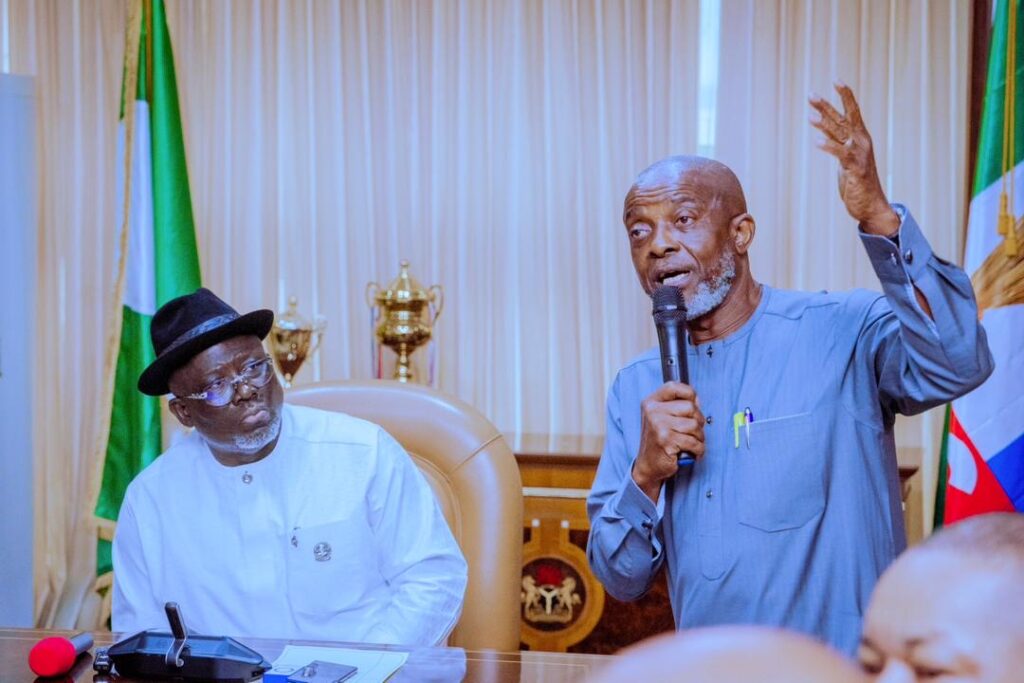
Asaba – April 8, 2026 – Delta State Governor, Sheriff Oborevwori, on Wednesday, April 8, 2026 reaffirmed his administration’s commitment to achieving stable and reliable electricity supply through strategic partnerships with reputable energy experts.
Speaking during a high-level meeting with the management of Power Acumen Consulting Ltd (PACL), Detail Solicitors, and the Nigeria Infrastructure Bank (NIB) at Government House, Asaba, Governor Oborevwori identified power distribution, not generation, as the major challenge hindering progress in the nation’s energy sector.

He stated that his administration is intensifying efforts to address longstanding gaps in electricity supply through strategic partnerships, policy reforms, and targeted infrastructure development under its “Light Up To Industrialize Delta State Initiative.”
According to the governor, while the state has recorded progress in infrastructure, healthcare, and education, sustainable power supply remains critical to unlocking broader economic growth and development.
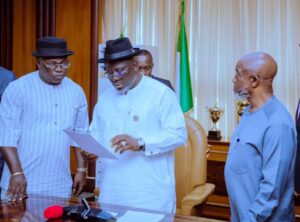
Oborevwori commended PACL’s management for what he described as a “brilliant and insightful presentation,” noting that the engagement reflects the government’s resolve to work with competent partners capable of delivering measurable results.
He announced that a joint technical team comprising representatives of the state and PACL will be established, tasked with developing a clear roadmap and actionable framework for 24/7 power supply in the state.
“We do not want to act blindly. We need a well-structured plan that will guide our decisions and ensure long-term success,” he said, adding that his administration has strengthened institutional capacity by appointing experienced professionals to oversee the energy sector. He expressed confidence that strong leadership and strategic collaboration will yield positive results.
While acknowledging that the journey to uninterrupted power supply may be long, the governor expressed optimism that ongoing reforms and partnerships would deliver tangible improvements sooner than expected.
“The journey toward stable electricity supply is not automatic. It requires deliberate planning, sound policies, and consistent execution. That is why we have taken bold steps to address these challenges progressively,” he said.
Governor Oborevwori disclosed that some communities that had experienced blackouts for over a decade have recently been reconnected to the national grid, adding that ongoing projects are aimed at extending electricity infrastructure to key economic corridors across the state.
He reiterated that the real issue lies in distribution: “We have the capacity to generate significant megawatts of power daily, but getting that power efficiently distributed to homes and businesses remains the major hurdle.”
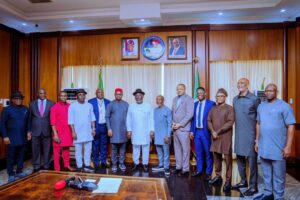
To tackle this challenge, he said the state has enacted an Electricity Law to strengthen the legal and regulatory framework for power sector reforms. Consultants have also been engaged to review existing policies and recommend practical solutions, with a comprehensive report expected soon.
The governor underscored the importance of collaboration with credible partners, noting that technical expertise is essential to complement the government’s financial and institutional capacity.
“We are not just interested in presentations; we want results. That is why we are seeking the right partners to guide us through the process and help us achieve real impact,” he said.
He further emphasized the need for community involvement, urging traditional rulers, youth leaders, and other stakeholders to support government efforts by promoting responsible electricity usage and safeguarding infrastructure.
Earlier in his presentation, the Managing Director of Power Acumen Consulting Ltd, Engr. Matthew Edevbie, noted that Delta State has an installed electricity generation capacity of about 3,000 megawatts, with major contributions from Okpai, Ughelli, and Sapele—yet shockingly benefits from less than 200 megawatts.
Engr. Edevbie said the flagship “Light Up and Industrialize Delta State Initiative” is not just a power project but an integrated development strategy, adding that “electricity is the foundation.”
He stated that Delta State must develop its own power grid, emphasizing that the state does not lack generation capacity but needs control over transmission and distribution within its territory.
“By building our own grid, we can harness existing power, distribute it efficiently, and ensure reliability. Encouragingly, recent regulatory developments now make it possible for states to establish independent transmission systems. This means Delta State can build, operate, and recover investments in its own grid over time—turning infrastructure into a long-term economic asset,” he added.
Engr. Edevbie assured that with proper coordination, partnerships, and regulatory alignment, the state can achieve 24-hour electricity supply in Warri and Asaba before the end of the year.
Facebook Comments

GIPHY App Key not set. Please check settings