


By Tony Eke
“If you are neutral in situations of injustice, you have chosen the side of the oppressor.”
—Desmond Tutu
Zoning of elective positions has become an enduring feature of the present democratic dispensation. At all levels, a common understanding now permeates the ranks of political players about the need to accommodate the interests of segments of a constituency so that each zone or unit could take its turn to occupy elective offices. The goal is to engender inclusiveness and enhance unity amongst the people.
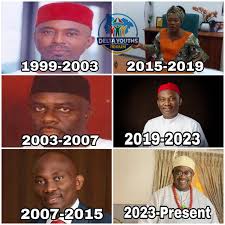
From 1999 to date, the application of zoning has generated a sense of belonging in many states and constituencies. Without such an informal agreement, many areas would have remained politically disempowered. The zoning formula as enshrined in the constitutional framework of political parties for the rotation and zoning of party and public elective offices continues to promote equity, justice, and fairness in political units where it is relatively observed.
Despite the relative application of equitable representation by the aforementioned principle in the last 27 years of constitutional governance in Nigeria, the Aniocha/Oshimili federal constituency in Delta State has not benefited as expected from the zoning practice. The constituency in question comprises four local government councils, namely, Aniocha North, Aniocha South, Oshimili North, and Oshimili South, but to date, the Oshimili axis has only produced a representative, unlike the Aniocha axis, which produced the national legislators for 24 out of the last 27 years. The emergence of the incumbent legislator, Hon. Ngozi Okolie of the Oshimili axis, was accidentally propelled by the historic momentum of Peter Obi’s candidacy on the Labour Party, though Hon. Okolie later defected to the All Progressives Congress (APC).
So, on a comparable scale, the Oshimili axis has evidently been shortchanged vis-a-vis the Aniocha segment of the constituency. Even before the end of the current cycle in 2027, the Aniocha axis has already occupied that seat for 24 solid years, with Oshimili just having a paltry four years. It behooves the Oshimili axis to work hard to reverse this willful exclusion and stave off a scenario where they might stay for another 16 years and consequently share the ill-fated experience of the biblical Israelites in the wilderness.
Addressing the glaring disadvantage induced by the disparity of representation suffered by the Oshimili axis over the years should be a collective effort. The application of moral suasion and the assurance of equitable representation by Oshimili will help them to overcome resistance from the Aniocha axis. Equity demands that the leaders and stakeholders of the APC take cognizance of the lopsided representation and zone the seat to the Oshimili people. Allowing a politician from the Aniocha axis to pick the APC ticket for the seat in the 2027 general election will exacerbate the grievances of the Oshimili people and heighten their feeling of alienation.
Retrospectively, the indigenes of Aniocha who have occupied the federal seat are Ned Nwoko (1999-2003), Pascal Adigwe (2003-2007), and Amaechi Mrakpor (2015-2019). Hon. Ndudi Elumelu was earlier there for two tenures between 2007 and 2015 and came back for a third term in 2019, eventually becoming the minority leader of the lower chamber of the National Assembly. Strange enough, the same Elumelu has declared interest in a fourth term, but his ability to realize it will depend on the willingness and forbearance of the Oshimili people to accept a further elongation of their marginalisation.
The shutting out of the Oshimili axis is pathetic in every material classification. Within the Delta North senatorial district, it’s only Aniocha/Oshimili among the three federal constituencies that has suffered the perpetuation of legislative dominance at the national level. The other two constituencies, Ndokwa/Ukwuani and Ika, have observed rotation of the seats among the local government councils since 1999.
In the Ndokwa/Ukwuani federal constituency, for instance, the former legislator Mercy Almona-Isei hails from the Ukwuani local government, while the late Charles Onyekweli and Olisa Imegwu were produced by the Ndokwa East local council. The immediate past representative, Ossai Nicholas Ossai, is from Ndokwa West Local Council, while his successor, Nnamdi Ezechi, is an indigene of Ndokwa East.
Similarly, the Ika federal constituency also produced Nduka Irabor of the Ika North-East local council before the late Cairo Ojougboh and Doris Uboh from Ika South took their turns. Victor Nwokolo, the current legislator, is from the Ika North-East local council.
Going forward requires Aniocha taking urgent steps to support Oshimili people to occupy the federal seat in 2027 on the basis of equity, fairness, and justice. As painful as it is, the Aniocha’s dominance may have emanated from the liberal disposition of Oshimili people. After all, the Oshimili axis has a galaxy of prominent politicians with track records of effective performance in elective offices, both in the past and at the present time.
What is expected of the Aniocha area is to forgo its aspiration and support the Oshimilii axis to produce the next national legislator in 2027. It is time for the Aniocha axis to reciprocate the longtime sacrifices of the Oshimili people in the spirit of brotherhood and good neighbourliness. With the homogeneity of the federal constituency evident in their ethnocultural features, it will be a welcome decision to accommodate the aspiration of the Oshimili people this time around. A common saying among the Enuani people, “Onyelie Oye Ibe” (literal translation: live and let live), is both valid and imperative. An abiding call for the promotion of good relationships and sharing of benefits accruing to the constituency.
• Tony Eke is based in Asaba. Delta State capital.
Facebook Comments

GIPHY App Key not set. Please check settings