

By Prof Lawrence Etim
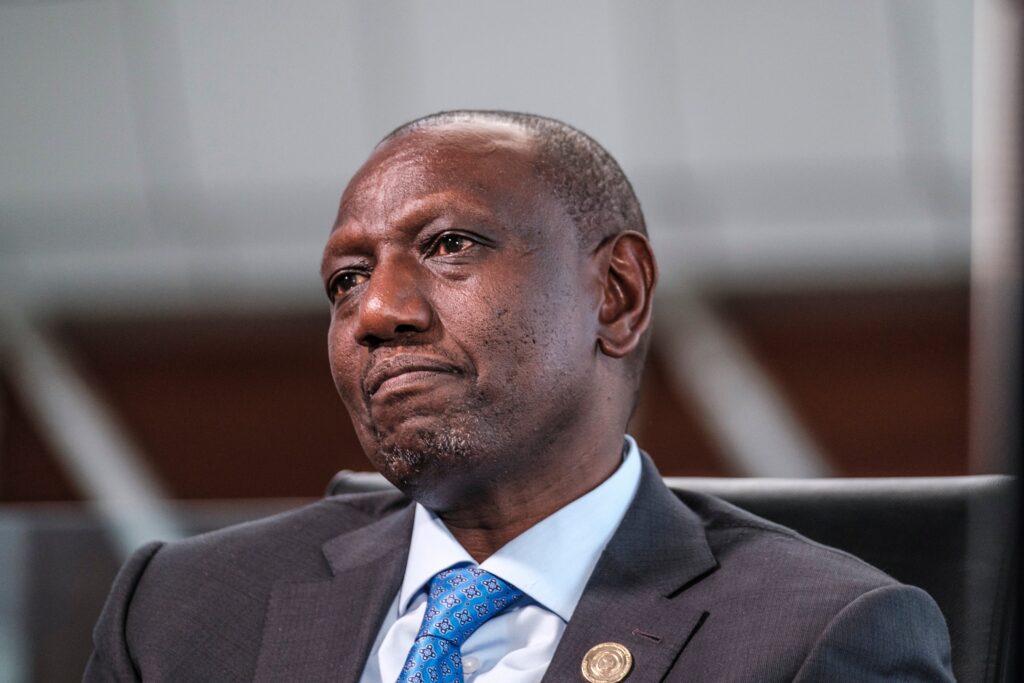
How can Kenyan President William Ruto stoop so low? A few days ago, while addressing his people in Italy, President Ruto stirred the hornets’ nest by claiming that Nigerians cannot speak English – that “you need a translator” to understand them when they speak English. He delivered this assertion with visible glee, laughing hilariously, and added for effect that Kenyans speak “proper and the best English.”
Watching that video genuinely surprised me. I was miffed by the insult. It is disheartening to see a sitting president descend into unnecessary linguistic mockery instead of focusing on substantive governance. Rather than addressing Kenya’s deplorably low Human Development Index (HDI) – where Kenya ranks notably below Nigeria in several UNDP metrics – Ruto chose to ridicule an entire nation’s manner of speaking.
Ruto appears to conflate accent with syntax and grammatical accuracy. Kenyans, striving to mimic the “White man’s” accent, often mistake affectation for proficiency. We Nigerians, by contrast, intentionally preserve our native accent with pride, without sacrificing any grammatical precision. In international linguistic assessments, Nigerian English users consistently demonstrate superior command of syntax, vocabulary, and idiomatic expression.
Beyond preserving our accent geologically (a Freudian slip that amusingly underscores our linguistic confidence), Nigeria has contributed more words to the global English lexicon than any other African nation. For example, in 2018, the Oxford English Dictionary incorporated about 29 Nigerian words – including “danfo,” “okada,” “agbero,” “ember months” and “segmentation”, etc into English lexicon, with that number having grown tremendously since. How many words has Kenya contributed to global English? A sincere search yields negligible results. Today, Kenyan youths and netizens speak more Nigerian slangs than Swahili.
I once traveled to Nairobi and was surprised to find that the hotel where I stayed was owned by a German lady. In contrast, virtually all hotels in Nigeria are owned by Nigerians, serving authentic Nigerian cuisine. This reflects a deeper reality: we are more successful in business and more culturally emancipated than Kenyans. Nigerian enterprise thrives locally and abroad, whereas key sectors in Kenya remain dominated by foreign interests.
Is it any surprise that the richest man in Africa, Aliko Dangote, is a Nigerian? Or that the richest African woman, Folorunso Alakija, is also Nigerian? Kenya, despite its natural beauty and tourism appeal, has yet to produce a billionaire of comparable stature. Who is the richest woman in Nairobi? The question itself reveals the disparity.
On local and international stages – whether at the UN, the African Union, or academic conferences – our presidents, politicians, and even scholars proudly wear Nigerian attire, showcasing our psychological and cultural emancipation from colonial rule. Meanwhile, Kenya’s president still appears in a Western suit, a relic of colonial subjugation that symbolises lingering dependence.
Nigeria has approximately 206 universities and numerous other degree-awarding institutions. Kenya has only five public universities of comparable standing. To compare Nigeria with Kenya in higher education is to compare a giant with a dwarf.
It is a settled fact that, in the United States, Nigerians are the most educated immigrant nationality. The proportion of Nigerian‑Americans holding a college degree far exceeds the US national average – and indeed surpasses that of Kenyan‑Americans by a wide margin. This empirical data alone refutes any claim of English deficiency.
Nigeria has the largest number of international church networks in Africa. I have personally attended Winners’ Chapel in Nairobi. Both Winners’ Chapel and the Redeemed Christian Church of God rank among the largest congregations in Kenya’s capital. Remarkably, there is no Kenyan‑owned church in Nigeria. That cultural and religious influence flows almost entirely one way.
Nigerian banks – UBA, First Bank, Access Bank, Ecobank, etc continue to dominate financial intermediation in most African capitals, including Nairobi. I have never heard of a Kenyan bank operating branches in other African countries, let alone competing regionally. In commerce, Nigeria leads; Kenya gropes.
Nigerian music, particularly Afrobeats, Naija pop dominate airwaves across Africa and beyond. Davido enjoys rockstar status worldwide. The song “Buga” by Kizz Daniel featuring Tekno became one of the biggest Afrobeats hits of 2022, its catchy rhythm and viral “Buga dance” sweeping social media globally. Rema’s “Calm Down” (popularly “Baby Calm Down”) became a global phenomenon, even topping charts in India, and the remix featuring Selena Gomez propelled it into Western mainstream history. Can anyone name a single Kenyan artist with comparable international reach? I don’t want to mention Fela who is in a class of his own and remains the most enduring music legend of his generation.
If Nigerians do not speak good English, how did Professor Wole Soyinka win the Nobel Prize in Literature (awarded for writing in English)? How did Chinua Achebe’s Things Fall Apart – an English novel by a Nigerian – sell over 20 million copies and get translated into more than 50 languages? These are not accidents. They are monuments to Nigerian mastery of the English language, achieved without abandoning our native identity. President Ruto would do well to listen more and mock less.
Kenyans have produced long distance runners as a consequence of their elevated altitude and mountainous terrain. After that, what else? Nothing.
In conclusion, public statements by leaders carry weight and consequence. Rather than fostering division through casual disparagement, African leaders would do better to promote mutual respect, celebrate diversity, and collaborate toward shared development goals. Africa’s strength lies not in competition over accents or superficial distinctions, but in unity, dignity, and collective progress.
Facebook Comments

GIPHY App Key not set. Please check settings