

By Our Correspondent
ASABA – Nigeria’s media professionals have failed to mount pressure on government for probity and accountability, becoming instead tools for propaganda and deceit that enable the country’s descent into conflict, a mass communication scholar declared Wednesday.
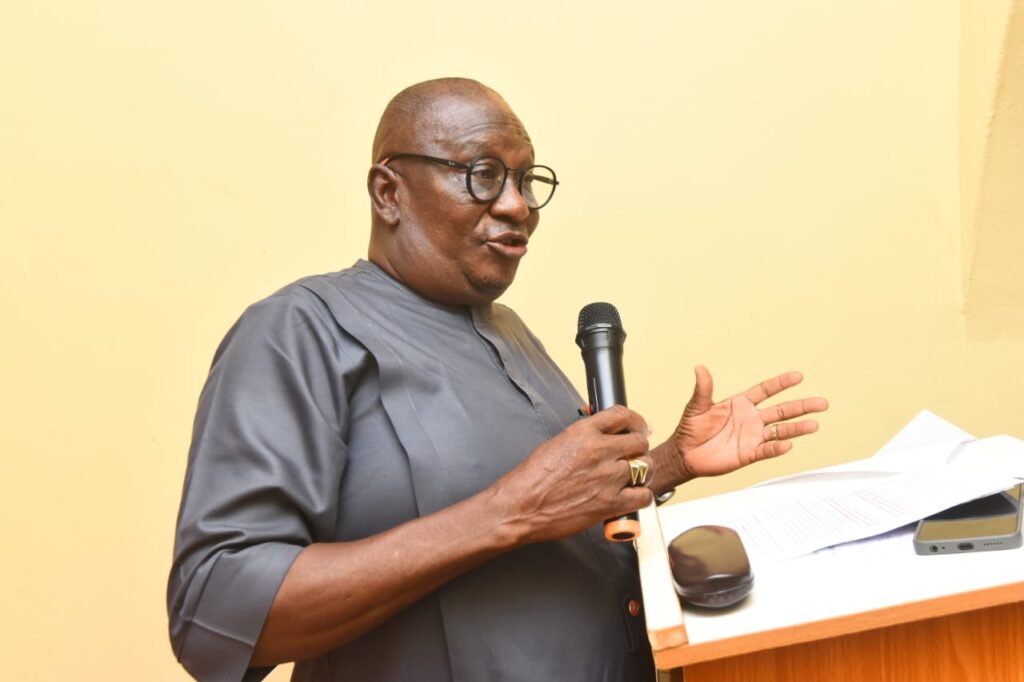
Delivering the keynote address at the Delta Online Publishers Forum World Press Day celebration in Asaba, Associate Professor Gideon Udechukwu Isika of Dennis Osadebay University warned that journalists compromised by government patronage have directly contributed to the nation’s insecurity crisis.

“Journalists have been unable to mount pressure on the government for enthronement of probity in public office,” Isika said, citing Aghalino (2019). “They haven’t lived up to their expectation, having been used on a sustained basis for propaganda and deceit by politicians and the military in government.”
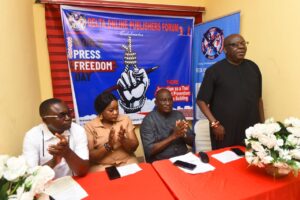
The address, titled “Journalists as a Tool for Conflict Prevention and Peace Building,” marked World Press Day 2026 under the global theme “Shaping a Future at Peace.”
Isika painted a grim picture of Nigerian democracy facing “a nosedive as a result of social conflict and insecurity,” pointing to contemporary African nations that have transformed technologically and industrially despite starting from poorer positions than Nigeria.
“Look at our contemporaries: Botswana – third poorest African nation in 1966 – Mauritius, South Africa, Egypt, Rwanda, and a host of others,” he said. “These are examples that have transformed, whereas in the midst of abundant economic and human resources, it has been colossal failure from one government to another.”
The don traced the failure directly to editorial compromises, alleging that “editors and heads of media establishments are on government payroll.”
Citing the 1954 International Federation of Journalists declaration adopted in Bordeaux, France, Isika reminded the audience that respect for truth and the public’s right to truth remains a journalist’s first duty – a principle he said has been widely abandoned.
Online journalists face particular credibility challenges, he noted, questioning whether they can “boast of having integrity” given widespread manipulation of facts, distortion of materials from contributors, and ethical breaches across the media spectrum.
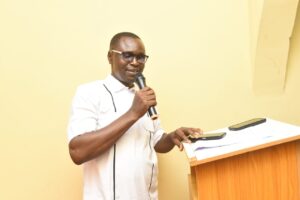
“It would be foolhardy to ignore ethical aberration common among us journalists today,” Isika said. “The political class has brought the country to near tipping point of unrest as we speak due to troubling governance ideals. It seems the long-awaited Armageddon is getting too close to comfort.”
He challenged media professionals to reject what he called “begging-bowl journalism” and resist the temptation to become lapdogs rather than watchdogs.
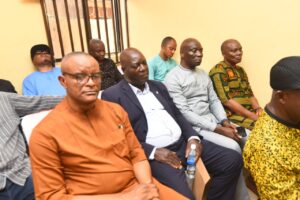
“Many journalists in government-owned media outfits often refer to the proverbial piper dictating the tune as justification for behaving as lapdogs of those in power rather than being watchdogs of the society,” he said.
The professor proposed specific strategies for conflict prevention, including preparing negotiation timetables for stakeholders, emphasizing commonalities between contending parties, focusing on win-win outcomes, and preparing all parties to disclose preferences without disguise.
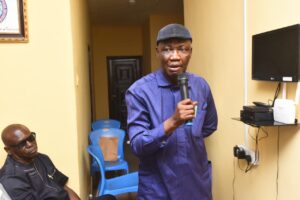
“Since we all agree and there are no pretences about Nigeria being in a big mess, building a peaceful nation is a sine qua non to her progress and overall development,” Isika said.
The event held at DOPF office, opposite St. Patrick’s Catholic Church, Asaba, drew members of the Delta Online Publishers Forum for the annual commemoration and other media dignitaries.
The event was also graced by Comrade Felix Ofou as Special Guest of Honor. Ofou, who is an Executive Assistant to Delta State Governor on News Media and Director Cruze FM, emphasized on financial independence as a proponent of responsible journalism.
“You cannot be a successful journalist if you are not financially independent”: Ofou stated, while recounting the dangers in journalism with reference to his experience in the Okotoko crisis.
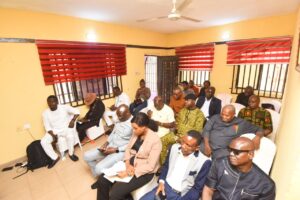
Ofou, who’ was the former Chairman of the defunct Punch Chapel of the NUJ, and Human Rights Award winner of the NUJ National Body (Imo State Chapter), charged journalists to imbibe credibility professionalism and regulations in their practices, and engage in continuous training and development for professionalism, aspiring to be not only a journalist but have a medium.
In a goodwill message, the Director-General of Delta State Bureau for Information, Dr. Fred Latimore Esq. expressed appreciation to the Chairman and leadership of DOPF for organizing this memorable event.
He charged journalists to keep reading and studying for more certifications, while soliciting the support of DOPF as election draws closer in news dissemination for a successful election.
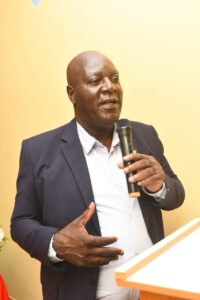
The Delta State Director of National Orientation Agency (NOA), Mrs. Tracy Ikolomi, expressed profound appreciation to the leadership of DOPF for their sustained partnership with NOA. She deemed the theme of this year’s edition of press freedom day as apt, noting that without peace and serenity, we cannot have a safe society. She emphasized the importance of journalists, including the so-called “citizen journalists” in unravelling credible news, citing the recent cases of crime in Delta who was covered by the conventional social media.
Ikolomi ceased the opportunity to hail the growth of DOPF in strength and networks, urging them to continue in the path of progressive growth.
The State Chairman of Nigeria Union of Journalists (NUJ), Delta State Chapter, Comrade Churchill Oyowe, in his goodwill message, emphasized on creativity and responsibility for balanced reportage.
“Before journalists are entitled to social and economic security, they should play their parts through responsible journalism that makes us citizenship journalists, different from citizen journalists.” Oyowe noted.
He further noted that there is need for a 4-way test, verification and fact-checking for balanced reportage, and urged journalists to be guided by these due diligence. He mentioned that the Journalism Council of Nigeria is a necessary institution for the stability of journalism which will regulate journalists from the onset in tertiary institutions. He urged members to be up and doing to make the profession a noble one.
Speaking at the event is the Chairperson of Nigeria Association of Women Journalists (NAWOJ), Delta State Chapter, Comrade Sonia Unobunjo, who commended DOPF for convening the program on behalf of the entire Press family in Delta State.
She applauded DOPF for doing journalism and doing it very well, while encouraging credible and responsible publications in online journalism.
Unobunjo identified the role of NAWOJ as being supportive to other organs of NUJ in Delta State, and assured the DOPF of their continued support in programmes like this.
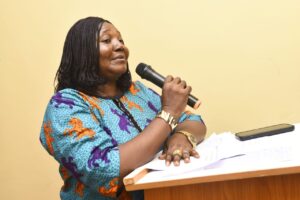
Earlier in the programme, the Chairman Organizing Committee, Comrade Julius Oweh noted that DOPF was established and operates on the principle of professionalism and responsible journalism for peace building as he set the course of the discussion.
Participants present raised concern on plethora of issues which includes failure of accessing credible source of news and accessing areas with heavy security presence, the snare of paymasters in journalism, citizen journalism, balanced reporting, fear of internal sabotage and power fighting back responsible journalism.
Responding, Dr Isika noted that reporting truth has a lot of danger, but charged journalists to be of good courage and hope in God while being very careful in their practices.
On citizen journalism, DOPF Chairman, Comrade Emmanuel Enebeli clarified that DOPF members are registered journalists with registered media outfits for public accountability. He decried cases of citizen journalists and Facebook boys who have no media background but are engaged by the political class as their media aides, but emphasized that the requisite qualifications should be met before appointment as public aides.
In a vote of thanks, Enebeli extended the Forum’s profound gratitude to guests present for the event, and acknowledged DOPF responsibility as gatekeepers for public trust. “As we approach election, the burden of journalism becomes greater with a need to ensuring that our platforms serve for peace instead of unrest.” he said.
He assured stakeholders that DOPF advocates ethical reportage and publications to prevent crises through strategic communication with the Government and responsible publications to the public.
Facebook Comments

GIPHY App Key not set. Please check settings