

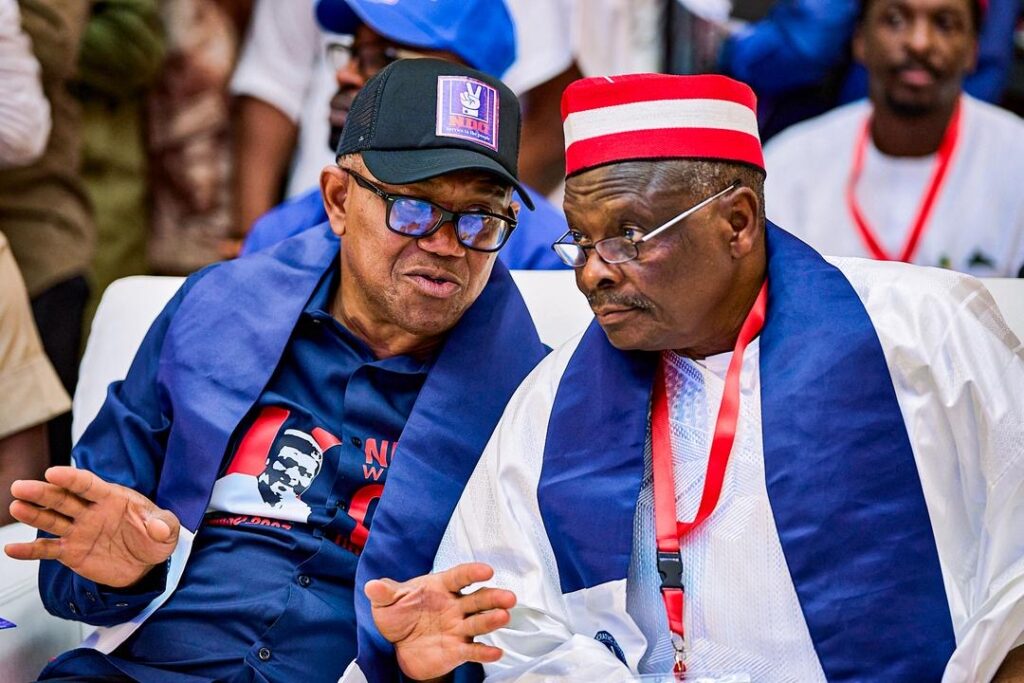
 Former Labour Party presidential candidate, Peter Obi, appears set for another shot at the presidency in 2027, this time under the platform of the Nigerian Democratic Congress (NDC), following the party’s decision to zone its presidential ticket to the South.
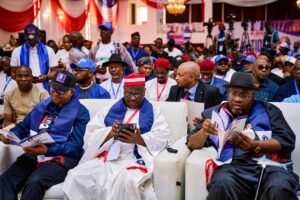
The decision, announced at the party’s first National Convention in Abuja on Saturday, has further strengthened speculations that Obi is gradually emerging as the preferred presidential aspirant of the party after his recent defection from the African Democratic Congress (ADC).
Obi had dumped the ADC on Sunday amid growing disagreements over the party’s refusal to clearly state its position on zoning, a controversy that had deepened tensions within the opposition coalition.
Within the ADC, former Vice President Atiku Abubakar, who flew the flag of the Peoples Democratic Party (PDP) in the 2023 presidential election, was reportedly positioning himself for the presidential ticket, despite persistent arguments that power should remain in the South after the eight-year tenure of former President Muhammadu Buhari.
Supporters of zoning have consistently maintained that the presidency should stay in the South in line with Nigeria’s informal power-sharing arrangement, especially after President Bola Tinubu succeeded Buhari in 2023.
However, Atiku’s camp had continued to resist the arrangement, insisting on an open contest both in the PDP and later within the ADC, thereby fueling fresh divisions within opposition ranks.
The NDC, however, moved swiftly to settle the matter at its convention by adopting a zoning formula that reserves the 2027 presidential ticket for the South East for a single four-year term from 2027 to 2031.
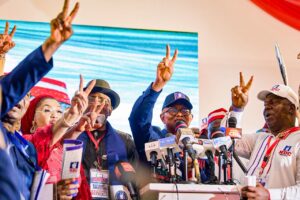
The motion was moved by Victor Afam Ogene, member representing Ogbaru Federal Constituency of Anambra State in the House of Representatives, and was overwhelmingly adopted by delegates at the convention.
Party leaders also resolved that after the single-term arrangement, the presidential ticket would automatically revert to the North in 2031.
The convention is also expected to ratify key decisions earlier taken by the party’s National Executive Committee, including amendments to the party constitution and the election of substantive national officers.
The NDC has in recent weeks witnessed a wave of defections from rival opposition parties, especially the ADC and the PDP, further boosting its national profile ahead of the 2027 elections.
On Tuesday, no fewer than 17 members of the House of Representatives officially defected from the ADC to the NDC during plenary.
Among the lawmakers were Yusuf Datti, Uchenna Okonkwo, Adamu Wakili, Thaddeus Attah, George Ozodinobi, Lilian Orogbu, Oluwaseyi Sowunmi, Peter Aniekwe, Mukhtar Zakari, George Oluwande, Munachim Umezuruike, Emeka Idu, Jesse Onuakalusi, Ifeanyi Uzokwe, Afam Ogene, Murphy Omoruyi and Abdulhakeem Ado.
The defections came barely two days after Obi and former Kano State Governor, Rabiu Musa Kwankwaso, formally joined the NDC from the ADC.
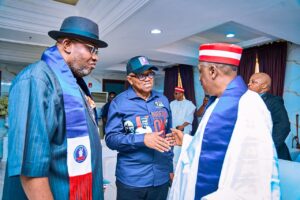
The two political heavyweights were presented with NDC membership cards after a closed-door meeting with party leaders and were officially received by former Bayelsa State Governor and national leader of the party, Senator Seriake Dickson.
Explaining his decision to leave the ADC, Obi cited worsening internal crises, external interference and increasing hostility within party structures.
He lamented what he described as a toxic political environment characterised by intimidation, insecurity and sustained attacks on individuals committed to genuine public service.
Facebook Comments

GIPHY App Key not set. Please check settings