

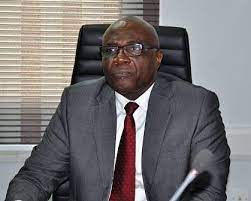

When Peter Obi called on President Bola Ahmed Tinubu to consider resignation on the grounds of what he described as monumental governance failure, many expected a robust and thoughtful response from the Presidency. What Nigerians got instead was a lengthy exercise in political propaganda masquerading as a rebuttal.
Bayo Onanuga’s statement from the State House did not seriously engage with the fundamental issue Obi raised: accountability. That is the real question. Not whether Britain operates a parliamentary system and Nigeria a presidential one. Not whether APC won a handful of elections. Not whether stock market figures can be assembled into glossy talking points. The question is simple: has life improved for ordinary Nigerians under President Tinubu? For millions of citizens, the answer is painfully obvious.

Food prices remain beyond the reach of average families. Electricity remains unreliable. Businesses are shutting down under the weight of energy costs. Insecurity continues to haunt vast parts of the country. Kidnapping has become an industry. Farmers are afraid to enter their farms. Communities continue to live under the threat of terrorists, bandits and armed criminal gangs.
These are not opposition talking points. They are lived realities. Rather than address these realities, Onanuga chose to attack the messenger. Such a response exposes the greatest weakness of the current administration: its inability to distinguish between criticism and hostility. A government confident in its record does not panic when confronted with uncomfortable questions. It answers them.
The British Prime Minister’s resignation was not the central issue raised by Obi. The issue was political responsibility. Obi’s argument was that leaders must be prepared to accept responsibility when their governments fail to deliver on key promises. That principle is universal. Accountability is not British. Responsibility is not British. Leadership is not British. They are democratic values that should apply everywhere, including Nigeria.
The Presidency’s attempt to hide behind constitutional technicalities completely misses the point. Nobody disputes that Nigeria operates a presidential system. The real question is whether leaders should remain in office regardless of performance simply because the constitution permits them to do so. Of course, history says no. Democracy is not merely about occupying office. It is about earning the moral authority to remain there.
Onanuga boasts about economic indicators, foreign reserves and stock market performance. Yet economic statistics mean little when they fail to translate into improved living conditions for the majority. What comfort is a soaring stock market to a family that cannot afford three meals a day? What does increased federation revenue mean to a graduate without employment? What significance do macroeconomic figures hold for communities living under the constant fear of abduction? Governments exist to improve the lives of citizens, not to compile impressive PowerPoint presentations.
The administration’s defenders frequently point to inherited challenges. Nobody denies that President Tinubu inherited serious problems. The difficulty with that argument is that he actively sought the office while promising solutions. He did not campaign by telling Nigerians that the problems were too difficult. He promised to fix them. He asked to be judged by results. Nigerians are now judging those results.
Perhaps the most troubling aspect of Onanuga’s statement is the attempt to portray criticism as anti-democratic. Nothing could be further from the truth. Holding leaders accountable is democracy. Demanding explanations is democracy. Questioning performance is democracy. Insisting that public office holders answer for their actions is democracy. The notion that citizens must remain silent while conditions deteriorate is the very opposite of democratic culture.
The Presidency also cannot simply wave away widespread concerns about transparency and public procurement. Across the country, questions continue to be asked about the awarding of massive infrastructure contracts and the concentration of economic opportunities around politically connected interests.
Whether those concerns are justified or not, they deserve transparent answers rather than dismissive rhetoric. Public trust is strengthened through openness, not through insults directed at critics.
Meanwhile, insecurity remains perhaps the most devastating indictment of the current administration. Communities continue to suffer attacks. Criminal networks continue to operate. Families continue to mourn loved ones lost to violence.
A government cannot claim complete success while citizens remain afraid to travel on highways, cultivate farms or sleep peacefully in their homes.
The buck stops at the President’s desk. That is the essence of leadership. That is the essence of accountability. That is the essence of the argument Peter Obi raised.
Supporters of the administration may disagree with Obi’s call for resignation. They are entitled to that position. What they cannot do is pretend that the concerns he raised are imaginary. They cannot pretend that hunger is imaginary. They cannot pretend that insecurity is imaginary. They cannot pretend that economic hardship is imaginary. They cannot pretend that millions of Nigerians are not struggling to survive.
The Presidency’s response ultimately revealed a government more interested in defending its image than confronting the depth of public frustration. The reality is that no amount of official spin can erase what Nigerians experience every day.
A leader’s greatest report card is not written by advisers in Abuja. It is written by citizens in markets, farms, classrooms, factories and homes across the nation. And that report card is becoming increasingly difficult for this administration to defend.
Until the government begins addressing reality rather than attacking those who describe it, statements like Onanuga’s will continue to sound less like leadership and more like desperate attempts to explain away a crisis that millions of Nigerians are already living through.
Facebook Comments

GIPHY App Key not set. Please check settings