

By Chukwudi Abiandu
ASABA — Former Independent National Electoral Commission (INEC) Resident Electoral Commissioner, Hon. Mike Igini, has issued a stark warning that Nigeria’s democracy faces an uncertain future unless the country urgently rebuilds its battered value system, restores the independence of key institutions and compels political leaders to embrace accountability.

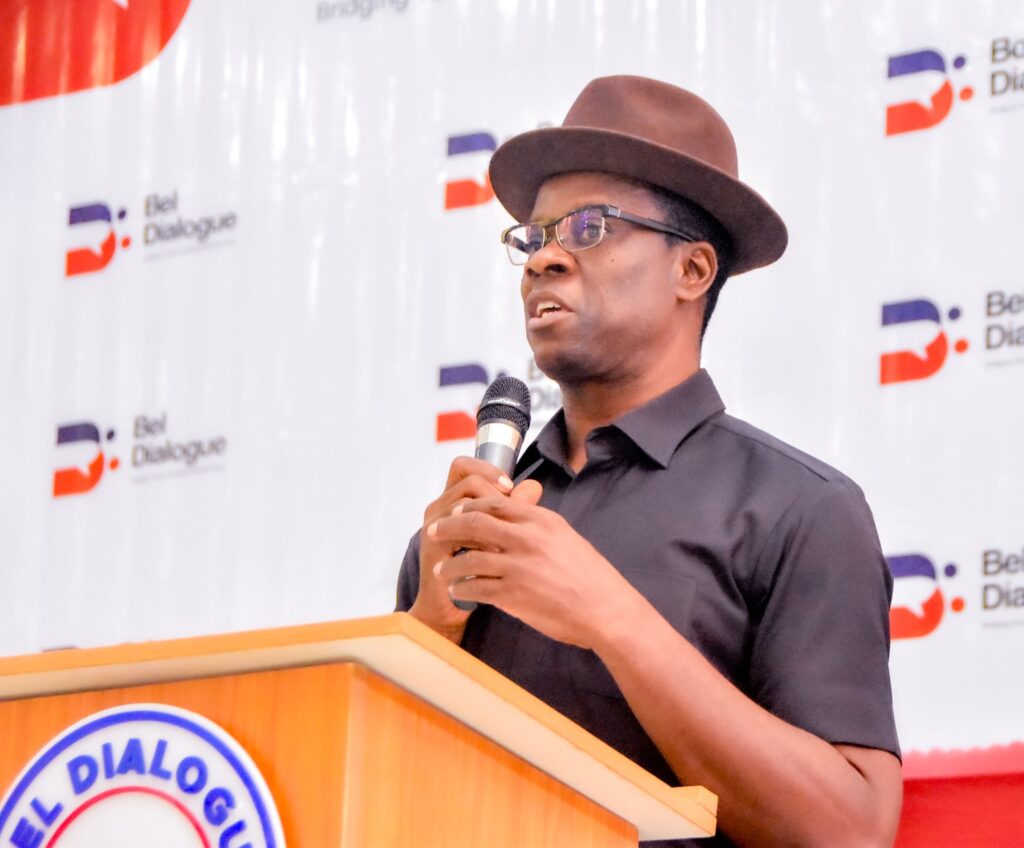
Speaking at the 2026 BEL Dialogue in Asaba, Igini said the 2027 general elections would be a defining test of the nation’s democratic future, warning that democracy cannot endure where institutions are weak, corruption thrives and citizens abandon the values that sustain good governance.

Addressing participants while delivering the Chairman’s address at the dialogue themed “Democracy That Works: Bridging the Gap Between Votes, Results and Institutional Accountability,” Igini insisted that democracy is measured not by the conduct of elections alone but by the strength of institutions that hold elected leaders accountable.
“The 2027 election is about the survival of our democracy,” he declared. “Nigerians cannot afford to sit back. Every citizen must participate and insist that the right thing is done.”
In a sweeping assessment of Nigeria’s democratic journey, the former electoral commissioner lamented what he described as the collapse of the country’s moral foundation, saying honesty, integrity and hard work had gradually given way to corruption, impunity and the celebration of those who undermine public institutions.
Noting that in Nigeria the value pyramid is upside down, he said: “No society can make progress outside the values it upholds. Today, our value system has been turned upside down. Those who destroy the system are often celebrated instead of being punished,” pointing out that the judiciary has now become “the lost hope of the common man.”
Igini recalled the sacrifices made by pro-democracy activists during the struggle against military rule, saying many risked imprisonment because they believed democracy would usher in transparency, constitutional governance and respect for the rule of law.
“We fought for democracy because there was no parliament, no institutional accountability and no freedom. Unfortunately, many of the institutions we fought to build have now been weakened,” he said.
He identified corruption as the greatest threat to public confidence in national institutions, including the legal profession and the judiciary, but maintained that many honest judges, lawyers and public servants still remained committed to national service. “The few bad people often dominate the system,” he observed.
Igini argued that while elections produce governments, only strong institutions can preserve democracy. “Democracy is not just about elections. Elections produce leaders, but accountability comes from strong institutions such as the legislature, the judiciary and other independent bodies. Without institutional accountability, democracy cannot survive,” he stressed.
The former INEC commissioner credited reforms introduced under former President Goodluck Jonathan for expanding the commission’s operational independence, saying constitutional amendments that empowered INEC to regulate its own operations strengthened the credibility of the 2011 elections and laid the groundwork for Nigeria’s first peaceful transfer of presidential power in 2015.
He also defended the introduction of technology into the electoral process, saying electronic accreditation and real-time transmission of polling unit results were designed to eliminate manipulation and make election outcomes more transparent.
“The idea was simple. Once results are declared at the polling unit, they should immediately be uploaded where every Nigerian can see them. That makes it difficult for anyone to alter results later,” he explained.
However, Igini accused political actors of systematically weakening electoral reforms for personal advantage. “Those who benefit from manipulating elections are the same people making the laws. They removed some of the safeguards that would have guaranteed greater transparency,” he alleged.
He also criticised Nigeria’s political culture, saying many political parties lacked ideological direction and had become platforms for personal ambition rather than public service.
Igini declared that Nigeria’s greatest challenge is not the absence of resources but the failure of leadership and the erosion of institutions that should enforce accountability.
Using Singapore as an example, he argued that sustainable development becomes possible only when merit, discipline and the rule of law are placed above personal interests.
Igini further expressed concern over what he described as the weakening of the judiciary, warning that democracy begins to unravel when courts lose public confidence or appear unwilling to defend the Constitution.
He also faulted prolonged delays in resolving election petitions, saying delayed justice undermines both democracy and citizens’ faith in the electoral process. “The burden of proof for election results must be on INEC and not the political party,” Igini said.
Ending on a note of cautious optimism, Igini urged Nigerians not to surrender to hopelessness but to unite in rebuilding democratic institutions capable of delivering justice, accountability and credible governance.
“Every society becomes better when its citizens decide to do what is right. Democracy is a continuous journey. We must strengthen our institutions, defend the rule of law and leave behind a country where future generations can proudly say we did what was right,” he said.
Facebook Comments

GIPHY App Key not set. Please check settings