

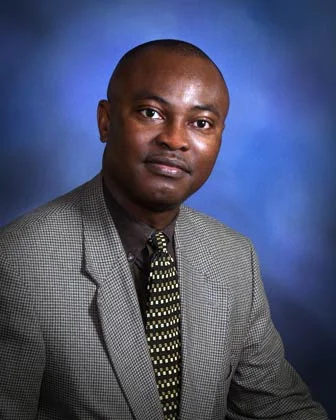
By Prof Beze Adogu
Beyond the ohs and ahs as long lost friends reunited after 43 years, and some shed tears as they parted again, University of Jos Alumni Association (Class of 1979 -1983) met in Abuja, recently, a Medical Doctor, Beze Adogu (MD, PhD, FACP, Clinical Professor of Medicine and Life Fellow, Cambridge Philosophical Society) gave an insightful and inspiring lecture titled “WHAT DOES JOS MEAN TO ME?”
That title was plagiarized from one of my favorite poems of the storied Harlem Renaissance, HERITAGE by Countee Cullen, a transcendent poet.
We are all in Abuja, FCT, to honor our common origins, our alma mater (the University of Jos, Nigeria), old friendships, new acquaintances, and our teachers, some of whom are now sadly departed.

Shame on me for not immediately recognizing my first-year roommate and good friend, Dr. Emmanuel Emeka Ossai, with whom I shared digs (together with the always entertaining but certifiably dipsomaniac James Yiltzung) at Nassarawa Gwom students’ hostel in our first year at Jos. We solemnly remembered our old friends now across the vail, this time not with as much sadness as with nostalgia: Jimmy Davies. Ephraim Dike. Abraham Babamidele Chibuzo Pinheiro (I kid you not: those were his true monikers). Sunny-James Ezuma. RTB Palomeras. James Yebe. Seneca Fynecountry. And our departed teachers, whose only consolation in a country that rarely remembers to reward talent and excellence, but has over the past decades perversely enthroned an overwhelming culture of crass mediocrity and insouciance, where that proverbial “ivory tower” has since been breached- and overrun- by the nonentity class, is the reverence of their students.
Once upon a time, there were intellectual stalwarts like Dr Chiweyite Ejike. Professor Uche Peter Isichei. Dr Brian Cowlishaw. Dr. C.O. Akueshi. Professor DBA Berry. Professor WTW Morgan. Mr. Sonny Oti. Professor Alfred Chikwe Ikeme. Professor WVW Weber. Professor SP Jain. Dr. David Drew. Each one of those men could hold a class of restless teenagers mesmerized for an hour or more with total ease, whilst performing on the lecture stage. Each could make the intricately complex seem surreally within easy reach. It was a gift, not a pretension. Then, in those halcyon days of innocence and hope, to be a teacher was to be blessed amongst men. These were men- and women- who gave their all. And if we are, even marginally, worthy of their collective sacrifice, it is our duty to honour those selfless pioneers without let or reservation.
I do not bring up the chasm of disparity between our teachers of our young adulthood and the teachers of today to disparage. Rather, it is to remind us of what we once were, when only our “best and brightest”, to purloin an Arthur Schlesinger aphorism, were handed the existential responsibility of shepherding the next generation. From them, we learnt what was expected of us, what our profession demanded of us, what was important, and perhaps just as important, how to separate signal from noise, the eternal from the ephemeral, the ennobling from the base. If we, who witnessed the very best of Nigeria were to demand for a return to those days, it surely will come. Those were the days of excellence and merit. Long before this Age of Discontent, where charlatans are at the fore, the marginal pretending possession of what they cannot have, and the laity bemused at the ensuing bedlam. If only we choose, if only we prioritize, if only we pay close attention, if only we ask the “hard” questions, if only we could believe the evidence of our own eyes, we could, within another generation, reverse the rot and ineptitude in our body politic.
Every major university anywhere in this world, is built upon a single currency: a perception of excellence. The founding of the eminence gris of public institutions, including Cambridge and Oxford, both of which I know pretty well, were plagued by uncertainty, politics, canonical inviolability, impecuniosity, and invariably, active hostility by their host “town” communities. Yet, they each survived, they thrived, and would continue to extend their reach and reputation into the behemoths we now universally acknowledge. In each and every case, the groundwork of reinvention and public acceptance was laid by the alumni. It will be no different for Jos. And in this, our alumni cohort, advantaged by chronological order and the direct appeal of the so-called “founder’s effect” stands to play the leading role.
Nobody, according to the great Roman orator, Seneca, ever loves his country because it is great, but because it is his (nemo patriam quia magna est amat). This is a sentiment that pervades nearly all my interactions with my country of birth Nigeria, but perhaps more specifically, my alma mater, the University of Jos. Jos, as the history buffs might recall, started life as a token counterweight to the massive spread of Ahmadu Bello University, Zaria, midwifed by the United Middle Belt Congress, as a campus of University of Ibadan. Then, Dr. E A Ayandele, a notable man of letters, was promptly dispatched from the “mother ship” to grant it some gravitas-by-association, and the campus was otherwise left to slowly wither on the vines. That was until 1975, when the Murtala Muhammed regime breathed new life into the moribund university ecosystem by inaugurating 4 full-fledged universities at Jos, Ilorin, Calabar and Maiduguri. University of Jos was headed by Professor Gilbert Onuaguluchi, a clinical pharmacologist and internist, who was fated to help immortalize the university despite local resistance from his designated “catchment zone”, a no-win kerfuffle that would come at the expense of his health, his family, and ultimately, his reputation. The first students- us- at that fledgling university arrived on campus, October 27, 1976. Fifty years on, it is still astounding to me how far we have come- and how far we could have come, given a little more imagination, insight and patience.
The first set of lawyers graduated 1980, with Mr Ubaka Iwobi, a soft-spoken, preternaturally shy gentleman winning top honors, a feat he would repeat at the Nigerian Law School. It was as if Jos was eager to announce her arrival in the great World of Ideas. Then came the ingénues of Theater Arts under Mr Sonny Oti, who had gathered- and fathered- an eclectic group of performers who were destined to individually- and collectively- shake the rafters of dance and theater across Nigeria. Medicine would come later, with its first graduates in 1982, and by 1987- five years later- those same graduates were attaining fellowships and consultancy positions in various disciplines. The “UniJosGeneration” had been born.
But life, all meaningful life, is only in small measure about what you did for you, but mostly concerns what you have done for all. It is here that the 1976-1980 Alumni Association stands to be of consequence. First tentatively initiated by the ever-restless Sir Amechi Onianwa, KSC- Don Meche to the initiated- it has brought together the “original” students of Jos under one roof. This time, it is not to drown the demands of school work and the like under the “vibes” of James Brown, Shalamar, Ray Parker Jr, Tina Turner, Cindy Lauper, and the like, but to support the growth and development of the university “that made us”, as Josites are wont to say. As he hands over the sash of office to Ambassador Ozo Nwobu, another distinguished Josite (once a Josite, always a Josite, as the indefatigable Olu Onyeabor often reminds me, thereby making the phrase “ex-Josite” an oxymoron), the Jos Alumni Association brings back old memories of bygone days, unending promise, and the rugged enthusiasm typically associated with the idealistic young, recent religious converts and mad men.
As difficult as it might appear at first blush, one must seek to untether the fortunes of Jos from those of a wider Nigeria: remember that despite the pillaging of Idi Amin in Uganda, Makarere thrived, the Sorbonne survived the hollowed-out appeasement of Vichy France, and University of Hamburg overcame the worst iniquities and excesses of Nazism. Despite the tragedy of Nigeria’s current political leadership, which one must concede long preceded Tinubu and would inevitably survive him, Jos retains the necessary ingredients for an intellectual renaissance. But my alma mater must do all that is possible to reject mediocrity- in high and low places, amongst students and faculty- to attain “higher ground”. Otherwise, all would be for naught. Man, in this case the University, cannot live by appearances (or blandishments) alone. Paraphrasing the immortal Dean Inge, any university that finds itself married to the spirit of this Age, will certainly- and deservedly- become a widow in the Next. The time to start preparing for a better Nigeria is now. The unprepared, without any core convictions or operational philosophy, would be like Lord Bowen’s metaphysician- a blind man in a dark room underground, desperately searching for a black hat which is not even there. It is a bleak future that Jos can decidedly avoid. I have seen the future, and it wears a blue Jos smile. As another eminent Josite, Olu Ariyibi, MD, would always say to me during any of our brief interludes of social anomie at Jos, “May this world of ours never end in our time”.
I’d say a fulsome Amen to that. May the Jos of tomorrow surpass the Jos of yesterday in all particulars and specifics.
For me, as a now aging alumnus, it was a rare privilege, granted only to the blessed, to once again have communion with old friends from the distant past. These are folks I last saw some 45-50 years ago. Of even more moment to me as a pilgrim, was the opportunity to honor some of the many men and women who taught me at Jos, and on whose sturdy shoulders I have been perched for the remainder of my life. Purely as a matter of convenience, I chose to publicly acknowledge four, and four alone, the men who have been most instrumental in guiding my career to its present:
1. Professor Uche Peter Isichei, my biochemistry teacher, and later my pathology professor, my greatest cheerleader and mentor, who insisted whilst I was still in medical school that only his own alma mater, Oxford University, would do for my future postgraduate medical education, and went out of his way to secure an admission for me there. He had to accept Cambridge, after I made what I believed to be a compelling disquisition on their respective merits. From him, I learnt to always seek my path of highest “comparative advantage. Nine years after first qualifying as a physician, four years following my election as FWACP in Internal Medicine, and 12 months after completing my PhD in biochemistry, he would honour me beyond all measure by offering me a full professorship in Medicine & Clinical Biochemistry in 1991, alas, undercut by the deafening siren-call of foreign travel to these United States. He treated me far better than any favourite son. His innate calmness and reserve doused my own tempestuous spirit in young adulthood. May his noble soul continue to find favour in Paradise. And may it please the Fates to grant me the glory of living up to his example and expectations.
2. Professor Ed Donkor Yeboah, was my Chief of Surgery in medical school and during my housemanship (intern) year, ever encouraging, always supportive, never flagging, who saw only the best of me and studiously ignored the worst of me, and who thought my better angels lay within the field of surgery.
3. Dr. Amobi Ogbukagu, practical, practiced, sincere, and unapologetic, who patiently taught me the ins and outs of Obstetrics & Gynecology, delivered with a distinct Germanic flavor, my daguerreotype of what an all-round accomplished medical lecturer should be. And finally,
4. Dr. Nwachukwu Abiodun Azikiwe, who wore both his genius and birthright with astounding humility, and was quite easily the most brilliant internal medicine physician I ever knew. His example convinced this acolyte to ultimately “Go West, young man, Go West”.
Therefore, on this day, I will endow on behalf of our alumni association, a yearly prize in their names under their respective medical disciplines, at N250,000:00 per recipient each year for the next 10 years in the first instance. I hereby donate the sum of N10 million naira to achieve that specific goal, and remind us all that once upon a time, only the very best were permitted to teach the upcoming generation.
Jos yesterday, Jos today, Jos tomorrow, Jos for evermore! My dear fellow alumni, here I am: send me.
Facebook Comments

GIPHY App Key not set. Please check settings