

…Says N3tn funding gap, powerful import cartel stalled Nigeria’s industrial giant

By banneronlinenews Correspondent
After 47 years of failed promises, abandoned contracts and billions of naira sunk into a project that has yet to produce commercial steel, Nigeria’s long-delayed Ajaokuta Steel Complex may finally be approaching another defining moment.
But the Federal Government has now made a startling admission: beyond decades of poor funding and weak political will, a powerful cabal allegedly benefiting from Nigeria’s dependence on imported steel has been fighting to keep the country’s steel industry from taking off.
The Minister of Steel Development, Mr. Shuabu Abubakar Audu, said vested interests making fortunes from Nigeria’s multi-billion-dollar steel import business were working “tooth and nail” to frustrate efforts to revive the country’s domestic steel industry.
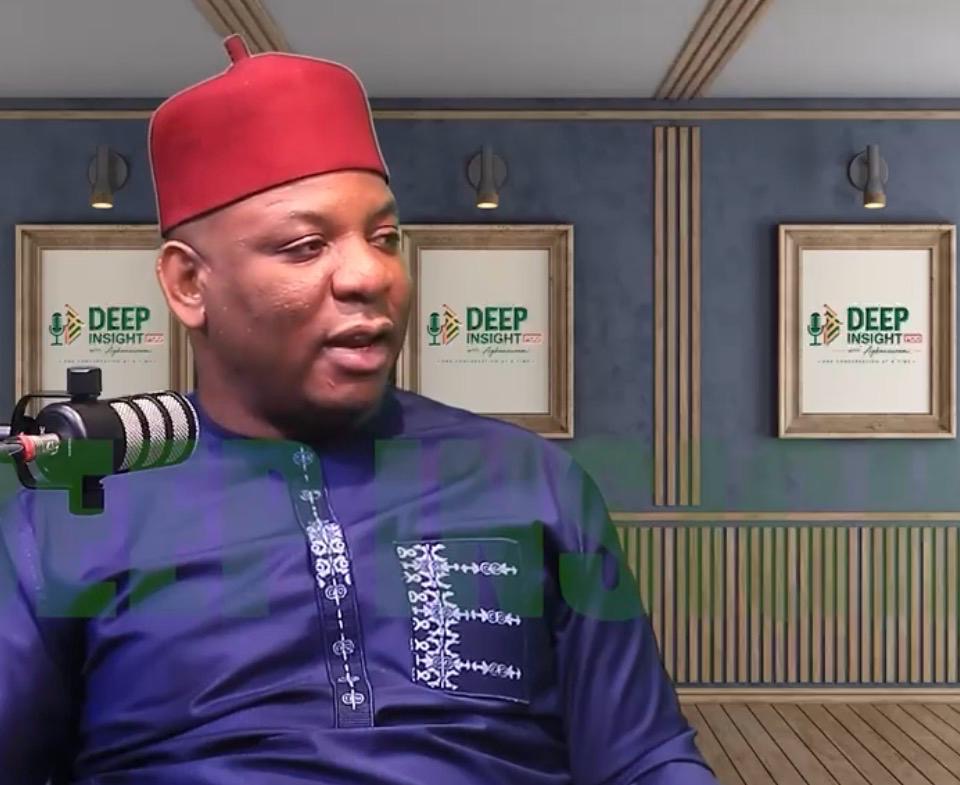
Audu, who spoke during a podcast interview on Deep Insight With Agbonsuremi, anchored by veteran journalist and broadcaster, Augustine Okhiria Agbonsuremi, said the Federal Government was now hopeful of sealing a major agreement with Chinese investors to revive and complete the moribund steel complex.
The minister said the Chinese investor was considering an investment of between $1.5 billion and $2 billion to bring the long-abandoned Ajaokuta Steel Complex in Kogi State back to life.
According to him, the investment would come through a combination of cash and equipment, under a proposed production-sharing arrangement that would allow the investor to recover its investment before ownership of the facility eventually reverts fully to the Federal Government.
N3 Trillion Gap, N500 Million Budget
Audu said one of the greatest obstacles confronting the revival of Ajaokuta was the enormous financial requirement needed to restore the complex to full operational capacity.
He disclosed that about N3 trillion would be required to revive the steel plant, making it difficult for the government to depend solely on public funding.
The minister noted that the project received only N500 million in the 2025 budget, with a mere N50 million allocated for capital expenditure.
According to him, the huge disparity between what Ajaokuta requires and what successive governments have committed to it explains why the project has remained in limbo for decades.
For nearly half a century, Ajaokuta has symbolised Nigeria’s unfulfilled industrial ambition.
Conceived in the 1970s as the foundation for Nigeria’s industrialisation and steel self-sufficiency, the complex was expected to power manufacturing, infrastructure development and economic growth.
Instead, it became trapped in decades of neglect, abandoned contracts, legal disputes, policy inconsistencies and allegations of sabotage and asset stripping.
While estimates of the project’s completion level have varied over the years, Audu said an ongoing technical and financial audit would determine the exact current condition of the complex.
He, however, estimated that about 70 per cent of the existing facilities remained useful, while the remaining 30 per cent would require major upgrading.
‘Import Beneficiaries Will Fight Tooth and Nail’
The minister was particularly blunt about the powerful interests allegedly benefiting from Nigeria’s continued dependence on imported steel.
Nigeria currently imports an estimated $4 billion worth of iron and steel annually.
Audu warned that those benefiting from the massive import business were unlikely to welcome the emergence of a strong local steel industry.
“The people that are benefiting from imports of $4bn in terms of iron and steel annually would fight tooth and nail to prevent the local industry from kick-starting,” he said.
He alleged that such interests had continued to make efforts to frustrate government initiatives in the steel sector, including attempts to block policy and legislative reforms considered necessary for the development of the industry.
According to the minister, the combination of vested interests, inadequate funding and years of inconsistent political commitment had dealt devastating blows to Nigeria’s steel dream.
FG Turns to China After Russia Talks Stall
Audu said the Federal Government initially explored the possibility of working with Russian equipment manufacturers because of Russia’s historical connection with the development of the Ajaokuta complex.
However, he said the Russia-Ukraine war forced the government to shift its attention towards China.
He expressed optimism that a partnership with Chinese investors and technical partners could provide the funding, technology and expertise required to finally complete the project.
The minister said the government was hopeful that negotiations could be concluded this year, paving the way for the complex to commence commercial production by 2028.
He also disclosed that the Federal Government had taken additional steps to make Ajaokuta more attractive to investors.
According to him, the government has signed a 20-year gas supply agreement with the Nigerian National Petroleum Company Limited to guarantee energy supply to the complex.
In another major development, Audu said the Ministry of Steel Development had entered into an agreement with the Ministry of Defence and the Defence Industries Corporation of Nigeria to utilise part of the Ajaokuta complex for the production of military hardware.
The proposed facilities are expected to produce items including helmets, bulletproof vests and ammunition.
Ajaokuta, Delta Steel and One Million Jobs
Audu said the revival of Ajaokuta and other major steel facilities could transform Nigeria’s economy.
According to him, a fully functional steel sector could contribute as much as $100 billion to the Nigerian economy.
He said the revival of Ajaokuta, Delta Steel and other steel facilities could generate between 500,000 and one million jobs.
Nigeria, he added, possesses an estimated three billion metric tonnes of iron ore deposits in Kogi State, providing a strong foundation for the development of a globally competitive domestic steel industry.
The minister identified three major outcomes Nigerians should expect from the Ministry of Steel Development: the signing of an agreement for the revival of Ajaokuta, the resuscitation of Delta Steel, and the implementation of a 10-year blueprint for the development of Nigeria’s wider steel industry.
“Absolutely, I believe I can do it. And I believe that I will do it,” Audu said.
Tinubu’s Second Term and the $1 Trillion Economy
The minister also linked the long-term success of the steel revival programme to policy continuity under the administration of President Bola Tinubu.
Audu argued that the President would require a second term to consolidate ongoing reforms and achieve the administration’s target of building a $1 trillion economy by 2030.
“We are hoping, praying, that the President gets a second term so that we can have a 2030 $1tn economy,” he said.
He urged Nigerians to support Tinubu’s re-election, arguing that continuity would be critical to completing major industrial projects, including Ajaokuta.
For a project that has survived 47 years of political promises and repeated revival plans, however, the latest assurances will inevitably be greeted with cautious optimism.
The proposed Chinese investment could represent the biggest opportunity in years to finally awaken Nigeria’s sleeping industrial giant.
But after nearly five decades of disappointment, the question remains whether Ajaokuta is truly on the verge of producing steel—or whether Nigeria’s most enduring industrial dream is once again being offered another promise.
Facebook Comments

GIPHY App Key not set. Please check settings