

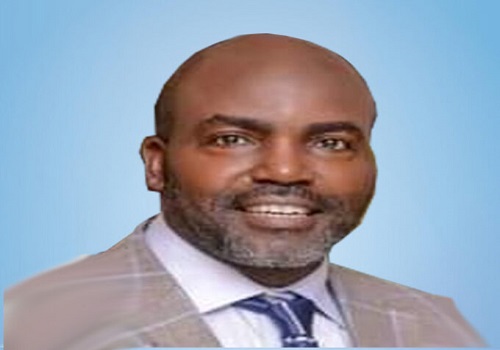
— NDC candidate dismisses ‘sole candidate’ endorsement, demands evidence of jobs, industries and economic transformation
By Our Correspondent
Deacon Chris Iyovwaye, governorship candidate of the Nigeria Democratic Congress (NDC) in the 2027 Delta State election, has challenged Governor Sheriff Oborevwori to account for the huge public revenues accruing to the state, asking what measurable economic transformation Deltans are getting in return for the trillions of naira managed by his administration.
Iyovwaye said the central issue ahead of the 2027 election should not be the endorsement of Oborevwori as the “sole candidate” of the Urhobo Nation by the Ukoko R’Ivie R’Urhobo, but whether the incumbent administration can demonstrate what it has achieved with the enormous resources available to the state.
In a statement dated September 12, 2026, the NDC candidate said Deltans had a right to ask not simply how much money the state receives, but what has been achieved with it.
His challenge followed the communiqué by the forum of Urhobo traditional rulers expressing support for Oborevwori ahead of the 2027 governorship election.
While paying respect to the traditional rulers, Iyovwaye insisted that their endorsement could not replace the constitutional authority of the electorate.
“Under the 1999 Constitution of the Federal Republic of Nigeria, the electorate alone has the authority to elect the Governor of Delta State through the ballot box,” he said.
But he quickly shifted the debate from the endorsement itself to the financial and developmental record of the incumbent administration.
According to Iyovwaye, the Delta State Government’s 2026 budget proposal projected total expenditure of ₦1.664 trillion, comprising, among other revenue sources, ₦720 billion in statutory allocation, ₦250 billion in internally generated revenue and ₦120 billion in VAT.
He also pointed to increased inflows through the Federation Account Allocation Committee (FAAC) following the removal of the petroleum subsidy.
Against this backdrop, he asked what he described as the more important question:
“What measurable economic transformation are Deltans receiving in return for these substantial resources?”
Iyovwaye challenged the Governor to show Deltans the concrete benefits of the money flowing into the state.
“Are we endorsing the number of sustainable jobs created for our unemployed youth?” he asked.
“The industries established? The businesses enabled to grow? Reliable power and infrastructure for small businesses? A stronger healthcare system? Better educational opportunities? Or a credible strategy to diversify our economy beyond dependence on oil revenues?”
‘Where are the measurable benefits?’
The NDC candidate also brought Oborevwori’s political alignment with the ruling APC into the accountability debate.
He noted that the Governor had justified his movement into the APC partly on the grounds that alignment with the Federal Government would enhance Delta’s access to resources and improve governance outcomes.
Iyovwaye said that justification placed an even greater responsibility on the administration to demonstrate measurable results.
“If alignment with the Federal Government is presented as an advantage, then the people are entitled to ask: Where are the measurable benefits?” he queried.
He said Deltans should be able to see the benefits of such alignment in their communities, businesses, farms, schools, hospitals and household incomes.
“Political alignment is not development. Budgets are not development. Contracts are not development,” Iyovwaye declared.
“Development is measured by the extent to which government improves the lives and economic prospects of its people.”
He argued that the state could not continue to measure progress principally by the size of its budgets or the number of projects announced or executed.
Rather, he said, the ultimate test should be whether government expenditure produces jobs, strengthens businesses, improves public services and expands the productive capacity of the state.
‘Expenditure is not transformation’
Although he acknowledged the present administration’s reported investments in roads, bridges and other infrastructure, Iyovwaye warned against equating expenditure with development.
“Those projects should be acknowledged where they serve the people,” he said.
“But expenditure is not the same thing as transformation.”
He demanded answers to a series of questions which he said should form part of the 2027 electoral debate.
How many sustainable private-sector jobs have been created?
How many new industries are operating and employing Deltans?
How many young people who might otherwise leave Delta for Lagos, Abuja or overseas now have viable opportunities at home?
What measurable improvement has occurred in the business environment?
What has been done to provide reliable infrastructure for businesses?
What measurable progress has been recorded in healthcare and education?
And, most importantly, how much stronger is Delta’s productive economy today compared with the period before the state began receiving substantially higher public revenues?
“These are not partisan questions,” Iyovwaye said. “They are questions every responsible government should be prepared to answer.”
‘People, not communiqué, will decide’
The NDC candidate also rejected the notion that the Urhobo traditional rulers’ endorsement could determine the outcome of the 2027 election.
As an Urhobo man, he said he understood the importance of unity and respected the traditional institution, but stressed that Delta State belonged to all its constituent peoples.
“The governorship is a sacred trust sought from all Deltans, not a title conferred by an ethnic consensus,” he said.
Iyovwaye said he would formally request an audience with the Ukoko R’Ivie R’Urhobo to present his vision, adding that traditional rulers deserved to hear directly from every serious contender.
He equally insisted that he would continue his campaign across the state.
The NDC candidate concluded with an unambiguous declaration:
“I will not step down.”
He said the 2027 election should become a referendum on performance, accountability, competence and vision rather than merely on endorsements and political arrangements.
“When Deltans step into the polling booth in 2027, it will not be a communiqué that marks their ballots,” he said.
“It will be their own judgement of character, competence, record and vision.”
“I respect our royal fathers. I respect Governor Oborevwori’s right to run. And above all, I respect the sacred right of every Deltan to choose.”
Find below full text of Deacon Chris Iyovwaye’s statement
Deacon Chris Iyovwaye,
NDC Governorship Candidate
12 September 2026
I have read the communiqué issued by the Ukoko R’Ivie R’Urhobo, in which our revered forum of Urhobo traditional rulers expressed support for the incumbent Governor, Rt. Hon. Sheriff Oborevwori, as the “sole candidate” of the Urhobo Nation for the 2027 governorship election.
I hold our royal fathers and the exalted institutions they represent in the highest esteem. They are sacred custodians of our history, culture, customs and communal values.
With that deep respect, we must clearly distinguish between traditional counsel and constitutional authority.
Our royal fathers have every right to express their views and give guidance where necessary. However, under the 1999 Constitution of the Federal Republic of Nigeria, the electorate alone has the authority to elect the Governor of Delta State through the ballot box. An endorsement, no matter how dignified its source, cannot supersede or extinguish Deltans’ democratic right to choose their leaders.
As an Urhobo man, I deeply understand the value of unity. But Delta State belongs to all of us — Urhobo, Ijaw, Itsekiri, Isoko, Anioma, and every community that calls this state home.
The governorship is a sacred trust sought from all Deltans, not a title conferred by an ethnic consensus.
Before any endorsement is treated as a final political verdict, Deltans deserve to ask a fundamental question:
What exactly is being endorsed?
Are we endorsing the number of sustainable jobs created for our unemployed youth?
The industries established?
The businesses enabled to grow?
Reliable power and infrastructure for small businesses?
A stronger healthcare system?
Better educational opportunities?
Or a credible strategy to diversify our economy beyond dependence on oil revenues?
The argument that Delta State lacks resources can no longer be accepted as a sufficient explanation for the challenges confronting our people.
The State Government’s 2026 budget proposal projected total expenditure of ₦1.664 trillion, including ₦720 billion from statutory allocation, ₦250 billion from internally generated revenue and ₦120 billion from VAT. The Government also acknowledged increased inflows through FAAC following the removal of the petroleum subsidy.
Accordingly, the central question should no longer simply be:
“How much revenue does Delta State receive?”
The more important question is:
“What measurable economic transformation are Deltans receiving in return for these substantial resources?”
And this question must be addressed at both the state and federal levels.
The All Progressives Congress is currently the ruling party in Nigeria, while Governor Sheriff Oborevwori has chosen to align Delta State politically with the APC. The Governor has publicly said that his decision to join the APC was driven by the need to align Delta with the Federal Government and that the alignment has enhanced access to resources and improved governance outcomes. He has also described President Bola Ahmed Tinubu’s re-election as his “number one political project.”
That political alignment therefore creates an even greater obligation to demonstrate tangible results.
Deltans should not be asked to celebrate political alignment when what they require is meaningful economic transformation.
If alignment with the Federal Government is presented as an advantage, then the people are entitled to ask: Where are the measurable benefits?
The APC-led government must be assessed by the outcomes its policies have produced for ordinary Nigerians. Similarly, the Delta State Government must be evaluated on how effectively it has deployed the resources available to it.
The APC cannot seek another mandate from Deltans on the basis of promises alone. It must account for its results.
Where those results have fallen short of the expectations of our people, we must have the courage to say so:
The APC has not delivered the transformation Deltans deserve.
This is not a matter of political bitterness. It is a matter of accountability.
If an administration has access to greater resources, it should create greater opportunities.
If government revenue increases, businesses should experience tangible benefits.
If billions are invested in infrastructure, the productive economy should become stronger.
If political alignment with the Federal Government is presented as an advantage, Deltans should be able to see its benefits in their communities, businesses, farms, schools, hospitals and household incomes.
Political alignment is not development.
Budgets are not development.
Contracts are not development.
Development is measured by the extent to which government improves the lives and economic prospects of its people.
The present administration has reported major investments in roads, bridges and other infrastructure and has identified infrastructure expansion, human-capital development and economic growth among its priorities.
Those projects should be acknowledged where they serve the people.
But expenditure is not the same thing as transformation.
A government can spend billions of naira and still leave fundamental questions unanswered.
How many sustainable private-sector jobs have been created?
How many new industries are operating and employing Deltans?
How many young people who would otherwise leave Delta for Lagos, Abuja or overseas now have viable opportunities at home?
What measurable improvement has occurred in the business environment?
What is being done to provide the reliable infrastructure that allows businesses to survive and expand?
What measurable progress has been made in healthcare and education?
And, perhaps most importantly:
How much stronger is the productive economy of Delta State today than it was before these enormous public resources became available?
These are not partisan questions.
They are questions every responsible government should be prepared to answer.
Delta does not merely need larger budgets.
Delta needs budgets that create greater opportunities.
Delta does not merely need projects.
Delta needs projects that generate lasting economic value.
Delta does not merely need government expenditure.
Delta needs measurable returns on public expenditure that improve the lives of its people.
That is the standard to which every government should be held.
And that is why the 2027 election should be a referendum not merely on endorsements, personalities or political arrangements, but on performance, accountability, competence and vision.
That is the conversation I am bringing to Deltans under the platform of the Nigeria Democratic Congress (NDC).
I seek no confrontation with our traditional institutions. As a dutiful son of Urhobo land, I will officially request an audience with the Ukoko R’Ivie R’Urhobo to present my vision directly and respectfully, just as I am presenting it to everyday citizens across all 25 Local Government Areas.
I believe our traditional rulers deserve to hear directly from every serious contender for the leadership of Delta State, just as Deltans deserve to hear and compare the visions of those seeking their mandate.
Performance must be the standard.
Development must be the measure.
Accountability must be non-negotiable.
And the people must remain the final judge.
When Deltans step into the polling booth in 2027, it will not be a communiqué that marks their ballots.
It will be their own judgement of character, competence, record and vision.
I respect our royal fathers.
I respect Governor Oborevwori’s right to run.
And above all, I respect the sacred right of every Deltan to choose.
I will continue to campaign peacefully, constructively and firmly.
I will not step down.
Deacon Chris Iyovwaye
NDC Governorship Candidate, Delta State (2027)
Facebook Comments

GIPHY App Key not set. Please check settings