

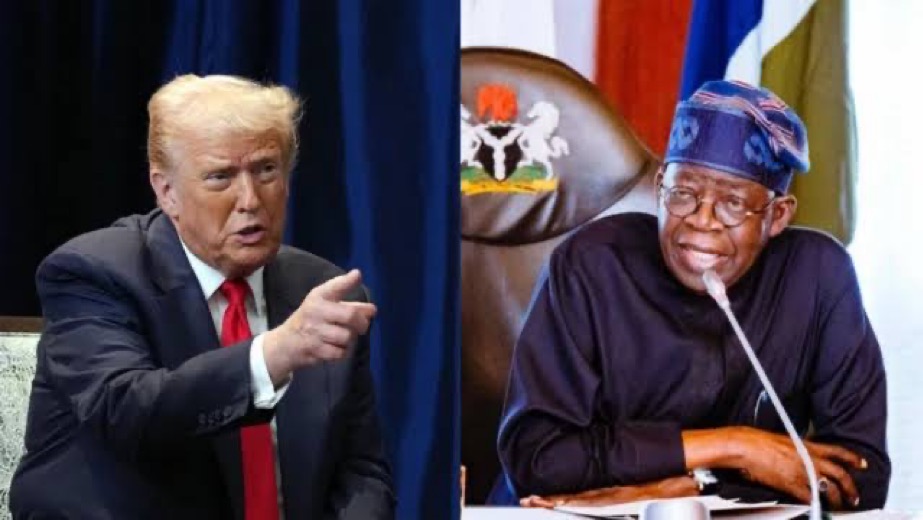
US State Department says regulatory uncertainty and business risks could deter American investors despite signs of economic stabilisation
The administration of United States President Donald Trump has raised concerns over Nigeria’s investment climate, identifying insecurity, corruption, inefficient seaports and regulatory uncertainty as major obstacles that could discourage American businesses from investing in the country.
The concerns were contained in the US Department of State’s 2026 Investment Climate Statements on Nigeria, which assessed the impact of the Federal Government’s economic reforms and highlighted persistent risks confronting foreign investors.

The report acknowledged signs of macroeconomic stabilisation following the implementation of major economic reforms by President Bola Tinubu’s administration but warned that structural and institutional challenges continued to undermine Nigeria’s attractiveness as an investment destination.
It described the reforms, which included the removal of petrol subsidies and liberalisation of the foreign exchange market, as “painful but necessary,” noting that the measures initially triggered significant economic volatility.
Although indicators in early 2026 suggested some stabilisation, the department cautioned that improvements in macroeconomic conditions had not eliminated the underlying obstacles to doing business in Nigeria.
Insecurity emerged as one of the major concerns identified in the assessment.
The report noted that attacks on oil infrastructure in the Niger Delta had declined but stressed that oil theft and illegal bunkering remained persistent problems, threatening the stability of the country’s petroleum industry.
It also highlighted the activities of terrorist groups and armed gangs in northern Nigeria, warning that insecurity continued to affect commercial activities, particularly in the agribusiness and mining sectors.
The security challenges, the report indicated, could increase operational costs, disrupt supply chains and expose businesses to risks that undermine investment decisions.
US raises concerns over detention of foreign executives
The State Department also expressed concern over the treatment of foreign business executives during regulatory disputes, warning that coercive measures could damage investor confidence.
It cited the nearly eight-month detention in Nigeria in 2024 of Tigran Gambaryan, an American citizen and Binance executive, as an example of the risks foreign executives could encounter when commercial disagreements escalate into regulatory confrontations.
“Furthermore, the use of coercive exit bans and detentions, highlighted by the high-profile nearly eight-month detention in 2024 of U.S. citizen Binance employee Tigran Gambaryan, serves as a cautionary note for foreign executives regarding the risks of aggressive regulatory friction,” the report stated.
The assessment suggested that such incidents could discourage foreign executives from entering Nigeria or expose companies to additional risks when navigating regulatory disputes.
Inefficient ports increase business costs
Nigeria’s seaport operations also came under scrutiny, with the US department identifying inefficiencies in cargo clearance and administrative procedures as significant impediments to trade and investment.
According to the report, delays in clearing imported raw materials, machinery, equipment and other essential goods could increase operating expenses, disrupt production schedules and weaken the competitiveness of businesses operating in Nigeria.
The department described port inefficiency as a hidden cost for investors, particularly companies dependent on imported inputs to sustain their operations.
However, it acknowledged improvements in port infrastructure, citing the performance of the Lekki Deep Seaport as a notable development.
The facility reportedly handled $9.6 billion in trade in 2025 while operating at about 50 per cent capacity, helping to ease pressure on older port facilities.
Despite this progress, the report indicated that broader infrastructure deficiencies and administrative bottlenecks continued to constrain the country’s trade and investment environment.
Corruption, regulatory uncertainty remain concerns
Beyond security and port operations, the assessment identified corruption, regulatory uncertainty and inefficient public services as continuing challenges for foreign businesses.
These concerns raise questions about the predictability of Nigeria’s business environment, particularly for investors who require transparent procedures, consistent regulations and effective institutions to protect their investments.
For American companies weighing opportunities in Africa’s largest economy, the report suggested that macroeconomic improvements alone might not be sufficient to overcome the risks associated with operating in Nigeria.
Investors must also contend with the practical realities of security, logistics, regulatory compliance and the reliability of public institutions.
The assessment therefore placed renewed emphasis on the need to address the institutional and operational challenges that continue to affect the cost of doing business in the country.
Reforms yet to eliminate investment risks
The report adds to the scrutiny of the Tinubu administration’s economic reform programme, which has sought to address longstanding distortions in the economy through the removal of petrol subsidies and changes to the foreign exchange market.
While the US Department of State acknowledged signs of economic stabilisation following the reforms, it warned that persistent security threats, corruption, regulatory uncertainty and inefficient public services remained important considerations for American businesses.
The assessment underscores the distinction between stabilising macroeconomic indicators and creating a business environment capable of attracting and retaining long-term investment.
For Nigeria, the challenge is not only to sustain economic reforms but also to strengthen security, improve port efficiency, ensure predictable regulatory processes and tackle corruption.
The report’s central concern is that, without progress in these areas, Nigeria could struggle to translate economic stabilisation into stronger investor confidence and expanded business opportunities.
• Source: Parallel Facts (parallelfactsnews.com), citing the US Department of State’s 2026 Investment Climate Statements on Nigeria.
Facebook Comments

GIPHY App Key not set. Please check settings