


By Pius Mordi
Democracy thrives on competition, tolerance, freedom of expression and the willingness of those in power to accommodate dissenting voices. It is built on the understanding that political power is not a personal inheritance, nor is government authority a licence to intimidate, suppress or eliminate opposing views. Unfortunately, the growing tendency among some state governors to deploy the instruments of state power against opposition parties raises serious concerns about the health of our democracy. What should ordinarily be a contest of ideas, policies and leadership alternatives is increasingly being reduced to a struggle for political survival, with those in government seemingly determined to make opposition politics difficult, expensive and, in some instances, dangerous.
The conduct of some governors suggests an alarming misunderstanding of their constitutional responsibilities. Rather than seeing themselves as custodians of the democratic space for all citizens, regardless of political affiliation, they appear to regard the state as an extension of their political parties. This attitude is dangerous because the state belongs to everyone, not merely those who occupy government offices. A governor is elected to serve the entire population, including critics, political opponents and members of rival political parties.
One particularly disturbing manifestation of this overreach is the imposition of outrageous fees on opposition parties seeking to advertise their candidates and political messages on billboards. While governments and relevant regulatory authorities have legitimate responsibilities to regulate outdoor advertising, ensure public safety and collect reasonable statutory charges, such regulations must not become instruments of political persecution. When billboard fees are deliberately inflated to discourage opposition parties from communicating with voters, the exercise ceases to be ordinary regulation and becomes an abuse of public authority.
It is difficult to justify a situation where political parties with limited financial resources are confronted with prohibitive advertising charges simply because they are not aligned with the ruling party. Such practices create an uneven playing field and undermine the principle that every political party should have a fair opportunity to present its programmes and candidates to the electorate. Political advertising should be regulated by transparent, consistent and reasonable standards, not manipulated to favour those in power.
Equally troubling is the reported denial of public venues to opposition parties for political rallies, meetings and campaign activities. Public facilities are established and maintained with taxpayers’ money. They should not become the exclusive property of the ruling party or be treated as political assets reserved for those who control the government. Where an opposition party satisfies the applicable requirements for using a public facility, there should be no justification for denying it access on account of its political identity.
The right to peaceful assembly and association is constitutionally protected. Governors and their administrations must understand that allowing opposition parties to hold rallies is not an act of generosity or political favour. It is an obligation that flows from the democratic and constitutional order. Denying opposition parties access to public spaces while making such facilities readily available to the ruling party exposes the hypocrisy of preaching democracy while practising political exclusion.
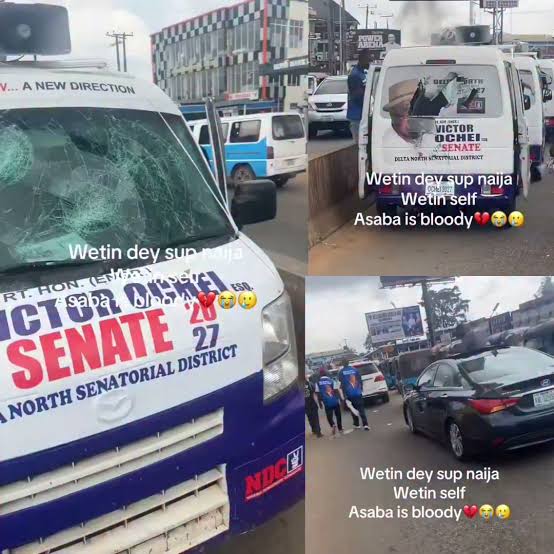
Even more alarming are reports of physical attacks on opposition politicians, supporters and party members during political activities. This is perhaps the most dangerous dimension of the growing intolerance within our political environment. No disagreement over political ideology, party affiliation or electoral ambition should ever justify violence. Political opponents are not enemies of the state, and they must never be treated as such.
The use of thugs, intimidation and physical violence to disrupt opposition activities represents a direct assault on democracy. It creates an atmosphere of fear in which citizens may become reluctant to participate in political activities or openly express support for candidates of their choice. More disturbing is the danger of political violence escalating into wider communal tensions, especially when perpetrators enjoy protection, encouragement or tacit approval from powerful political actors.
Governors must be reminded that they bear a special responsibility for maintaining law and order within their states. They cannot claim to be champions of peace while political opponents are attacked and their activities disrupted. Security agencies must remain professional, impartial and committed to protecting all citizens, irrespective of their political affiliations. Any governor who uses the influence of office to encourage, tolerate or shield political violence undermines the very institution he or she is constitutionally entrusted to protect.
The cumulative effect of these actions is the gradual shrinking of democratic space. When opposition parties are financially suffocated through outrageous fees, denied access to public venues, prevented from advertising their candidates and exposed to physical attacks, the result is an electoral environment in which the ruling party enjoys an unfair and potentially overwhelming advantage. Elections under such circumstances risk becoming exercises in political dominance rather than genuine contests of popular choice.
It is important to stress that democracy is not measured merely by the frequency with which elections are conducted. It is measured by the fairness of the process, the freedom available to competing political parties and the extent to which citizens can make informed choices without intimidation or coercion. An election in which the opposition is systematically weakened before voters even get to the polling stations cannot fully reflect the democratic aspirations of the people.
The responsibility for addressing this troubling situation does not rest with opposition parties alone. The Independent National Electoral Commission (INEC), the judiciary, the police, civil society organisations, the media and other democratic institutions must demonstrate greater vigilance. Regulatory agencies must ensure that billboard charges are reasonable, transparent and uniformly applied. Public facilities must be made accessible to all political parties under equal conditions. Allegations of political intimidation and violence must be investigated promptly, and perpetrators must face the full consequences of the law.
Governors who are genuinely confident in their leadership should have nothing to fear from opposition parties. Their achievements, policies and vision for development should speak for them. They should welcome scrutiny, encourage robust political debate and allow voters to compare competing alternatives. Democracy is not weakened by a strong opposition; it is strengthened by one.
Ultimately, the greatest test of democratic leadership is not how effectively those in power silence their critics, but how generously they protect the rights of those who disagree with them. Political offices are temporary, but the institutions and democratic values we build must endure.
Governors must therefore resist the temptation to turn public office into an instrument of political domination. They must understand that their mandate does not confer ownership of the state or the right to determine which political parties deserve to exist and operate freely. The opposition has a legitimate place in our democracy, just as the ruling party does.
The time has come to draw a clear line against political intolerance, administrative high-handedness and the abuse of state power. Nigeria cannot build a credible democracy on the foundation of intimidation, exclusion and fear. A democracy that protects only the ruling party is no democracy at all. The political space must remain open, competitive and accessible to all, because the ultimate owners of democracy are not governors or political parties, but the people.
Facebook Comments

GIPHY App Key not set. Please check settings