

Remi Tinubu applauds Delta governor, credits Tinubu’s reforms for infrastructure boom
Governor Sheriff Oborevwori of Delta State has completed the long-awaited 20.95-kilometre Trans-Warri Road project, including 15 bridges and connecting spurs, bringing to reality an infrastructure dream that had remained unfulfilled for nearly two decades.

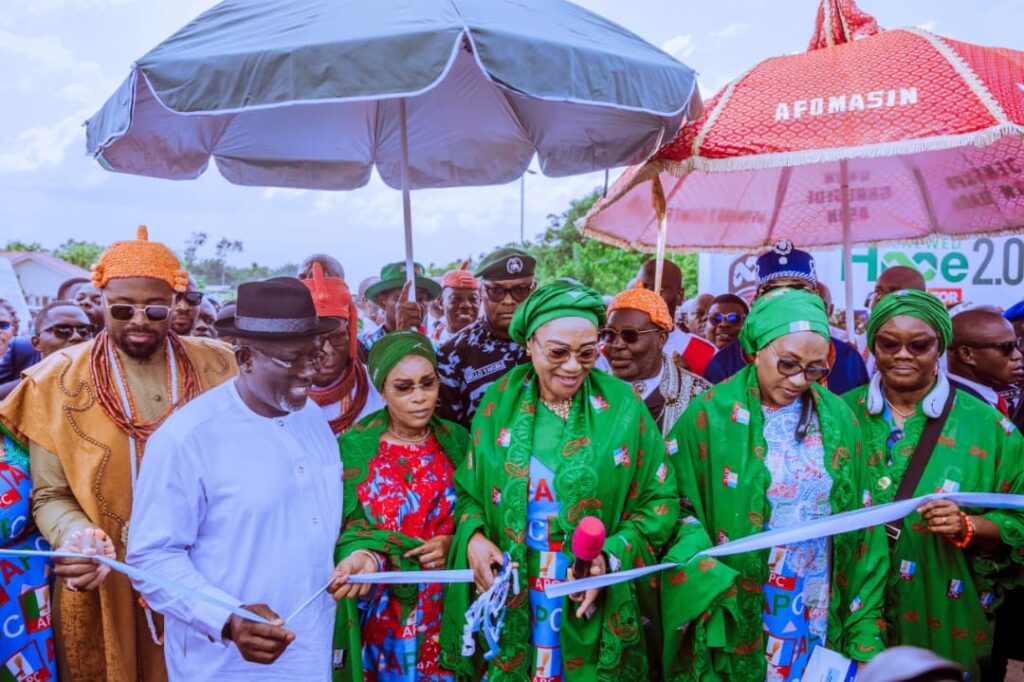
The project, inaugurated on Friday by Nigeria’s First Lady, Senator Oluremi Tinubu, is expected to open up 10 riverine communities, improve connectivity and stimulate economic activities across the Warri axis.
Speaking at the inauguration ceremony in Warri, Mrs Tinubu commended Oborevwori for completing the project, which she described as a significant intervention in the development of the area.
She attributed the increasing pace of infrastructure development across the country to the economic reforms of President Bola Tinubu, particularly the removal of fuel subsidy, which she said had increased the financial resources available to state governments.
According to her, the additional resources were enabling states to embark on major infrastructure projects, rehabilitate roads and meet their financial obligations, including the payment of workers’ salaries.
The First Lady said the Trans-Warri Road was evidence of the importance of continuity in governance, urging Nigerians to support leaders who had demonstrated commitment to delivering development.
“When someone is performing, the best way to support him is to give him a second term,” she declared.
She particularly praised Oborevwori for completing the project, which had remained on the drawing board for almost 20 years.
In his address, Governor Oborevwori described the Trans-Warri Road and bridges as the fulfilment of a dream that had eluded the people of the area for nearly two decades.
He traced the history of the project to 2006, when it was awarded under the administration of former Governor James Ibori, explaining that subsequent administrations, including those of Dr Emmanuel Uduaghan and Senator Ifeanyi Okowa, made efforts towards its execution.
Oborevwori, however, said his administration assumed the responsibility of completing the project by providing the necessary financial resources and addressing outstanding contractual obligations.
He explained that the 20.95-kilometre road, with its 15 bridges and connecting spurs, would provide access to 10 riverine communities, many of which had endured years of infrastructural neglect and transportation difficulties.
The governor said the successful completion of the project underscored his administration’s determination to complete inherited projects while simultaneously embarking on new ones.
He stressed that rural and riverine infrastructure remained a major priority of his administration because of its importance to economic development, food production and the welfare of rural communities.
According to him, connecting farming communities to markets, facilitating the movement of people and goods, attracting investments and promoting economic integration informed his administration’s commitment to rural road development.
Oborevwori also acknowledged the positive impact of President Tinubu’s economic reforms, noting that the increased resources available to state governments had enhanced their capacity to execute major development projects.
Earlier, Chairman of Warri South Local Government Council, Hon. Isaac Agbateyiniro, commended the governor for completing the Trans-Warri Road and other infrastructure projects in Warri and across the Itsekiri nation.
He assured that the people of Warri South would support President Tinubu and all candidates of the All Progressives Congress (APC) in the 2027 general elections.
The Olu of Warri, His Majesty, Ogiame Atuwatse III, also applauded Oborevwori for completing the project, describing it as a major development intervention that would significantly improve the lives of the people.
The inauguration of the Trans-Warri Road marks a major milestone in the state’s infrastructure development, particularly in the riverine communities, where difficult terrain and inadequate road networks have historically constrained economic activities and access to essential services.
Facebook Comments

GIPHY App Key not set. Please check settings