

Nigeria’s long, bruising war against press repression finally produced its newest roll call of shame this week and it is a damning one. The International Press Institute (IPI) Nigeria has officially entered three powerful public officers into its notorious Book of Infamy, the permanent ledger of those who believe the constitution is optional and journalists are expendable.
On the list:
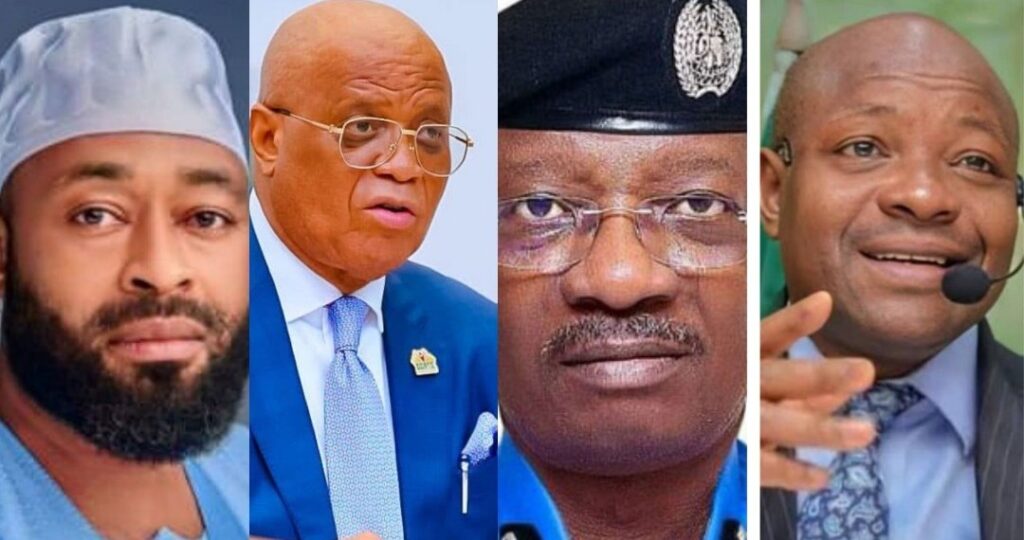
Niger State Governor Umaru Bago,
Akwa Ibom State Governor Umo Eno, and
Inspector General of Police Kayode Egbetokun.
All three now carry the public stain of repressing journalists, obstructing media work, and dragging Nigeria backwards on democratic accountability.
But just as the gavel was about to fall, Vice President Kashim Shettima, who chaired the IPI AGM in Abuja attempted a rescue mission. He begged the Institute to grant the Federal Government two weeks to “intervene.”
“I crave your indulgence,” he pleaded, almost sounding like a prefect begging the principal to spare his unruly friends. “Give us a grace period of two weeks,” the Vice President pleaded.
He vouched for the culprits like a character witness at a sentencing hearing: Umo Eno, “a pastor and a humble man.”Bago, “my friend.”Egbetokun, “a man in the eye of the storm.”
But appeals to personal friendships do not erase public misconduct. And the facts are stubborn.
Bago: The Governor Who Shut Down a Radio Station Because He Could
Governor Umaru Bago earned his spot in infamy for shuttering Badeggi 90.1 FM on August 1, 2025, an act of executive recklessness so brazen that even the Minister of Information waded in. Yet the station remains sealed, its silence a daily reminder of the abuse of power.
IPI said attempts to resolve the matter hit a brick wall. So into the Book he goes.
Umo Eno: The “Humble Pastor” Who Expelled Journalists for Doing Their Job
Governor Umo Eno expelled Channels TV reporters Christopher Mufat and Kufe Ipe from Akwa Ibom Government House after they aired his own words; not rumours, not accusations, just his remarks. IPI’s efforts to engage him? Ignored. Attempts at reconciliation? Snubbed. It takes a special kind of insecurity for a leader to attack journalists for reporting what he said in public. But insecurity, apparently, is now governance philosophy.
IGP Egbetokun: Presiding Over a Police Force at War With the Press
The Inspector General of Police did not escape scrutiny. Under his watch, police officers across Nigeria have harassed, arrested, intimidated, and obstructed journalists with impunity, despite repeated engagements with the Force Headquarters.
IPI’s verdict was blunt: He failed in his constitutional duty to protect press freedom. He allowed systematic oppression.
He is now blacklisted.
A Lone Bright Spot: The SSS DG Who Chose Democracy Over Intimidation
In a rare twist, the Director-General of the State Security Service, Adeola Ajayi, walked away with commendation. IPI praised his “unmistakable commitment to press freedom,” a startling, but welcome departure from the agency’s dark legacy of gagging dissent.
When the SSS is receiving press-freedom awards while governors and the police chief are entering the Book of Infamy, you know the country has turned upside down.
The Real Question
Shettima wants two weeks to “sort things out.” But Nigeria has seen this movie before: the powerful begging for time to clean up messes they could have prevented in the first place.
The Book of Infamy isn’t just a list. It is a mirror. And right now, it is reflecting a democracy increasingly uncomfortable with scrutiny.
Will Shettima’s two-week window produce accountability or just another round of excuses?
Nigeria, as always, will wait and watch.
Facebook Comments

GIPHY App Key not set. Please check settings