


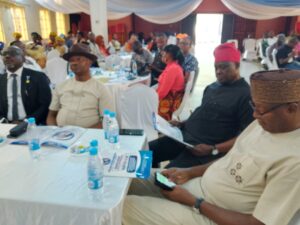
ASABA, Nigeria — Speakers at the 2025 Delta Online Publishers Forum (DOPF) Annual Lecture have dismissed the popular belief that Nigeria’s new tax law is another revenue grab by government, insisting instead that the reform is structured to benefit citizens, strengthen businesses, and clean up longstanding distortions in the tax system.
During a panel session at the event, leading accountant and tax consultant, Victor Fegor Origho, explained that the new tax framework was designed to rebalance the relationship between taxpayers and the state. He said the law corrects years of inequity, where some Nigerians bore excessive tax burdens while others slipped through loopholes and underassessment.
Origho urged the public to ignore fears of arbitrary debits and punitive enforcement. “This reform is not created to punish Nigerians. It is to fix the gaps and ensure everyone pays exactly what is due — no more, no less,” he said.

Legal practitioner Barr. Ikpesu Gideon Jade likened the legislation to a modern tax ombudsman, offering clearer dispute-resolution windows and helping businesses stay within the law. While fines remain part of the enforcement structure, he said organizations can avoid sanctions by keeping proper records and complying early. “If you do your part, the law protects you,” he assured.
Another panelist, Martins Onyem Aghaobod, Esq, stressed the urgent need for public enlightenment ahead of the law’s full rollout in January 2026. He encouraged Nigerians to familiarize themselves with the 203-section document, noting its core goals: ending multiple taxation, improving compliance, and creating a more predictable tax environment.
Collectively, the experts noted that the law gives more power to citizens by enforcing transparency in tax processes and enabling Nigerians to better monitor how public revenue is managed and spent.
Delivering the keynote address, Dr. Ochuko Emudainohwo, Associate Professor of Accounting at Dennis Osadebay University, said the new tax law is not just a fiscal reform but a deliberate economic recalibration. With dwindling oil revenue, rapid population growth, and the aftershocks of COVID-19, he said the federal government had little choice but to rethink its fiscal foundation.
Dr. Emudainohwo highlighted the merger of income and company taxes into a unified tax net as a major step toward simplifying administration. He described the law as “pro-people,” pointing out that companies earning below ₦50 million annually are exempt from capital-based and company income taxes — a provision expected to ease pressure on small businesses and spur innovation.
He added that strengthened digital tax systems and tighter oversight mechanisms would close revenue leakages, improve efficiency, and help rebuild trust in public finance management.
Although the Governor of Delta State, Rt. Hon. Sheriff Oborevwori (represented by Commissioner for Information, Charles Aniagwu), Chairman of the Occasion Mr. Edward Obiefuna Martyns, and DOPF Chairman Mr. Emmanuel Ochonogor Enebeli, all emphasized the need for accountability in tax administration, the day’s conversations were dominated by expert analysis of how the law will reshape governance and economic behavior.
Oborevwori stressed that reforms must translate into real development; Martyns urged the media to intensify oversight of government revenue use; and Enebeli reiterated that taxation must be matched with service delivery — better roads, safer communities, and transparent governance.
The 2025 DOPF Annual Lecture, themed “Nigeria’s New Tax Law: Implications and Opportunities for Businesses and Society,” brought together a wide array of stakeholders and offered deep insights into how the legislation will impact Nigerians as the country steps into a new phase of tax reform.
Facebook Comments

GIPHY App Key not set. Please check settings