

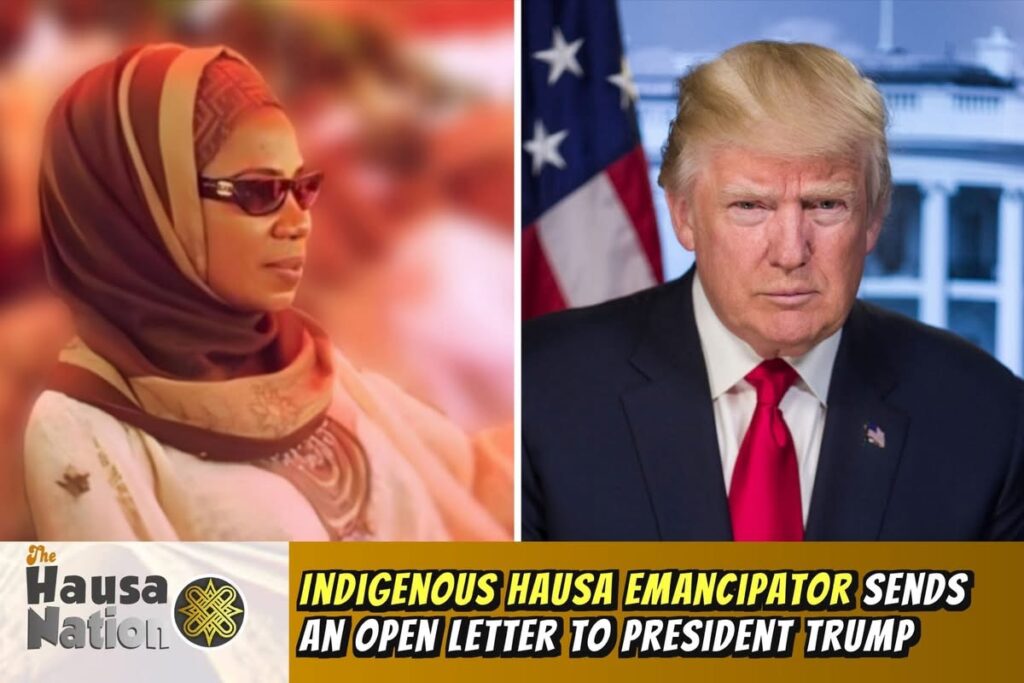
A Hausa advocacy group, the Guguwar Hausawa Tsantsa Movement, has written an open letter to former United States President Donald J. Trump, urging international pressure on Nigeria to abolish Sharia-based criminal laws in parts of the country, which it says have fueled discrimination, violence and mass displacement of Hausawa communities.
In the strongly worded letter, the group appeals to Washington’s long-standing commitment to religious freedom and civil liberties, arguing that the operation of Sharia criminal codes in 12 northern Nigerian states has undermined Nigeria’s secular constitution and denied millions of citizens equal protection under the law.
The movement alleges that Hausawa communities, both Muslim and Christian have been systematically targeted, stigmatized and punished under what it describes as an exclusionary legal and security order. According to the letter, Hausawa are frequently labelled “Maguzawa,” a term the group says is used pejoratively to justify social hostility and collective punishment.

The group further claims that armed groups using extremist religious rhetoric have carried out violent attacks on Hausawa settlements, with survivors reporting that assailants invoke religious slogans during raids. These attacks, the letter says, have included assaults on wedding ceremonies, churches, mosques and prayer gatherings, leaving hundreds dead and many abducted.
Citing specific incidents, the movement alleges mass killings during prayers in Zamfara (about 50 people), Katsina (76) and Sokoto State (around 60), stressing that victims have included both Muslims and Christians. “The violence does not distinguish faith,” the letter states, “but targets a people perceived as vulnerable.”
Beyond killings, the group paints a grim picture of widespread displacement. It claims that thousands of villages have been abandoned and that millions of Hausawa have been forced off ancestral lands, crippling agriculture, education and community life. Farmers, the letter alleges, are compelled to pay levies described as jizya before planting or harvesting, with threats of violence for non-compliance.
The movement also raises serious allegations of selective enforcement of Sharia punishments, claiming that Hausawa are disproportionately subjected to extreme penalties such as amputation, stoning and capital punishment for offences ranging from petty theft to alleged moral transgressions. Women, it says, are particularly vulnerable, with reports of death sentences following accusations of pregnancy outside marriage.
Linking present-day abuses to historical grievances, the group argues that the legacy of the 1804 Sokoto Jihad and subsequent political dominance continues to shape modern governance and security arrangements to the detriment of Hausawa communities.
The humanitarian toll, the letter warns, is catastrophic. It claims that insecurity and displacement have left millions of children out of school, with education systems collapsing as schools are abandoned, teachers flee and parents fear for their children’s safety.
The group also criticises what it describes as the silence, or alleged complicity of influential clerics, traditional rulers and political figures, arguing that failure to clearly condemn violence has eroded public trust and fostered impunity.
In its appeal to Trump, the movement insists that its demand is not an attack on Islam, but a call for a single civil legal system that guarantees equality before the law in a constitutionally secular federation. It urges the United States to engage Nigeria diplomatically, press for independent investigations into mass violence, and support accountability for perpetrators.
“The Hausawa people seek neither privilege nor domination,” the letter concludes, “but safety, dignity and freedom of belief.”
The open letter was signed by Kaltum Alumbe Jitami on behalf of the Guguwar Hausawa Tsantsa Movement and circulated widely on social media under multiple Hausa and Middle Belt advocacy hashtags
Find below full text the Hausa group’s message to President Donald Trump:
OPEN LETTER TO PRESIDENT DONALD J. TRUMP: HAUSAWA SUPPORT FOR THE ABOLITION OF SHARIA LAWS IN NIGERIA AS A MATTER OF RELIGIOUS FREEDOM AND CIVIL PROTECTION
Mr. President, Donald J. Trump
We write to you as members of the Guguwar Hausawa Tsantsa Movement, Mesa ta tashi…, to formally present a grave appeal concerning religious freedom, equal citizenship, and civilian protection in parts of the Federal Republic of Nigeria. This letter is composed in the spirit of international human rights norms and the longstanding partnership between Nigeria and the United States in advancing freedom of conscience and the rule of law.
Our central concern is the continued application of Sharia-based criminal codes in twelve Nigerian states by Fulani Islamic radical jahadist and the consequences this legal framework has had for Hausawa communities. We submit that the present arrangement has entrenched fear, discrimination, and systematic exclusion, rather than coexistence, and has undermined constitutionally guaranteed freedoms for millions of citizens.
Hausawa communities have persistently sought religious freedom and equal protection under Nigeria’s secular constitution. In practice, however, many Hausawa—Muslim and Christian alike—report being stigmatized as “Maguzawa”, a term used pejoratively by Fulani Islamic radical jahadist to suggest religious deviation or cultural inferiority. This classification has fostered social hostility and has been used to rationalize collective punishment.
We allege that armed groups identifying themselves through extremist religious rhetoric have committed acts of violence in villages and towns predominantly inhabited by Hausawa. Survivors consistently report that assailants invoke religious slogans during attacks by Fulani islamic radical jahadist, which has deepened the perception that violence is justified on sectarian grounds rather than prosecuted as criminality.
There are documented incidents in which wedding ceremonies have been attacked, including cases in Christian settings where newly married couples and relatives were killed and others abducted, allegedly to secure ransom. These acts, carried out in the name of religious identity, have left families shattered and communities traumatized.
Similarly disturbing are reports of mass-casualty attacks on Muslim gatherings, including wedding halls and mosques. In some instances, halls were reportedly surrounded and set ablaze, by Fulani Islamic radical jahadist leading to the deaths of hundreds of civilians. In other cases, worshippers were shot during prayers, resulting in dozens of fatalities across different states.
Specific incidents cited by community leaders include mass killings in Zamfara 50 are killed during prayers, katsina 76 where killed in the mosque and Sokoto States 60 also killed during prayer. These events underscore that the violence does not distinguish between Muslims and Christians, but rather targets a people perceived as vulnerable.
Beyond direct violence, large-scale displacement has occurred. Thousands of villages have reportedly been vacated by Fulani Islamic radical jahadist, with millions of Hausawa forced from ancestral lands. Displacement has disrupted agriculture, education, and community life, creating long-term humanitarian consequences.
In rural areas, Hausawa farmers report being compelled to pay levies described as jizya to Fulani Islamic radical jahadist before planting or harvesting crops. Failure to comply is allegedly met with crop destruction, hostage-taking, or forced labor demands imposed on youths, further eroding livelihoods and dignity.
There are also allegations of selective enforcement of Sharia-based punishments applied almost exclusively to Hausawa by Fulani Islamic radical jahadist. Accusations such as petty theft or moral offenses have reportedly led to extreme penalties, including amputation or stoning, raising serious concerns about due process, proportionality, and ethnic targeting.
Women have been particularly vulnerable under this system. Reports include accusations of pregnancy outside marriage leading to capital punishment, again predominantly affecting Hausawa women by Fulani radical Islamic jahadist. Such practices violate international conventions on women’s rights and human dignity.
Collectively, these experiences have led many Hausawa to conclude that genuine freedom of religion does not exist for them under the current legal and security order. They perceive the legacy of the 1804 Sokoto Jihad by Fulani islamic radical jahadist and subsequent political dominance as continuing, in altered form, into the present day.
The humanitarian impact is severe. Due to the activities of Fulani Islamic radical jahadist community estimates suggest tens of millions displaced internally, with children disproportionately affected. According to reports attributed to UNESCO and child welfare organizations, millions of Hausawa children are out of school, fueling cycles of poverty and insecurity.
Education systems in affected regions have collapsed under fear and displacement. Schools have been abandoned, teachers have fled, and parents are unwilling to risk their children’s safety. This educational deprivation threatens regional stability and future development.
We further express concern over public statements and actions by influential clerics, traditional leaders, and politicians that are perceived to be Fulani radical Islamic jahadist locally as minimizing or justifying extremist violence. Names frequently cited in public discourse include prominent religious figures and former political officeholders.
The perception—rightly or wrongly—that such figures provide ideological cover or political protection for violent actors has eroded trust in institutions meant to safeguard all citizens equally. Silence or ambiguity in the face of atrocities is interpreted by victims as tacit approval.
We therefore appeal to the principles the United States has historically championed: freedom of religion, equality before the law, and civilian protection. We urge your moral leadership in encouraging Nigerian authorities to reassess the role of Sharia criminal codes within a constitutionally secular federation which is to the benefit of Fulani radical Islamic jahadist.
Our call for the abolition of Sharia criminal laws in Nigeria is not an attack on Islam as a faith, but a demand for a legal order that treats every citizen—Hausawa, Christian, Muslim, or otherwise—under one civil law that guarantees equal rights and remedies.
We respectfully request that the United States engage diplomatically with Nigeria to support constitutionalism, independent investigations into mass violence, and accountability for perpetrators by Fulani radical Islamic jahadist who are supported by cleric, politicians and traditional leadership.
Mr. President, the Hausawa people seek neither privilege nor domination, but safety, dignity, and freedom of belief. We trust that your commitment to religious liberty worldwide will give due consideration to this appeal.
Respectfully submitted,
Guguwar Hausawa Tsantsa Movement
Uwar Gwagwarmayar Kwatar Yancin Hausawa a KasarHausa, Nigeria (Kaltum Alumbe Jitami)
#JarumaHausaTV #Hausa #Hausawa #Hausanation #TheHausaEmpire #Hausahistory #Hausaland #KasarHausa24 #Gobir #Zazzau #Kabi #Daura #Zamfara #Katsina #Kano #Rano #Adar #Hadejia #Plateau #Benue #Adamawa #Taraba #Gombe #Nigeria #Middlebelt #Arewa24 #MiyettiAllah #NoMoreFulaniRuleInNigeria #KaryarFulanitakare #Fulanimustgo
Facebook Comments

GIPHY App Key not set. Please check settings