


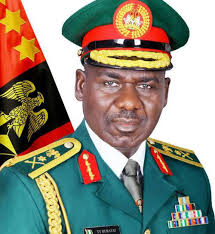
Fresh revelations by retired Major-General Danjuma Ali-Keffi have cast a harsh spotlight on former Chief of Army Staff, Lt-Gen Tukur Buratai, who is accused of orchestrating internal resistance, undermining intelligence operations, and clashing with a covert anti-terror unit whose work was on the verge of crushing banditry in 2021.
Ali-Keffi, former GOC 1 Division and Commander of the ultra-secret Operation Service Wide (OSW), paints a picture of a military high command at war with itself; one where personal turf, institutional rivalry and hidden interests allegedly outweighed national security.
According to his detailed account published by Sahara Reporters, Buratai’s opposition to OSW began the moment the National Security Council approved the unit’s leadership, based on recommendations from intelligence chiefs across the DSS, NIA, DIA and the NFIU.

‘He Didn’t Hide His Annoyance’
Ali-Keffi said Buratai reacted angrily to his appointment and immediately sought to block or absorb the unit into Army Headquarters.“Gen Tukur Buratai was unhappy with my appointment as Commander OSW from the start… he didn’t hide his annoyance,” he stated.
The tension came to a head in a late-night summons to Buratai’s residence in November 2020, a meeting Ali-Keffi describes as hostile, intimidating and driven by a desire to seize control of the new unit.
Buratai, he claims, questioned his qualifications, insisting that only Army Headquarters should handle the assignment. He allegedly demanded that all intelligence gathered by OSW be turned over to him, dismissing the unit’s mandate.
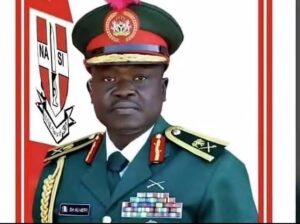
Ali-Keffi said Buratai asserted that the Army could complete OSW’s entire mission “within 48 hours”, and abruptly ended the meeting. “I left the Flag House unsure whether the conversation had been secretly recorded,” he said.
The Sudden Offer And Suspected Trap
After the tense encounter, Buratai reportedly reversed course days later, offering to provide logistics, funding and vehicles for OSW. Ali-Keffi refused, saying he feared the equipment could be compromised with trackers or booby traps, a sign of deepening mistrust between the two senior officers.
According to him, the move seemed less like support and more like a ploy to infiltrate or monitor the covert outfit.
‘Deliberate Undermining’ of Anti-Banditry Operations
Ali-Keffi insists Buratai’s opposition marked the beginning of a systematic effort to weaken the OSW and stifle critical intelligence operations.
This, he said, contributed to the broader collapse of coordinated military action at a time when bandit groups were being pushed to the brink in several theatres.
Behind closed doors, he claims, Nigeria’s fight against terrorism was being sabotaged by power struggles, personal interests and high-level complicity.
Buratai, Buhari Administration Accused of Entrenched Interests
Beyond the OSW feud, Ali-Keffi alleges that top figures in the Buhari administration—including military figures close to the centre—were entangled in illegal mining operations tied to banditry across the North West and North Central.
“The previous administration was complicit… due to the illegal mining activities that key officials were involved in,” he said, indicating a nexus between state actors and criminal networks.
These claims, though untested, further deepen questions about whether resistance to OSW was driven by personal power or protection of illicit economic interests.
Buratai’s Shadow Over the Aborted 2021 Offensive
Ali-Keffi maintains that the military was on the verge of a historic breakthrough between April and July 2021. Bandit enclaves in Niger and Kaduna were cleared, abductees were rescued, highways reopened, and a joint 1 Division–8 Division offensive known as Operation FOREST SHIELD was set for launch.
Then came the controversial Presidency-ordered ceasefire, purportedly to allow Fulani leaders negotiate disarmament with bandit groups.
Ali-Keffi said he obeyed the directive reluctantly, but before the two-week pause elapsed, both he and the 8 Division GOC were suddenly removed.
The abrupt sackings, coming after months of tension with Buratai and security power blocs raise new questions about whether the halt was purely political or influenced by military high command rivalries.
The Bigger Picture: A War Within the War
Ali-Keffi’s testimony suggests that at the height of Nigeria’s banditry crisis, the military was fighting two wars: one against armed criminals in the forests and another, quieter war within its own leadership.
At the centre of that internal conflict, he claims, was General Buratai’s determination to assert control over a sensitive intelligence operation he neither created nor fully trusted.
Whether these allegations will trigger a formal inquiry remains to be seen. But the disclosures have once again revived debates about how personal power struggles, political orders and hidden agendas may have prolonged Nigeria’s security woes at a devastating human cost
Facebook Comments

GIPHY App Key not set. Please check settings