

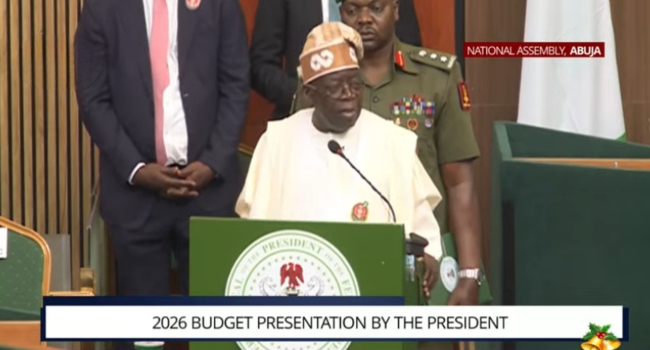

President Bola Ahmed Tinubu’s address at the Second National Economic Council (NEC) Conference was packaged as a confident unveiling of a Renewed Hope National Development Plan for 2026–2030. But outside the comfort of the State House conference hall, the speech has landed with a thud, dismissed by many Nigerians as yet another glossy policy document detached from their lived reality.
For a growing number of citizens battered by inflation, joblessness and hunger, the President’s self-congratulatory tone felt jarringly out of place. One dissatisfied reader’s blunt verdict: “another garbage as economic policy” , captures a mood that is no longer marginal, but widespread.

The President spoke of “inclusive growth” and “macroeconomic stability,” yet Nigeria continues to feature prominently in global conversations about extreme poverty and youth unemployment. Streets in urban centres tell their own story: able-bodied young Nigerians hawking sachet water, driving motorcycles for survival wages, or desperately seeking visas to escape a country that appears to have given up on them. If the reforms are truly delivering “prosperity, dignity and opportunity,” Nigerians are asking a simple question: where is the evidence in their daily lives?
Food insecurity offers perhaps the sharpest contradiction to the President’s claims. Across large swathes of the country, food production has shrunk, not expanded. Insecurity has emptied farming communities in Benue, Plateau, Nasarawa, Niger, Katsina and parts of the South-West and South-East. Farmers have abandoned their land, not because they are lazy or unproductive, but because they are afraid to die. Displaced families now crowd IDP camps, stripped of livelihoods and dignity, surviving on handouts, with no hope of ever returning to their ancestral lands. Any economic plan that glosses over this reality with technocratic language about “productivity” and “irrigation” rings hollow.
Tinubu’s speech praised increased FAAC allocations to states and local governments as a major achievement. Yet this raises another uncomfortable question: more money for whom, and to what end? Across the federation, improved allocations have not translated into better healthcare, functional schools, potable water or safer roads. Instead, Nigerians watch governors and council chairmen behave like conquerors sharing spoils, buying exotic SUVs as spoil gifts, while citizens choke under the weight of escalating high public transportation costs, awarding inflated contracts to political allies, party financiers and cronies, while communities remain trapped in deprivation. Fiscal federalism, without transparency and accountability, simply decentralises corruption.
The President also spoke glowingly about infrastructure, social investment and human capital development. But on the ground, roads are announced more often than they are completed, social programmes are politicised and poorly targeted, and education continues to deteriorate. A youth population described as a “demographic dividend” increasingly looks like a demographic time bomb, abandoned to frustration and despair.
Perhaps most corrosive to public trust is the widening perception of dishonesty within governance itself. Laws passed by the National Assembly are frequently amended, diluted or subverted by bureaucratic sleight of hand. Policies are announced with fanfare, only to be contradicted by implementation. This pattern feeds a dangerous belief that the administration says one thing, does another, and expects citizens to applaud regardless.
The Renewed Hope Agenda, as presented at NEC, reads like a familiar catalogue of promises Nigeria has heard before: diversification, private sector–led growth, climate resilience, inclusive development. What is missing is credibility. Nigerians are no longer inspired by plans; they are convinced by outcomes. They want to eat, work, farm safely, educate their children and plan for the future without fear.
By praising his administration in the midst of deepening hardship, President Tinubu risks reinforcing the image of a government out of touch with the people it governs. Economic reform is not judged by PowerPoint slides or conference applause, but by the price of food, the availability of jobs, the safety of farms and the honesty of institutions.
Until those realities change, no amount of rhetorical polish will disguise the widening gap between the President’s optimism and the nation’s pain. For millions of Nigerians, “Renewed Hope” remains a slogan in search of substance.
Facebook Comments

GIPHY App Key not set. Please check settings