

By Chukwudi Abiandu
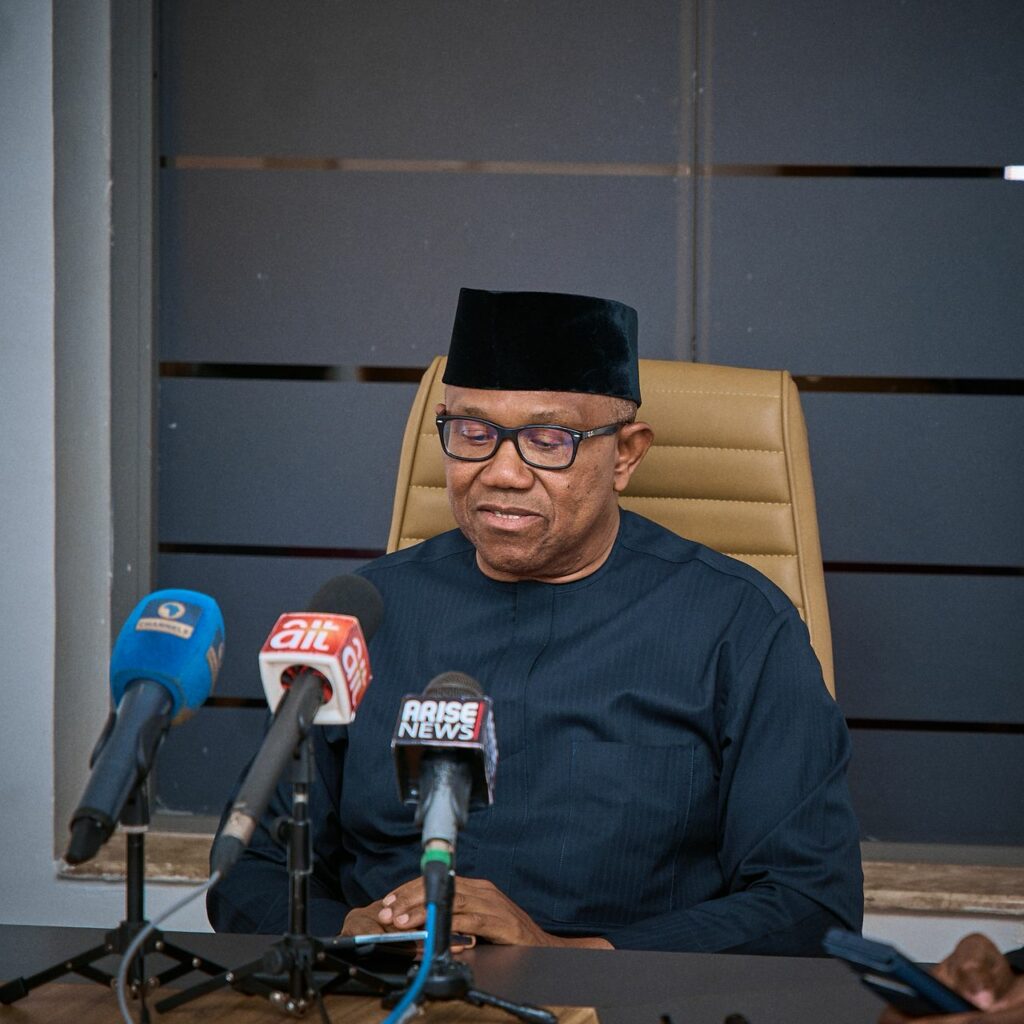
When the Federal Government announced a $1 billion (₦1.5 trillion) port modernisation deal for Lagos, most Nigerians applauded. But for Peter Obi, it was a bittersweet moment, another sign that Nigeria is still building its future around a single city. In a post on X (formerly Twitter), the Labour Party presidential candidate in the 2023 elections made a compelling case for decentralising Nigeria’s maritime development. His argument is simple but profound: no nation seeking shared prosperity should anchor all its ports in one harbour.
Lagos as overload

Every Nigerian importer knows the story too well that ships queuing endlessly offshore, trucks snaking for miles on Apapa roads, containers stacked like towers, and drivers sleeping in their cabs for days. Lagos, for all its energy, has become a victim of its own success.
And yet, it remains Nigeria’s only true maritime focus. Despite a coastline that stretches from Badagry to Bakassi, more than 70 per cent of Nigeria’s port activities still take place in Lagos.
Peter Obi doesn’t dispute the importance of Lagos. What he disputes is the logic of building a national economy on one city’s shoulders.
“Nigeria’s infrastructure investment remains excessively concentrated in Lagos, often at the expense of other strategic ports such as Warri, Port Harcourt, Calabar, and Onne,” Obi said. It must also be added that the Delta Ports besides the Warri Port also has Burutu, Koko and Sapele Ports. “If fully developed, these ports could enhance productivity, drive trade, create jobs, and open new economic corridors that would lift millions out of poverty,” Obi said.
A $1 Billion Question
The Federal Government’s recent approval of $1 billion to modernise the Apapa and TinCan Island Ports was meant to signal reform and renewal. But to Obi, it also underlined a deeper national imbalance; a chronic concentration of infrastructure that leaves the rest of the country waiting on the dock.
He’s not against the investment. In fact, he welcomes it, but only if it comes with accountability, transparency, and equity.
He said: “While any effort to improve efficiency and embrace technology in our maritime sector is commendable, such an initiative must be guided by accountability, transparency, and equity for all Nigerians.”
Lessons from the World’s Waterfronts
To make his point, Obi points outward to the nations that have mastered maritime balance.
Vietnam, for example, runs over 300 ports, from Haiphong in the north to Ho Chi Minh City in the south. Indonesia operates about 111 commercial ports, while South Africa boasts eight, spread from Durban and Richards Bay on the Indian Ocean to Cape Town and Saldanha Bay on the Atlantic.
Even smaller African nations understand this logic. Egypt runs 15 ports on two seas, Morocco has 14 on its coasts, Algeria has 10 along the Mediterranean, and Ghana’s two ports — Tema and Takoradi — sit on opposite ends of its coastline for balance.
These countries grasp a truth Nigeria still struggles to learn: a diversified port system is not just an infrastructure plan — it’s an economic philosophy.
Why It Matters Beyond the Coast
Decentralisation, Obi argues, is not just about logistics — it’s about national balance and security.
“No country seeking to maximise its blue economy concentrates all maritime activities in a single city,” he said. “Decentralisation reduces congestion, improves logistics, enhances national security, and promotes balanced economic growth.”
Beyond the numbers, there’s a human angle. Revitalising the ports in Warri, Calabar, Onne, and Port Harcourt would do more than decongest Lagos; it would transform forgotten towns into thriving economic corridors. It would create jobs, attract industries, and pull millions out of poverty.
It’s not hard to imagine a Nigeria where each region has its own maritime gateway — where ships dock in the Niger Delta, goods flow seamlessly inland, and economic power spreads more evenly.
Fixing the System, Not Just the Structures
For Obi, port diversification won’t mean much without systemic reform. The bottlenecks that plague Nigerian trade go far beyond physical congestion.
He calls for a deep clean of the sector — tackling corruption, cutting red tape, and embracing technology-driven, paperless operations that meet global standards.
“A truly national blue economy must carry every region along,” he wrote. “If prudently managed, the Lagos modernisation project could become a model for broader maritime transformation — a reference point from which similar development radiates across the nation.”
Fairness as a National Strategy
In the end, Obi’s essay isn’t just a critique of government spending — it’s a moral argument about fairness, vision, and the need to rebuild Nigeria on equity, not excess.
“Now more than ever, Nigeria must rebuild with fairness, guided by equity, integrity, and a clear vision to transform our nation from one of consumption to one of production and shared prosperity,” he said.
His message echoes beyond maritime economics. It’s a call to reimagine Nigeria’s development map — to build a country where opportunity flows in every direction, not just toward the Atlantic.
And as always, he signs off with the conviction that fuels his movement:
“A New Nigeria is POssible.”
Following is full text of the submissions of Peter Obi on X
The Imperative of Diversifying Port Development in Nigeria
I have noted the Federal Government’s recent approval of $1 billion (₦1.5 trillion) for the modernisation of the Apapa and TinCan Island Ports in Lagos. While any effort to improve efficiency and embrace technology in our maritime sector is commendable, such an initiative must be guided by accountability, transparency, and equity for all Nigerians. However, this development once again exposes a longstanding concentration of our port development only in Lagos.
Nigeria’s infrastructure investment remains excessively concentrated in Lagos, often at the expense of other strategic ports such as Warri, Port Harcourt, Calabar, and Onne. If fully developed, these ports could enhance productivity, drive trade, create jobs, and open new economic corridors that would lift millions out of poverty across the federation.
Around the world, countries that have decentralised port development are reaping immense economic benefits. Vietnam operates over 300 ports — from Haiphong in the north to Da Nang in the centre and Ho Chi Minh City in the south — ensuring nationwide connectivity. Indonesia boasts about 111 commercial ports distributed across its territory to guarantee balanced access to trade. South Africa maintains eight major seaports — from Durban and Richards Bay on the Indian Ocean to Cape Town and Saldanha Bay on the Atlantic — reflecting a vision of maritime inclusion. Egypt runs about 15 commercial ports along both the Mediterranean and the Red Sea coasts; Morocco has about 14 ports open to international trade, including Casablanca, Tangier Med, and Agadir, distributed along its Atlantic and Mediterranean shorelines; and Algeria operates about 10 commercial ports spread across its extensive Mediterranean coast. Even Ghana, with only two major ports — Tema and Takoradi — ensured they are geographically decentralised on opposite ends of its coastline.
These nations have grasped a simple truth: no country seeking to maximise its blue economy concentrates all maritime activities in a single city. Decentralisation reduces congestion, improves logistics, enhances national security, and promotes balanced economic growth. In Nigeria, however, more than 70 per cent of port activities are still concentrated in Lagos, burdening the city with chronic congestion, high demurrage costs, environmental degradation, and delays that discourage investors and inflate the cost of goods nationwide. Developing other ports is, therefore, not merely an infrastructural necessity but a national imperative. Revitalising Warri, Port Harcourt, Calabar, and Onne would decongest Lagos, reduce shipping costs, attract investment, create employment, and stimulate regional economies.
As one who understands the critical link between infrastructure, trade, and national growth, I believe that a truly national blue economy must carry every region along. Beyond physical infrastructure, reform must also address corruption, reduce bureaucracy, and embrace technology to create a seamless, paperless port system that enhances turnaround time and global competitiveness. If prudently managed, the Lagos modernisation project could become a model for broader maritime transformation — a reference point from which similar development radiates across the nation.
Now more than ever, Nigeria must rebuild with fairness, guided by equity, integrity, and a clear vision to transform our nation from one of consumption to one of production and shared prosperity.
A New Nigeria is POssible – PO
Facebook Comments

GIPHY App Key not set. Please check settings