

From Our Reporter,
Abuja
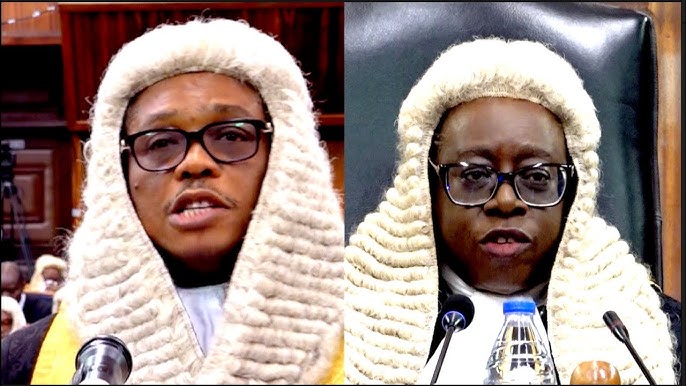
President of the Nigerian Bar Association (NBA), Mazi Afam Osigwe, SAN, on Monday, September 29, 2025 issued a stark warning that public confidence in Nigeria’s judiciary is rapidly eroding, citing corruption, politicisation, slow justice delivery, and systemic abuse as factors undermining the courts’ credibility.

Speaking at the Supreme Court’s special session to mark the opening of the 2025/2026 legal year and the conferment of the rank of Senior Advocate of Nigeria (SAN), Osigwe said the justice system was in urgent need of reforms to restore trust and ensure it fulfils its constitutional role as the last hope of the common man.
“The judiciary was once a beacon of hope, but today, justice is increasingly seen as a purchasable commodity,” Osigwe declared. “The poor often suffer injustice while the powerful evade accountability.”
Delay Undermining Justice
The NBA president decried persistent delays in adjudicating constitutional and governance-related cases, warning that justice delivered too late often becomes meaningless.
He cited the Supreme Court’s failure to decide challenges to a state of emergency in Rivers State before its expiration as a glaring example. A similar situation occurred in Plateau State, where a legal challenge was not resolved for nearly two years.
“Delay in deciding weighty constitutional issues sends a dangerous signal that the judiciary is indifferent to critical matters of governance,” he said. “Timely decisions are vital to strengthening federalism and maintaining public confidence.”
Appointment Process Under Fire
Osigwe criticised the current system of judicial appointments, describing it as opaque, politicised and skewed against private legal practitioners.
“About 80 per cent of recent nominees to the Federal High Court bench are judiciary staff or government officials. While eligible, it is troubling that private practitioners with courtroom experience are being sidelined,” he noted.
He called for a transparent process that includes written examinations, objective evaluations, and joint recommendations by the Bar and Bench, warning that poor-quality appointments could permanently weaken the judiciary’s integrity.
Bail Abuse and Political Cases
The NBA president also condemned what he described as the misuse of bail to punish political critics and journalists. He cited the case of journalist Chinedu Agu, detained over opinion pieces critical of the Imo State government, as evidence of how legal processes are sometimes weaponised to silence dissent.
“Some judges are enabling political oppression by denying bail for bailable offences or setting conditions that amount to denial,” Osigwe said. He urged judges to uphold free speech rights and protect citizens from executive overreach, citing the landmark Arthur Nwankwo v. State case, which struck down sedition laws.
Systemic Delays and Rights Violations
Osigwe highlighted the prolonged detention of lawyer Bright Ngene, whose appeal remains unheard due to repeated recusals by judges in Enugu State. He described the situation as a violation of Ngene’s constitutional right to a fair and speedy trial.
He also criticised the handling of minors arrested during the #EndBadGovernance protests, some of whom were detained for months and charged alongside adults, and urged strict enforcement of child rights and proper age assessments.
Call for Digital Justice
While commending Chief Justice Kudirat Kekere-Ekun’s initial reforms — including online enrolment for lawyers and notary public applications — Osigwe said most courts still operate with outdated manual systems that contribute to inefficiency.
“In 2025, manual filing and handwritten records should be a thing of the past,” he said, calling for mandatory e-filing, digital recording of proceedings, real-time case tracking and improved case scheduling.
He also called for urgent investment in court infrastructure, citing a viral video of a leaking courtroom in Anambra as symbolic of broader institutional neglect.
Discipline and Responsibility
On judicial accountability, Osigwe urged the National Judicial Council (NJC) to enforce discipline firmly and transparently to rebuild public confidence.
He reminded newly conferred SANs that the rank is a “call to higher duty” rather than a status symbol and called for reforms to make the SAN conferment process more inclusive, particularly for academics.
Judiciary at a Crossroads
Concluding his remarks, the NBA president said the judiciary stands at a critical juncture and must reform to remain a credible arbiter of justice.
“Justice is the greatest concern of man on earth. It must not be a distant ideal but a daily reality,” he said. “The judiciary must rise to its constitutional responsibility, protect the rights of all Nigerians, and serve as a bulwark of democracy and the rule of law.”
Facebook Comments

GIPHY App Key not set. Please check settings