

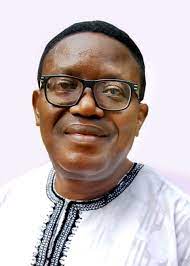
By Owei Lakemfa
January 8, 1959. Cuban youths led by a 34-year-old bearded lawyer, Fidel Castro, drove in a convoy into Havana. A week earlier, the dictatorship of Batista, propped by bayonets, had collapsed.
Fidel, the leader of the triumphant youths, then began his drive from his Santiago base at the head of a convoy of rebels which as it passed villages, towns and cities, drew the populace into the streets.
Now, on this day, he stood amongst a populace that had emptied into the streets to make his speech. Then, in the venue, choked with human beings, three white doves hovered around. As Fidel made his speech, one of them landed on his left shoulder. It stayed as Fidel continued his speech. For many, especially in highly spiritual Cuba where traditional African faith intertwines with Christianity, it was a belief that Fidel was a chosen one. Some even made an allusion between the dove perching on Fidel and that which rested on Jesus at his baptism. For some, the three doves were a trinity. Some followers of the African faith believed the dove was a sign that Fidel was a god, or what the Cubans and Yorubas in Nigeria call an Orisha.

So, when Fidel passed away in 2016, an ancestral funeral was held in his honour at the National Stadium, Lagos. It was marked with an all-night drumming, songs, dances, incantations and chants.
This Thursday September 18, 2025, some Nigerians and organisations, including the two labour centres, solidarity movements, government officials and youths gathered in Abuja to kick off the Fidel Castro Centenary that will roll through 2026. There was also a large number of diplomats and Cuban residents present.
Former President Olusegun Obasanjo flew in to lead the tributes for a man he described as an extraordinary human being. Obasanjo, who was friends with Fidel, said: “If there was a great leader I came across in my life, it was Fidel.”
He told a humorous story of a Fidel address at the United Nations General Assembly. Speakers are requested to speak strictly to time. So, the green light goes on for the commencement of a speech. The amber flickers on asking the speaker to round off, and the red light means he should stop. When the red light flickered, rather than stop, he said Fidel used his handkerchief to cover the red light and continued talking.
Obasanjo said he once visited Cuba for three days and was impressed by its development. When he briefed Fidel, the Commandante told him that education in Cuba was free from cradle to grave.
He said healthcare was free and drugs, which the Cubans produced themselves, were free.
Obasanjo also recalled that when Apartheid held sway in South Africa and was also invading African countries, Fidel decided that enough was enough and he sent in Cuban troops. He said when Apartheid and its supporters had enough, he was asked to persuade Fidel to end the war. When he arrived, Fidel had a huge battle map in his office where he planned the war in Africa. He told Fidel that the Apartheid regime had agreed that Namibia and South Africa would be freed but Cuban troops should leave Africa. Fidel replied that Cuban troops both alive and dead would be evacuated.
Obasanjo said of all countries with mixed races, Cuba is the only one he knows where the skin of a person does not matter.
Professor Wole Soyinka who was outside the country, sent his Centenary poem on Fidel.
Also, the highly talented Mambisa musical group led by the multi-talented Tar Ukoh, belted out songs on Fidel, Obasanjo and various leaders.
The next tribute was by the Honourary President of the Nigeria Movement of Solidarity with Cuba, Ogbeni Rauf Adesoji Aregbesola.
The ex-Governor of Osun State
said: “Fidel was simply a humanist who sought to make the world a better place and strived to do so by his personal example.”
Aregbesola remarked that: “Under his leadership, he built Cuba into a medical superpower that, since the 1960s, has sent over 10,000 Cuban doctors, nurses and medical personnel across the world, caring for about four million people .”
On why Fidel is so revered on the continent, the immediate past Nigerian Minister of Interior said: “We Africans particularly remember Cuba as the only country which, in our most trying times when Apartheid South Africa invaded Angola and threatened to overrun African countries, sent soldiers to our defence. The Cubans’ defeat of the seemingly invincible Apartheid forces was so crushing that on December 22, 1988, Apartheid South Africa signed a peace treaty committing to the independence of Namibia and South Africa.”
In conclusion, Aregbesola said the Nigerian Movement of Solidarity with Cuba: “re-echoes the United Nations General Assembly demand, which it has made annually since 1992, that the United States end its 63-year economic, commercial and financial embargo on Cuba.”
The Nigeria Labour Congress, NLC Acting President, Comrade Adewale Adeyanju said Nigerian workers will never relent in their support of Cuba. He added that but for the support and sacrifices of Cuba, some African countries might still not have attained independence.
Cuba he said, is the world’s shinning example of good citizen healthcare, a fact he said, is acknowledged by the World Health Organization, WHO.
The Representative of the Trade Union Congress, TUC Comrade Martin Egbanubi said Nigerian workers support all efforts that ensures that the United States embargo on Cuba is lifted. Workers he said, stand against all forms of economic strangulation against other countries.
The President of the Association of Graduates from Cuba, Dr Onuche Oludun praised Mexico for providing the Cuban rebels safety from the Cuban dictatorship which enabled them carry out the iconic Cuban Revolution. He said many Nigerian doctors trained by Cuba are today, consultants delivering healthcare to Nigerians. He added that given the fact that Cuba made them bilingual in European languages, they are also in high demand in Spanish- speaking embassies and organisations.
The President of the Cuban Institute of Friendship with the Peoples, ICAP, Fernando Gonzalez Llort who came in from Havana said:
“Fidel Castro taught us that peace is not simply the absence of war, but the presence of justice. His commitment to international solidarity was manifested in his support for the anti-capital struggles in Africa and the defense of the rights of the oppressed”
He said the battle fields of Namibia, Angola, Ethiopia, Guinea- Bissau amongst others: ” carry in their memory, the generous blood of Cuban combatants who, alongside their African brothers, wrote pages of heroism.”
He demanded an end to the USA embargo against his country, the independence of Palestine and Western Sahara and, a reversal of the current deployment of USA. military forces in the Caribbean Sea.
As the evening wore on, guests including diplomats, took to the dance floor.
The Centenary of Fidel offers renewed hope of a better world for humanity.
Facebook Comments

GIPHY App Key not set. Please check settings