

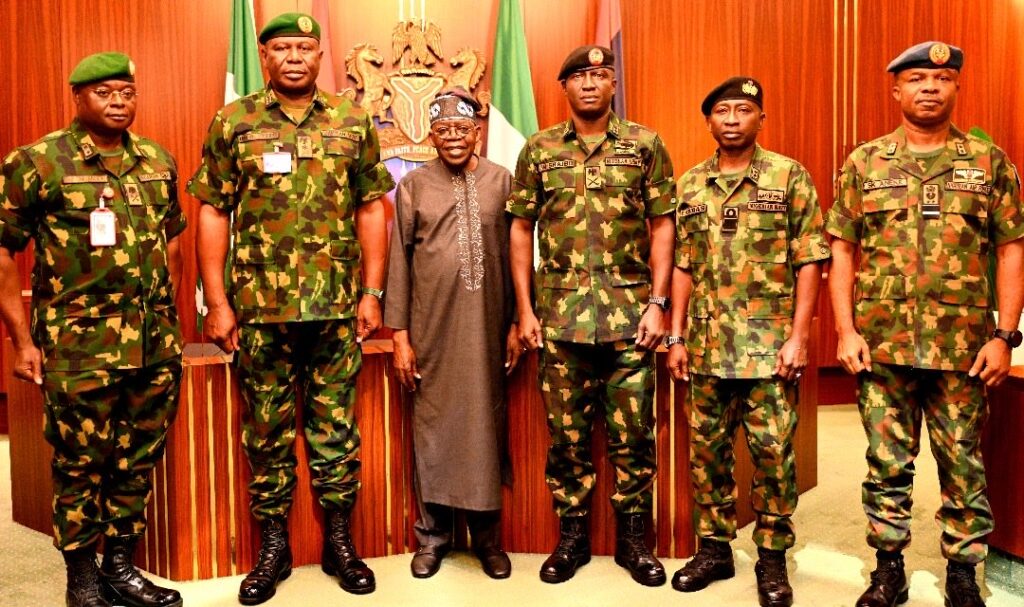
For weeks, Nigerians have been dragged through a theatre of whispers — a coup here, a coup there, shadowy suspects, breathless online hysteria, and a parade of names thrown into public mud without evidence. It was a dangerous, reckless show. And now, suddenly, the Presidency has found its voice.
“We are going to stick with the military’s narrative,” Presidential Adviser Sunday Dare declared, affirming the Defence Headquarters’ earlier denial that any coup plot ever existed.
A good statement. Necessary. But late — very late.

Because if indeed the military never reported a coup plot, if the Defence Headquarters never acknowledged such threat, then why did the whisper campaign metastasize across the country unchecked? Why did the government watch in silence as reputations were dragged, homes reportedly searched, and allegations thrown like stones in a crowded market?
Why did it take this long for Aso Rock to “stick with the narrative”?
And what of the men whose names have been dangled in the winds of this phantom putsch? Former Bayelsa governor, Timipre Sylva — alleged coup sponsor. NDDC Managing Director, Samuel Ogbuku — dragged into the plot for no other crime than being Sylva’s relation. Social media inflamed, tension heightened, and rumours weaponized.
If the military never confirmed a coup plot — if the coup never existed — then what exactly was the storm around Sylva and Ogbuku? Why did the narrative grow legs, uniforms, and headlines? How did the nation arrive at a point where a private citizen’s home was reportedly stormed on the back of a rumour — and nobody in government spoke up?
And the biggest question of all: Who benefited from this false alarm?
Because false alarms are never neutral. They are aimed. They are engineered. They serve purpose.
Now the Presidency has spoken. It has chosen certainty over speculation. Good. But it cannot stop there. Words, at this point, are not enough. If the coup story was false — as the government now affirms — then those whose names were fed to the wolves must be cleared publicly, formally, and unambiguously.
Their reputations must be washed clean — loudly, the same way they were stained.
Nigerians deserve stability, not manufactured drama. We cannot afford to be a country where anonymous whispers can trigger panic, drag citizens into suspicion, and be left to rot in public perception even after the truth arrives.
Good governance demands responsibility. National security demands clarity. Political maturity demands restraint.
Whoever unleashed this coup narrative in an already tense political climate owes this nation an explanation. Nigeria is battling inflation, insecurity, hunger, and social anxiety — it does not need phantom coups thrown into the mix.
Let the Presidency’s statement not be a convenient full stop. It must be the beginning of accountability:
- Who pushed this narrative?
- Why?
- To what end?
- And what consequences will follow?
Rumours of coups are not jokes in a democracy. They unsettle markets. They spook citizens. They cast shadows over institutions. They can trigger panic where none should exist.
The government has finally affirmed the truth. Now it must defend it. Repair the reputations smeared. Identify the mischief-makers. End this dangerous whisper game.
Nigeria deserves better than leadership by rumour and governance by silence.
And those who stoked this chaos must not escape behind a hurried press line. It is time for transparency — and justice — to match the soundbite.
Enough theatrics. Enough shadow-boxing. If there was no coup, let there be no scapegoats. Let truth finish the work that rumour began.
Facebook Comments

GIPHY App Key not set. Please check settings