By Bayo Olupohunda
“I told everyone to hold firmly to the trust given to them, because one day, even after I leave office, their actions may be exposed. Everything will be reviewed based on what you did while in office, since government records contain everything. And let no one call me to defend them. They should go and defend their own actions.” — Muhammadu Buhari (2022 interview)
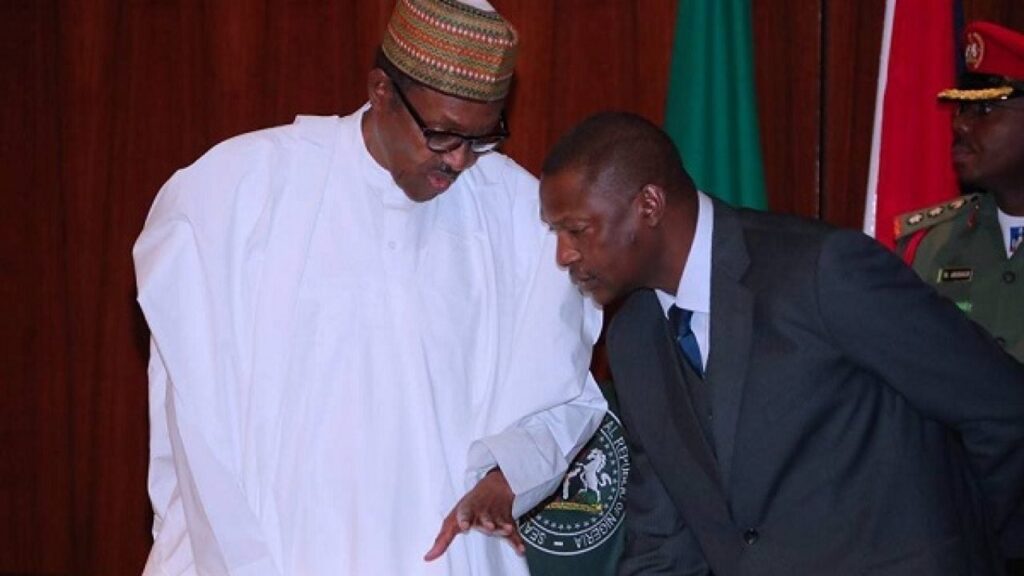
When the late former President Muhammadu Buhari made the quoted statement above in a televised interview before his departure from power, many Nigerians saw it as more than a casual remark. To some, it sounded like a warning. To others, it felt like an excuse prepared ahead of time. It’s been over two years now that President Tinubu assumed the leadership of the country, and now, with the interrogation of one of Buhari’s favourite ministers, Abubakar Malami, by the Economic and Financial Crimes Commission (EFCC), the late president’s warning feels prophetic.
Between 2015 and 2023, Buhari ran a highly centralised government. Power was concentrated around the presidency, and a small group of ministers, mostly from his ethnic group, became unusually influential. They controlled key sectors, enjoyed the president’s full trust, and were rarely questioned. Over time, they became so influential not because the constitution gave them special powers, but because they appeared untouchable.
These ministers were powerful not just because of their offices, but because of their closeness to Buhari, their political weight, and in some cases their ethnic or regional importance. Allegations followed many of them during their time in office — allegations of disdain for other ethnic groups, high-handedness, abuse of office, nepotism, favouritism, secrecy and misuse of public funds. Yet while Buhari remained in power, little was done. Now that he is gone, the questions he avoided are returning.
One of the most prominent figures is Abubakar Malami, Buhari’s attorney-general and minister of justice. As the chief law officer of the country, Malami held enormous power. He decided which cases went to court, how recovered looted funds were handled, and how the government responded to major legal disputes.
Throughout his time in office, critics accused Malami of being nepotistic and using his position to protect political allies and reward loyalists. There were controversies around how recovered Abacha loot was spent and legal decisions that appeared to favour powerful individuals and terrorism financing. Still, Malami remained firmly in office until Buhari left. Now these allegations are coming to light. Today, Malami is under investigation and has been detained by the EFCC over multiple allegations, including abuse of office, money laundering and terrorism financing. Whether he is guilty or innocent is for the courts to decide. But Malami’s case mirrors a major failure of Buhari’s administration: serious questions were ignored while he held power.
Isa Ali Pantami, former Minister of Communications and Digital Economy, represents a different kind of controversy. He was not accused of stealing public funds. Instead, the concern around him was trust and judgment. While Pantami was in office, old statements from his past resurfaced. In those statements, he appeared to praise extremist groups and violent ideologies. Although he later said he had changed his views, many Nigerians felt uncomfortable with him overseeing sensitive areas such as telecommunications, digital identity and data protection. Public calls for his resignation were loud, but Buhari stood by him. No clear investigation or national review was carried out. Pantami left office with many questions unanswered.
Hadi Sirika, the former minister of aviation, controlled a sector known for large contracts and major projects. His most controversial project was Nigeria Air, a national carrier that consumed public funds, staged a launch, but never became fully operational.
After Buhari left office, Sirika was charged over allegations of contract fraud and abuse of office, including claims that companies linked to his family benefited from government contracts. Nigerian aviation saw both progress and problems under Sirika, but the unresolved issues around transparency and conflict of interest have only grown louder. Sadiya Umar-Farouq, former minister of humanitarian affairs, handled one of the most sensitive ministries in the country. Her ministry was responsible for helping the poorest Nigerians, displaced persons, vulnerable families and children relying on school feeding programmes.
Instead, her tenure became associated with missing funds, unclear records and weak oversight and budget padding allegations. Courts ordered her to explain how hundreds of billions of naira meant for social programmes were spent. Investigators later uncovered large irregular transfers linked to her ministry. For many Nigerians, this was deeply painful. Money meant for the poor was allegedly mismanaged, shaking public trust. The minister was mostly known for her naughtiness and disdain for accountability. Sadiya believed nobody could question her stewardship, not even when she finally appeared before the national assembly, an invitation she had repeatedly declined when she was invited to account for the allegations of budget padding.
Added to this list is Chris Ngige, former minister of labour and employment. Ngige has been arraigned on charges linked to contract fraud involving the Nigeria Social Insurance Trust Fund. A court ordered that he be remanded in Kuje Correctional Centre while his trial continues. He has pleaded not guilty. Seeing a former powerful minister in prison custody is striking. It sends a strong message that public office should not place anyone above the law. But it also raises a troubling question: why are these cases only moving forward after these officials have left office?
What links Malami, Pantami, Sirika, Sadiya Umar-Farouq Ngige and others in the cabinet of the late President Buhari is not just controversy, but a system that protected them. During Buhari’s presidency, loyalty often mattered more than accountability. Oversight institutions were weak. Critics were dismissed. Whistleblowers were ignored. Buhari came to power promising to fight corruption, and many Nigerians believed him. But as it turned out, with Buhari’s eight years in the saddle, fighting corruption requires more than promises. It requires strong institutions and the courage to question even close allies. On this front, Buhari fell short. President Bola Tinubu now carries a responsibility. Holding the Buhari cabinet accountable must be fair and consistent, not selective or political. Investigations being conducted by the EFCC must follow due process and respect the rule of law.
As a country, we must move away from a system where powerful officials are shielded while in office and only questioned after they leave. True accountability means asking hard questions of government officials when they are in power and out of power. Buhari said his ministers should defend themselves after he left office. That time has come. Nigerians must insist that the truth — whatever it may be, is fully brought into the open.
Follow BayoOlupohunda on X @BayoOlupohunda
• Source: TheCable




GIPHY App Key not set. Please check settings