

By Sylvester Odion Akhaine
Good morning, Mr President. You would have noticed that kites are being flown in the political sky of Nigeria. If you have not seen one, I am now bringing to your attention the fact that the one being flown is an expensive kite with far-reaching consequences for the polity. Growing up in Ekpoma during the 1960s and 1970s, it was one of those rudimentary technical outputs of young lads, a category to which I belonged then.
Once hoisted in the sky of the plateau town, it can be seen several miles away without the aid of a telescope.
It was somewhat competitive as everyone wanted to fly their own to the highest altitude. We loved it and enjoyed it. Implicit in the competition is merit; one wanted the appellation of having flown his own to the highest height.
The above reminiscences can be contrasted with the attitude of the average Nigerian politician with a sit-tight mentality to public offices, even when there is no notable contribution to national development. Of course, there is always a story to tell about the self.
This is the storyline: build a mansion as a country home, have fat bank accounts at home and abroad, a fleet of expensive cars, and strings of side-chicks who are sometimes flown in first class cabin to holiday resorts overseas. The road to his hometown, where his country home is, may not be paved; there is no primary healthcare centre, let alone a general hospital; the primary schools may not have chairs and may have leaky roofs.
Inspite of this obvious balance sheet, they want to remain in office forever and perpetuate the immiserisation of the toiling people of our country. As Lord Acton once intoned, “power corrupts, and absolute power corrupts absolutely.”
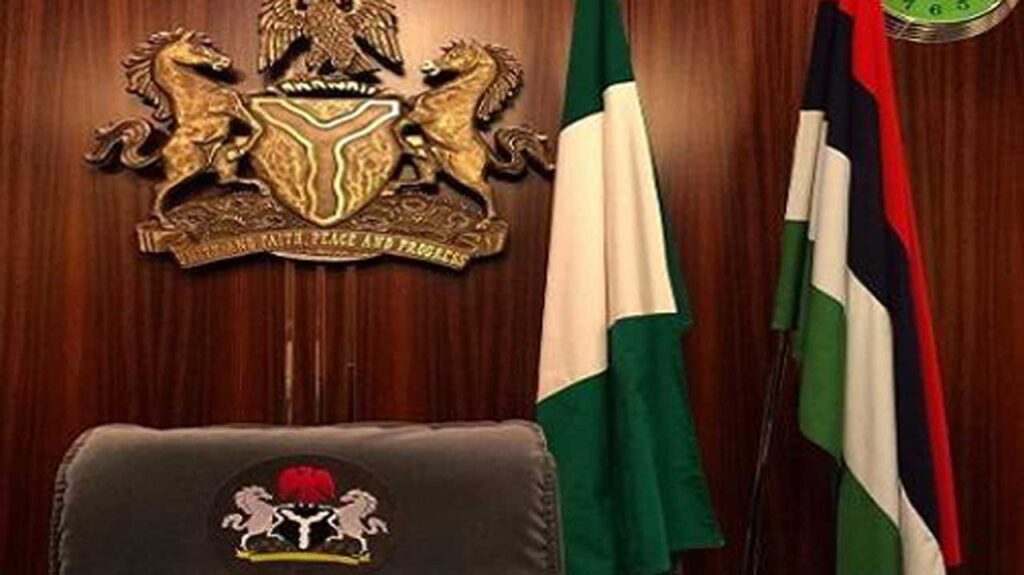
Mr President, it is against this backdrop that I am reflecting on the call by Senator Kenneth Eze (APC-Ebonyi Central), who has called for a single 16-year presidential term against the extant two-term, four-year cycle provided for in the 1999 Constitution as amended. His argument in what he qualified as an intellectual debate is that such an elongated term would allow for continuity in governance, especially with project implementations.
In his words, “Every four years, we return to campaign mode. By the third year, governance slows as attention shifts to re-election; that is why projects are abandoned, and policies are not allowed to mature…Nigeria’s constitution provides for a four-year presidential term, renewable once, but if you ask me, I will advocate one tenure of 16 years. It sounds controversial, but it will allow policies to run their full course and stabilise the system.”
Due to hostile reactions, the Senator has now woken up from his illusory loquacity to put matters in the proper context. In a statement put out by Kizito Nwankwo, his Legislative aide, he was not in essence proposing its application to any public offices or a constitutional amendment, but a mere intellectual masturbation.
The statement read in part, “The attention of the media team of Senator Engr. Kenneth Emeka Eze, Senator representing Ebonyi Central Senatorial District, has been drawn to a trending publication alleging that he proposed a single 16-year tenure for elected political officeholders in Nigeria…Ordinarily, such a sensational claim would not deserve a response. However, in view of the potential for misinterpretation and the deliberate attempt to misrepresent his position, it has become necessary to set the records straight…At no time did Senator Eze sponsor, submit, or formally propose a constitutional amendment seeking to introduce a 16-year single tenure for the office of President of the Federal Republic of Nigeria or any other elected political officeholder…The remarks attributed to him were made during a broader intellectual discourse on governance stability, policy continuity, and the perennial distractions caused by prolonged electioneering cycles…Like many scholars and policymakers who occasionally interrogate constitutional models across the world, Senator Eze merely referenced a theoretical governance framework during a conversation on how to deepen policy implementation and reduce the culture of abandoned projects.”
For his misfire, the senator sought a straw man in journalists who are accused of reporting matters out of context. But the role of the journalist is to report news, and once they hit the public domain, they assume their own independent dynamics. In a country where politicians are enamoured of power, which went through a third–term debacle under Obasanjo administration, a 16-year tenure proposal is newsy.
Mr President, you may not have been apprised of this matter, and it is not even registered in your deepest subconscious, though you are obviously fixated on your second-term agenda. However, such illusory senatorial flippancy may even be ascribed to you. A case of the voice of Jacob and the hands of Esau. But let’s treat the subjectmatter on its merit from the perspectives of tenure/performance and continuity. I have always argued that for those guilty of historical amnesia, Nigeria’s history did not begin in 1999, that is, the fourth republic, notorious for the production and reproduction of the most warped political elite in the political annals of Nigeria.
In the Second Republic, there was a Lateef Jakande who elevated Lagos developmentally in four years, running the state from his home, not his official residence. In Lagos, Governor Jakande built housing estates in every location in Lagos state, waterworks were built, secondary schools were multiplied, and tertiary institutions, including the prestigious Lagos State University, were built. Many of the infrastructure projects were built through direct labour.
He had even sealed the construction of Lagos metro before the military struck and terminated the republic. In Bendel State, Professor Ambrose Alli built grammar schools in every village, and tertiary institutions were also multiplied, including the then Bendel State University, one of the very best at the time. In Old Imo State, Governor Sam Mbakwe transformed Imo infrastructurally. Despite the shortcomings of that republic, on a critical evaluation, you discovered that what has been done between 1999 and now are mere whitewashing of the solid achievements of the office holders in the Second Republic.
On the matter of continuity, a country with a national consensus on its development trajectory that is constitutionalised, performance becomes a matter of degree. History, as Karl Marx puts it, moves irrespective of our will; men intervene only to give it direction.
Mr President, power is the most transient thing; we are not in control of our lives, but the Almighty. So, do not fall into temptation.
• Akhaine is a Professor of Political Science at the Lagos State University.
Facebook Comments

GIPHY App Key not set. Please check settings