

By Chukwudi Abiandu
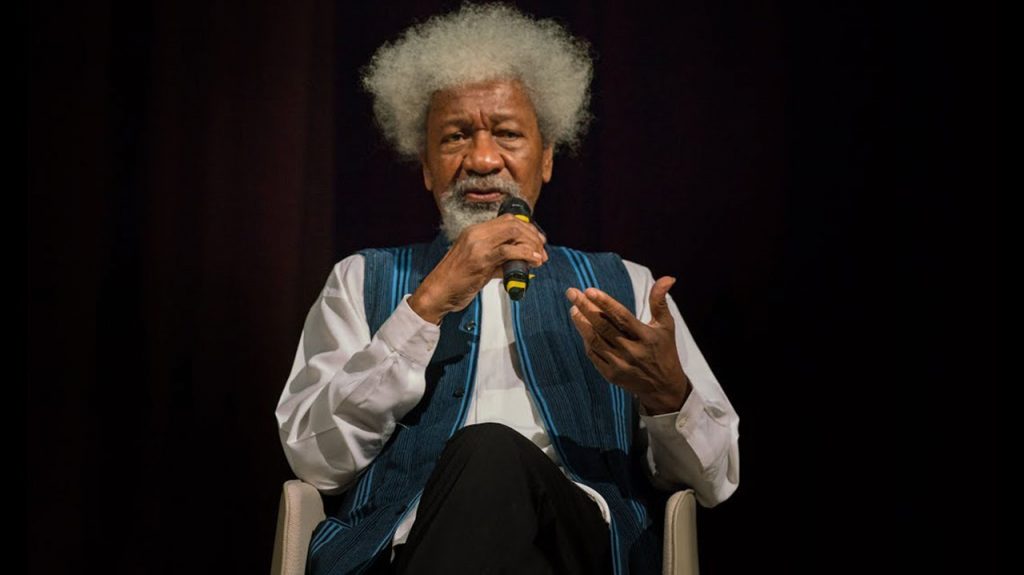
When Professor Wole Soyinka, Nigeria’s Nobel laureate and global literary icon, tore up his United States Green Card in 2016, he did so with the full flourish of defiance and self-importance. It was his way of protesting the election of Donald Trump as President of the United States—a man he despised for his politics, manner, and rhetoric. Soyinka, in that moment, symbolically severed ties with a country he had long enjoyed intellectual and social privileges from. It was an act that many described as noble protest, but in hindsight, it now appears as an episode of unbridled pride.
Fast forward to the present. The same man who publicly repudiated America is now lamenting the revocation of his U.S. visa. Appearing visibly rattled, he has reportedly said he needs to “consult the history of his relationship with America” to understand what went wrong—whether he violated any rule or offended the land he once loved to frequent. The irony could not be richer.
This episode is more than a personal inconvenience for the professor; it is a parable on pride, impulse, and the illusion of immunity that fame sometimes breeds. Soyinka, it seems, has forgotten that the same America whose moral foundations he dismissed remains a sovereign entity with long institutional memory. The United States is not a village square where emotional tantrums are excused as artistic expression. It is a system that prizes loyalty to its ideals and watches those who deride them, no matter how celebrated.
By tearing his Green Card, Soyinka was not simply making a moral statement. He was, knowingly or not, demonstrating disdain for a people’s democratic choice. The object of his scorn was not just Donald Trump the man, but the American electorate that placed him in office. To the ordinary American who takes pride in his nation’s democracy, that act was not poetic defiance—it was insolence.
Now that Trump is once again in the Oval Office, fulfilling his promise to “restore America’s dignity” and clamp down on those who, in his words, “undermine her integrity,” the irony of Soyinka’s predicament has come full circle. The same man who dismissed Trump’s America as unworthy of his association now finds himself thirsting for the same well he once spat into.
A Chinese proverb warns, “Do not spit into the well—you may need to drink from it again.” Soyinka’s ordeal illustrates that ancient wisdom with dramatic precision. His action was not just an impulsive show of defiance; it was a lesson in how pride blinds even the brightest of men. In his disdain for one leader, he overlooked the permanence of the institutions that sustain that leader’s authority. America does not forget. Its bureaucracy is deliberate, its memory institutional, and its response often poetic in timing.
Of course, Soyinka’s literary brilliance is beyond dispute. He remains one of Africa’s finest minds and a fierce voice for justice. But moral stature does not immunize one from the consequences of arrogance. The world has changed. Nations no longer indulge celebrity tantrums dressed in moral garments. Pride, when mixed with privilege, often breeds the kind of blindness that leads to self-inflicted embarrassment.
The lesson here is not about America or Donald Trump; it is about humility—especially among those who imagine themselves above the reach of consequence. Soyinka’s predicament is a reminder that words and actions have echoes, and that in a world increasingly shaped by memory and data, even symbolic gestures are recorded in the archives of accountability.
For a man who has spent a lifetime wielding words as weapons, it is ironic that his undoing might come not from an enemy’s sword but from his own past performance. Pride, as the old adage goes, goeth before a fall—and sometimes, before a revoked visa.
In the end, one hopes the professor’s reflection on this episode will not only be about whether America wronged him, but about whether he, in his moment of pride, wronged himself. For history often deals its ironies in silence—and this one, though quiet, is thunderous.
* Chukwudi Abiandu is a journalist and commentator on public policy and national affairs.
Facebook Comments

GIPHY App Key not set. Please check settings