

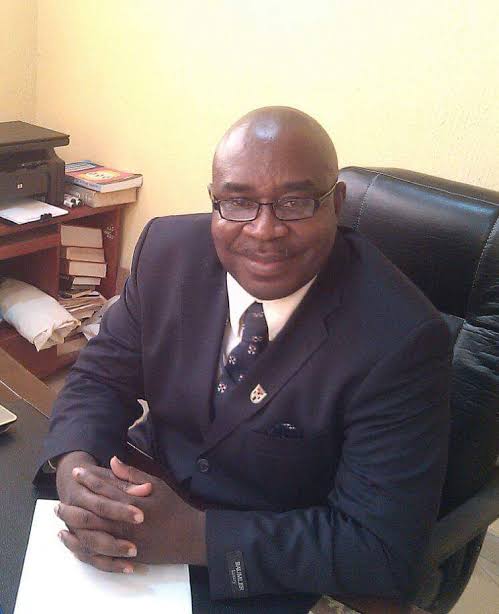
By Prof Abiodun Ojo
When the news broke that the Deputy Speaker of Nigeria’s House of Representatives had earned two PhDs within a period of five months—both from Nigerian universities—it fuelled a fresh national conversation about integrity, standards, and an emerging trend of political shortcuts in higher education. For many observers, this was not merely an accomplishment; it was a warning sign.
The question that disturbs academics, administrators, and the public is simple:
How does a serving high-ranking political officeholder complete the rigorous processes required for doctoral research—twice—within such a short timeframe?

The implications for the credibility of Nigerian postgraduate education are far-reaching.
*When Honoris Causa Is No Longer Available, Something Else Will Replace It*
Honorary doctorates—honoris causa—were historically awarded to individuals whose contributions to society merited exceptional recognition. They were symbolic, not scholarly. But the Nigerian Universities Commission (NUC) recently tightened the rules:
Recipients must not attach the title “Ph.D” to honorary degrees.
They must be referred to strictly as “Honorary Doctor”, not as academic doctorate holders.
Universities may no longer award honorary doctorates to serving public officials.
These reforms closed off a long-abused avenue for politicians eager to brandish the “Dr” title for prestige or political optics. But in closing one door, NUC inadvertently opened a window.
With honorary routes blocked, a new strategy emerged: Convert honorary intentions into “regular” degrees—regardless of whether the requirements are truly met.
Professorship Awards: The Slippery Slope That Signalled This Crisis
Many recall the controversy when a serving minister was awarded a “Professor of Cybersecurity” title, prompting national outrage. The uproar forced the NUC and university Senates to re-examine policies around academic promotions and “awarded” professorships. Nigeria watched in real time as: Academic titles were politicized, Institutional autonomy clashed with ethics, Standards bent under political pressure.
This misadventure signalled a decline that has now matured into today’s PhD-in-Five-Months phenomenon.
Certificate Scandals and the Distortion of Academic Value
Nigeria has also witnessed ministers and public officials embroiled in certificate controversies—ranging from questionable transcripts to outright forgeries. These scandals expose how political influence can compromise due process across educational institutions.
But even more alarming is the subtle erosion within postgraduate programmes—where shortcuts are harder to detect, yet more damaging.
If a politician can compress a doctoral journey that genuinely takes 3–6 years into a few months, then the certificate is no longer a testament to scholarship—it becomes a political accessory.
A Perennial Disorder Enabled by Institution’s
This problem is not new. For decades, Nigerian universities have served as soft landing spaces for politically connected individuals seeking titles without the accompanying rigour. What has changed is the scale and the audacity. The withdrawal of honorary awards has only redirected the desperation: from symbolic titles to academic titles now awarded through questionable fast-track channels.
The complicity of some administrators—Provosts, Deans, Heads of Departments, and even supervisors—makes it possible for such anomalies to thrive.
The Emerging Sinister Path: “Regular” Degrees Awarded at Honorary Speed
Postgraduate programmes are designed to ensure depth, critical inquiry, and the production of original knowledge. A PhD is not a weekend seminar. It is not an executive certificate. It is certainly not a political badge.
Yet today, the new trend is becoming clear:
1. Universities bypass timelines.
2. Supervisors adjust expectations.
3. Internal checks are weakened.
4. Political pressure overrides academic independence.
In many cases, the “research” is hurried, externally written, poorly supervised, or technically ghost-produced by consultants.
This is not just malpractice—it is a systematic hollowing out of the country’s intellectual capital.
*CDPGS AND THE UNIVERSITIES: THE BURDEN NOW RESTS ON US*
The Committee of Deans and Provosts of Postgraduate Schools (CDPGS) must rise to the challenge. If two PhDs can be awarded to a serving Deputy Speaker within months, then the integrity of doctoral education is under direct threat.
The questions we must urgently ask include:
Were the admission requirements followed?Was the coursework completed? Was the proposal approved through the correct chain?Where are the seminar presentations? Where is evidence of original research? Was the dissertation externally examined? Was Senate approval obtained following proper documentation?
If these cannot be answered transparently, then the award is academically compromised—no matter who receives it.
The NUC must also act swiftly to: audit suspicious postgraduate programmes, impose sanctions where standards are violated, and ensure that no university becomes a political certificate vendor.
A Turning Point For Nigerian Higher Education
This is not about one individual or one institution. It is about the soul of the Nigerian university system. If the trend continues: genuine PhD holders will be devalued, postgraduate schools will lose credibility, international recognition of Nigerian degrees will decline, and society will be flooded with “Drs” whose research cannot withstand scrutiny.
It is a dangerous precedent—one that weakens the meritocracy essential for national progress.
Conclusion: Time Will Tell, but Time Is Already Warning Us
Two PhDs within five months while serving as Deputy Speaker is not a miracle; it is a symptom. A symptom of a system bending under political weight. A symptom of institutions that know better but do not do better. A symptom of a nation where titles matter more than knowledge.
If the universities, CDPGS, and NUC do not decisively confront this emerging craze, then Nigeria’s doctoral degrees will soon mean little more than political ornaments.
And when that happens, the damage may be irreversible.
• Prof Abiodun Ojo is Provost of College of Post Graduate Studies, Afe Babalola University, Ado Ekiti.
• Source: PolicyandPolitics.com.ng
Facebook Comments

GIPHY App Key not set. Please check settings