

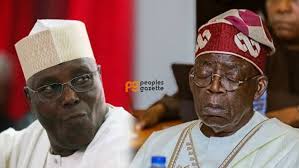
Former Vice President Atiku Abubakar has raised the alarm over what he described as the illegal alteration of Nigeria’s tax reform laws, accusing the Federal Government of committing a “brazen act of treason” against the Nigerian people and undermining constitutional democracy.
In a strongly worded press statement, Atiku alleged that key provisions were unlawfully inserted into the tax legislation after it had been duly passed by the National Assembly, in clear violation of Sections 4 and 58 of the 1999 Constitution. He warned that such actions amount to a direct assault on legislative supremacy and the rule of law.
According to the former Vice President, the alleged alterations grant sweeping and coercive powers to tax authorities without parliamentary approval. These include arrest powers, property seizure and garnishment without court orders, as well as enforcement sales conducted without judicial oversight.

“These provisions effectively transform tax officials into quasi-law enforcement agents, stripping Nigerians of due process protections that lawmakers deliberately provided,” Atiku said.
He further condemned provisions that allegedly increase the financial burden on citizens and businesses, including a mandatory 20 per cent security deposit before taxpayers can appeal assessments, the introduction of compound interest on tax debts, stricter quarterly reporting requirements, and forced dollar-based computations for petroleum operations.
Atiku argued that such measures erect prohibitive financial barriers that prevent ordinary Nigerians from seeking justice while piling additional compliance costs on businesses already struggling under inflation, unemployment and economic hardship.
Equally troubling, he said, is the alleged removal of accountability and oversight mechanisms from the law. These include the deletion of mandatory quarterly and annual reports to the National Assembly, the elimination of strategic planning submissions, and the removal of ministerial supervisory provisions.
“By stripping away oversight while expanding executive power, the government has insulated itself from accountability—a defining feature of authoritarian governance,” he stated.
The former Vice President accused the administration of pursuing aggressive revenue extraction from an impoverished population instead of investing in infrastructure, education, healthcare and economic empowerment that would organically expand the tax base.
“Nigeria’s poverty rate remains alarmingly high, unemployment continues to devastate families, and inflation erodes purchasing power daily. Yet this government chooses draconian measures over policies that empower citizens to prosper,” Atiku said.
He stressed that sustainable economic growth comes from empowering citizens, not impoverishing them through punitive taxation and erosion of legal protections.
Atiku called for the immediate suspension of the tax law scheduled to take effect on January 1, 2026, to allow for a full investigation. He urged the National Assembly to rectify the alleged illegal alterations and hold those responsible accountable, while calling on the judiciary to strike down any unconstitutional provisions.
He also appealed to civil society organisations and Nigerians to resist what he described as an assault on democratic principles, and urged the Economic and Financial Crimes Commission (EFCC) to investigate and prosecute those allegedly involved in the illegal alteration of the law.
“What the National Assembly did not pass cannot become law,” Atiku declared. “This principle must be defended, or we risk descending into arbitrary rule where constitutional safeguards mean nothing.”
He concluded by insisting that Nigerians deserve accountable governance, constitutional compliance, and economic policies that build prosperity rather than deepen poverty.
Facebook Comments

GIPHY App Key not set. Please check settings