

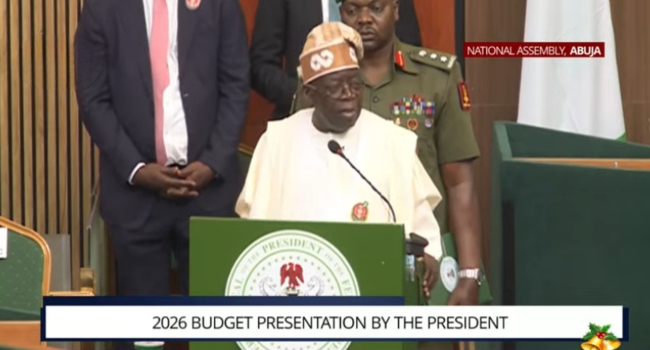
UNSURPRISINGLY, Nigeria performed poorly in the latest global governance index. The country, once touted as the giant of Africa, did not even feature among the top 10 best-governed countries in Africa. It is shameful.
The World Economic Governance Index 2026 ranked the best-governed countries on four parameters: Rule of Law, Press Freedom, Political Rights and Corruption. It ranked data on a 0-100 scale, where 0 means bad, or very poor and 100 means very good.
It also graded countries on an A to E scale, where ‘A’ is very good governance, ‘B’ is good governance, ‘C’ is average governance, ‘D’ is poor governance, and ‘E’ is very poor governance.
Globally, Finland ranks first among the best-governed countries with a governance index of 98.0. It scored 100.0 in Rule of Law, 93.4 in Press Freedom, 100.0 in Political Rights and 98.7 in Corruption. Denmark, Norway, Sweden, and the Netherlands rank second, third, fourth and fifth, respectively.
Afghanistan ranks last (156) among the very poorly governed countries, with a governance index of 5.0.
In Africa, the top 10 best-governed countries are Cabo Verde, Mauritius, Namibia, South Africa, Botswana, Ghana, Senegal, Malawi, Sierra Leone and the Gambia.
With a governance index of 74.0, Cabo Verde ranks 29th globally and first in Africa. On Rule of Law, it scored 58.8; Press Freedom, 77.6; Political Rights, 95.2; and Corruption, 64.5.
It is shocking that a country like the Gambia, which used to have an appalling record in press freedom, performed better than Nigeria in all parameters. The country is in grade ‘C’, which is average governance and ranks 74th globally with a governance score of 47.6.
Nigeria is on grade level ‘D’, which means it is among the countries in the poor governance category. It ranks 112 in the world with a governance score of 33.9.
The country scored 25.0 in the Rule of Law, 41.3 in Press Freedom, 52.4, and 17.1 in Political Rights and Corruption, respectively.
The reasons for this poor performance are not far-fetched. Concerning press freedom, it is obvious that journalists have become an endangered species in Nigeria. The Cybercrime Act has been weaponised by the political class; it is being used to muzzle, harass and detain.
The Centre for Journalism Innovation and Development Press Attack Tracker identified 110 verified attacks against journalists in 2024.
According to Reporters Without Borders, Nigeria dropped 10 spots to 122nd in the 2025 World Press Freedom Index.
Besides, Nigeria’s corruption level is deeply entrenched in virtually all spheres of national life. Government agencies are neck-deep in it, which has negatively affected access to quality education, health care, and job opportunities.
Closely tied to this is judicial corruption and the non-adherence to the rule of law. Hence, many Nigerians have lost confidence in the third arm of government.
The worst is that in Nigeria’s correctional centres, awaiting trial inmates, comprising 64 per cent of Nigeria’s total custodial population, far outnumber convicted inmates. Some spend more years in detention than they would have if convicted.
The political rights of Nigerians have also been viciously assaulted. Currently, Nigeria is tilting towards a one-party state.
There is a systematic stifling of the opposition. Political meetings of some opposition parties have been violently disrupted. Recent elections have shown that votes might not count.
UNESCO’s 2023 analysis of the status of human rights data from 180 countries indicates that many countries that enjoy the highest levels of free expression also enjoy higher civil, political, economic, and social rights. The situation is opposite for most of the countries that had the lowest level of free expression.
If the Nigerian government is serious about governance, it should review the Cybercrime Act and other restrictive legislation to engender human and political rights, as well as press freedom.
Nigeria will continue to stumble unless journalists are allowed to do their job without molestation, as stipulated and guaranteed by the 1999 Constitution, the International Covenant on Civil and Political Rights, the African Charter on Human and Peoples’ Rights, and Article 19 of the Universal Declaration of Human Rights (1948).
The rule of law must be respected, and the fight against corruption must proceed with the seriousness it deserves.
If Cabo Verde can achieve such a milestone in good governance, Nigeria can do better. It takes the political will and selflessness of those in power to achieve it.
• PUNCH Editorial, Wednesday, March 11, 2026
Facebook Comments

GIPHY App Key not set. Please check settings