

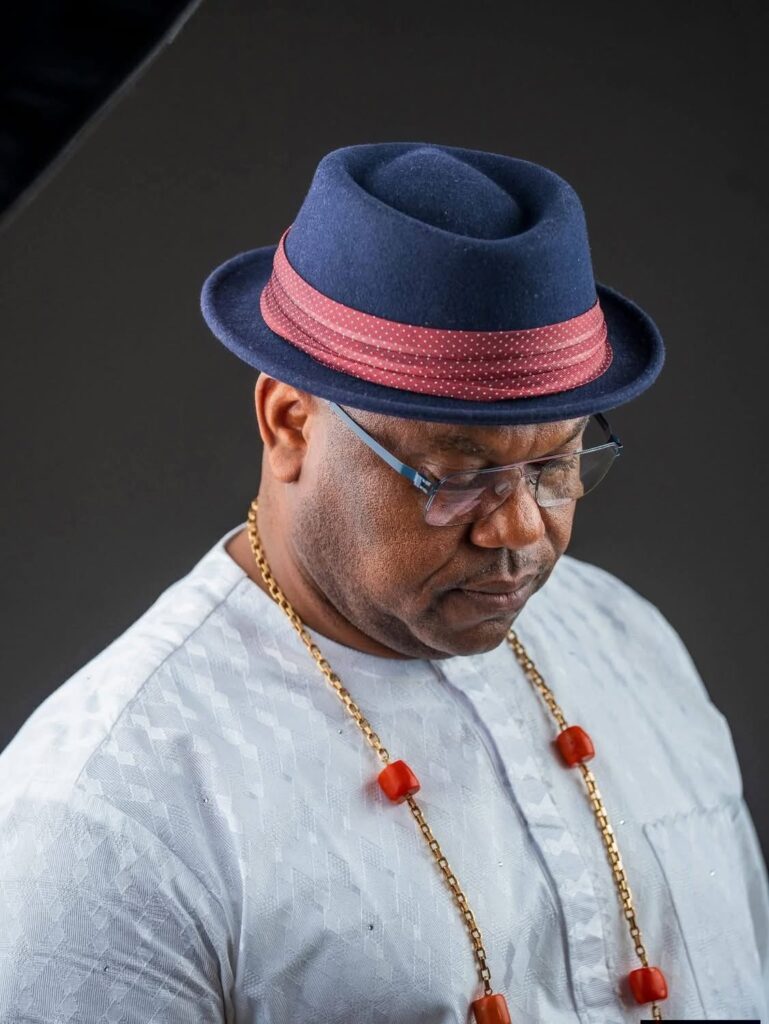
By Ikechukwu Chukwudi-Abiandu (The Legacydreamz).
It is often said that when facts become inconvenient, the easiest refuge is outrage. That appears to be the path chosen by Mr Jude Bruno Amamosa and those who seek to dismiss the concerns raised by Rt. Hon. Victor Ochei rather than engage the substance of his argument.
The lengthy defence for Senator Ifeanyi Okowa reads more like an emotional attempt to evade an uncomfortable conversation that is already taking place across homes, markets, communities, and political gatherings throughout Anioma land.

The issue is not Victor Ochei, it is also not Ned Nwoko, and if we are being circumspect enough, it is not even about Okowa as a person.
The issue is whether political power in Delta North should continue to revolve around the same circle while countless capable sons and daughters are expected to remain spectators in the land of their ancestry.
The most intelligent of men are not immune to word slips and speech errors, and even if by a long shot, one were to concede that Rt. Hon. Ochei misspoke on a particular detail, does that erase the larger concern he raised? Certainly not.
The crux of his message was never about whether Okowa once served as a councillor. It was about political concentration, entitlement, and the growing perception that public offices are increasingly being recycled within a narrow political family and its associates.
That sentiment did not originate from Victor Ochei. It is from conversations being whispered in private and discussed openly by many Anioma people who believe that leadership opportunities should not continually flow in one direction, while others are expected to cheer and applaud from the sidelines.
The attempt to reduce this concern to a technical argument about family definitions is also unconvincing. Whether one describes Emmanuel Osazuwa as an in-law, associate, political ally, or beneficiary of an established political network misses the broader point entirely. The concern being expressed by many constituents is about the concentration of influence and opportunity, not merely blood relationships.
Democracy undoubtedly gives every citizen the right to contest elections. Nobody disputes that and Rt. Hon. Ochei in his words, did not argue otherwise. The right to contest, however, does not place political decisions beyond public scrutiny.
Citizens are equally entitled to question patterns, challenge political monopolies, and debate whether leadership opportunities are being fairly distributed.
Democracy protects not only the right to run for office, but also the right of the people to interrogate those who seek such offices.
Jude Amamosa’s argument which says that raising these questions amounts to opposing democracy is nothing more than a tribute to mediocrity, and it antagonises democracy itself.
More stupefying however, is the argument that because people persuaded Senator Okowa to seek another office, the public should refrain from questioning the decision.
Throughout history, powerful politicians have always found supporters willing to encourage them to seek more power. Such endorsements do not automatically extinguish legitimate concerns about political succession, inclusiveness, or generational renewal.
The real question remains unanswered: after decades of occupying virtually every major political office available—local government chairman, commissioner, secretary to the state government, senator, governor, vice-presidential candidate, and now aspiring senator once again –at what point does a statesman create space for others?
That was the essence of Ochei’s intervention.
Ironically, those attacking him have done little to address that central issue.
They speak of popularity. They speak of goodwill. They speak of support structures. Yet none of these invalidates the argument that leadership should be broadened and opportunities expanded.
In fact, the more influential a leader becomes, the greater the responsibility to nurture new leadership rather than dominate the political landscape indefinitely.
What makes the attacks on Ochei particularly unfair is that they attempt to portray him as a bitter politician seeking relevance. Nothing could be further from the truth.
Rt. Hon. Victor Ochei has served as Speaker of the Delta State House of Assembly, held significant national responsibilities, built enduring institutions, invested in youth development, promoted sports, empowered communities, and maintained a visible presence in public life long after leaving office. He does not need relevance from anyone, much less an Ifeanyi Okowa that many believe owes the success of his first Senatorial expedition to the generosity and brotherly disposition to him.
More importantly, his comments were not those of a man seeking to challenge another politician out of personal animosity. They reflected a growing concern among many people who believe that Anioma politics must become larger than individuals, families, and entrenched structures.
Indeed, the assertion that Ochei is “challenging” Okowa is misplaced.
He merely articulated what many others have been saying for years. If those observations have generated discomfort, perhaps the discomfort lies not in the messenger but in the message.
History teaches that political greatness is measured not merely by the offices one occupies but by the opportunities one creates for others. The strongest leaders are not those who remain perpetually on the ballot; they are those who build a generation capable of succeeding them.
As for performance, the records of public service remain available for objective assessment.
Citizens are free to compare legacies, compare contributions, compare developmental footprints, compare investments in human capital, and arrive at their own conclusions. Such comparisons are not acts of bitterness. They are the essence of democratic accountability.
In the end, this debate is bigger than Victor Ochei. It is bigger than Ned Nwoko, and it is bigger than Ifeanyi Okowa.
It is about the future of Delta North and whether political leadership should remain concentrated or become inclusive.
It is about whether new voices should emerge or old structures should continue to dominate.
It is about the right of a people, our people to ask these questions without being accused of bitterness simply because the answers may be uncomfortable.
On a final note, the indecision of the National Working Committee of the APC regarding the Primaries between Senator Ned Nwoko and former Governor Ifeanyi Okowa, combined with the emergence of Rt Hon Victor Ochei has clearly shown the people’s inclination.
Among the three, Okowa is the least electorally viable and attractive candidate available.
Facebook Comments

GIPHY App Key not set. Please check settings