

By Our Correspondent
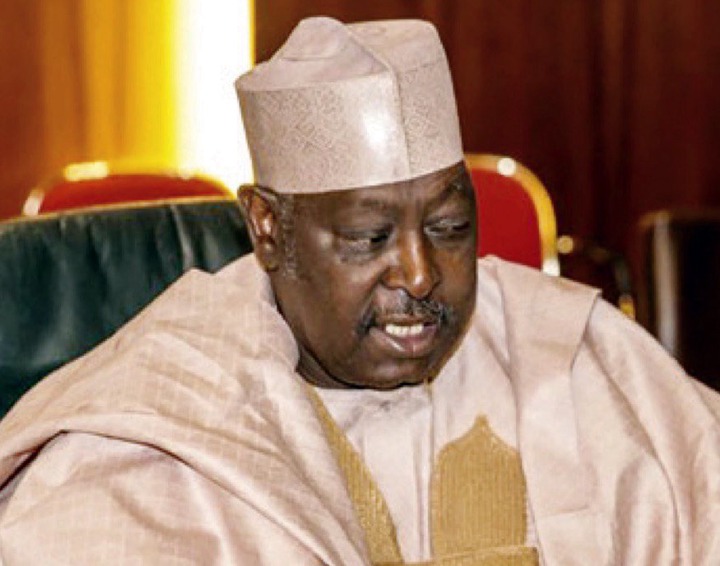
Former Secretary to the Government of the Federation (SGF), Babachir David Lawal, has launched a blistering attack on Nigeria’s political leadership, declaring that President Bola Tinubu’s administration has deepened insecurity and marginalisation, while insisting that former Vice President Atiku Abubakar lacks the capacity and public trust needed to lead the country.
In an explosive interview with Sunday Sun, Lawal painted a grim picture of the nation’s political and security landscape, warning that Nigeria’s future remains uncertain under its current leadership trajectory.

The former SGF accused President Tinubu of failing to address what he described as longstanding injustices against northern Christians and ethnic minorities, arguing that the controversial Muslim-Muslim ticket had aggravated existing divisions.
According to him, rather than improving the situation, insecurity has worsened significantly under the current administration.
“It is not persisting; it is increasing. There is no state that does not now have issues with bandits or kidnappers,” Lawal said while dismissing suggestions that fears surrounding the Muslim-Muslim ticket had not materialised.
He further alleged that the administration had shown little interest in restoring equity within the northern political structure, claiming that Tinubu’s approach to governance was contributing to deeper divisions.
Lawal also expressed scepticism about the President’s re-election prospects, arguing that widespread economic hardship, insecurity and social tensions had left many Nigerians disillusioned.
“Almost every Nigerian would vote against him. The North in particular would do so more forcefully,” he asserted.
The former SGF was equally unsparing in his criticism of Atiku Abubakar, whom he accused of seeking excessive control over political structures and operating with an inflated sense of entitlement.
Describing the former vice president as “full of himself,” Lawal alleged that Atiku conducts himself as though he still occupies public office, surrounding himself with long convoys, private jets and protocol arrangements reminiscent of his days in government.
He said his disagreements with Atiku stemmed not from personal animosity but from what he described as the former vice president’s tendency to dominate political organisations and dictate to party members.
More significantly, Lawal argued that Atiku has become a political liability whose repeated presidential ambitions have generated widespread voter fatigue.
“There is a fatigue against that man all over the country,” he said. “Nigerians are asking what is driving him to that position. It cannot be altruistic. It cannot be other than self-serving.”
Lawal revealed that his decision to leave the African Democratic Congress (ADC) was partly influenced by the party’s continued alignment with Atiku despite widespread concerns about his electoral viability.
According to him, party supporters across the country repeatedly expressed confidence that the ADC could win a presidential election, but only if Atiku was not its candidate.
The former SGF went further, issuing one of his strongest warnings yet against the former vice president’s presidential ambition.
“With Atiku, I am not confident the country would survive his presidency in the current climate,” he declared.
While acknowledging that President Tinubu remains deeply unpopular in many quarters, Lawal suggested that Nigerians might still prefer to endure another four years of the current administration rather than risk an Atiku presidency.
On Peter Obi, the former Labour Party presidential candidate whom he had previously supported, Lawal said circumstances had changed significantly.
He argued that Obi’s political prospects had diminished after leaving what he considered a potentially viable political structure and aligning with a party lacking nationwide organisation and resources.
“My hope in Peter Obi winning is not very high because of the structural challenges he has chosen to saddle himself with,” Lawal said.
Turning to insecurity, Lawal criticised proposals for state police, describing them as an attempt to transfer responsibility to governors whom he accused of contributing to Nigeria’s governance failures.
Instead, he called for the retraining and proper equipping of the nation’s security agencies, lamenting what he described as deteriorating standards within the military and security services.
He alleged that poorly equipped soldiers were being deployed to combat zones while senior officers accumulated wealth and properties.
“The son of a poor man is sent to face the enemy with a rifle held together with tape,” he said.
Despite his criticism of the Tinubu administration, Lawal hinted that a future political reconciliation could become possible if the President were to acknowledge concerns over religious representation by selecting a northern Christian running mate for a second term.
However, he stressed that competence and good governance must take precedence over ethnic and religious considerations.
As political calculations for the 2027 general election intensify, Lawal’s remarks are likely to reverberate across the country’s political landscape, particularly in the North, where debates over power, representation, insecurity and leadership continue to shape electoral calculations.
His intervention also underscores growing tensions within opposition circles and raises fresh questions about the viability of leading presidential hopefuls ahead of what promises to be another fiercely contested election cycle.
Facebook Comments

GIPHY App Key not set. Please check settings