

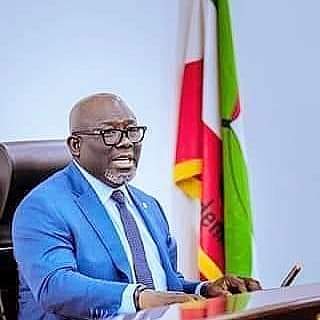
By Our Reporter
Hundreds of furious Ndokwa Nation protesters barricaded the Delta State Government House entrance for over an hour Wednesday, April 23, 2026, wielding old lanterns and worn-out lamps as proof of two decades of official abandonment.
The message was brutal: “Governor Sheriff, No Light No Vote.” “20 Years of Darkness.” “Oil Everywhere, Light Nowhere.”
This is not a technical fault. It is a systemic failure of policy, governance, and execution.
For more than 20 years, over 150 oil-rich Ndokwa communities have sat in total darkness while successive governments looked away. Families study by candlelight. Small businesses have collapsed under generator costs. Hospitals cannot run life-saving equipment.
“This is not an inconvenience,” declared Comrade Nkem Stanley Adoh, President General of Ndokwa Nation. “It is a wound on the development and dignity of our communities.”
The protest, led by women, youths, traditional masquerades, and community leaders, turned the seat of power in Asaba into a stage of shame. Observers noted the crushing irony: a region that powers Nigeria’s energy wealth cannot power a single clinic.
Governor Sheriff Oborevwori, through his Chief of Staff, offered vague assurances, consultants engaged, regulatory frameworks pending, power “soon” restored. The same language residents have heard for 20 years.
The protesters demand a time-bound, costed, accountable plan. An immediate independent technical audit. Emergency generators for health facilities now. Not tomorrow. Not “soon.” Now.
Because 20 years of darkness is not a grid failure. It is a governance failure. And in an election year, that failure has a price: No light, no vote.
Facebook Comments

GIPHY App Key not set. Please check settings