

By comrade Cromwell Umebese
Governance is not a public-relations exercise. It is not measured by the number of roads commissioned, the volume of money announced for projects, the frequency of government-sponsored advertisements or the size of crowds assembled to celebrate political leaders. Ultimately, governance must be measured by its impact on the lives of ordinary citizens.
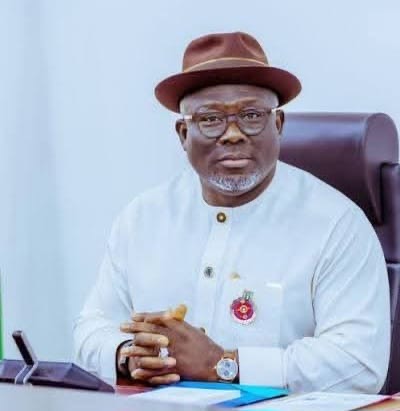
Since assuming office on May 29, 2023, Governor Sheriff Oborevwori has had the responsibility of translating Delta State’s enormous human, natural and financial resources into tangible improvements in the living conditions of its people. With oil wealth, substantial federal allocations, internally generated revenue and an established network of public institutions, Deltans have legitimate reasons to expect visible improvements in their economic circumstances.
The critical question, therefore, is not whether the government has executed projects. It is whether its policies and expenditure have produced sufficient, measurable and broadly shared benefits for the people.
A serious assessment of the administration must look beyond official announcements and examine the evidence. The following issues deserve particular scrutiny.
Persistent Poverty Amid Enormous Resources
One of the fundamental tests of government performance is its ability to reduce poverty.
Delta State is richly endowed with crude oil, natural gas, fertile agricultural land, waterways and a substantial commercial base. Yet natural wealth does not automatically translate into prosperity for the population.
When households struggle to afford food, parents find it difficult to pay school expenses, young graduates remain unemployed and small businesses battle rising operating costs, the government must explain how its economic policies are addressing these challenges.
The relevant question is whether the Oborevwori administration has established measurable poverty-reduction targets and published evidence of progress towards achieving them.
A credible assessment should examine changes in household purchasing power, poverty rates, access to social protection, employment opportunities and the affordability of essential services since 2023.
The issue is not whether poverty existed before the present administration. It is whether the government is making sufficient progress towards reducing it.
Infrastructure Development Without Sufficient Evidence of Broad-Based Prosperity
The Oborevwori administration has placed considerable emphasis on infrastructure, including roads and bridges. Infrastructure can stimulate economic activity, improve mobility and connect communities to markets. It is therefore an important component of development.
However, infrastructure spending should not become the only yardstick for evaluating government performance.
A road may improve transportation, but its broader economic value depends on whether farmers can sell their produce more profitably, traders can reduce transportation costs, businesses can expand and residents can access essential services more easily.
The government must demonstrate how its infrastructure investments translate into economic opportunities and improved living standards.
Questions that deserve answers include: What proportion of completed projects was delivered within budget? Which projects have been independently verified? How much has transportation improved along the affected corridors? What maintenance arrangements are in place to protect public investment?
The objective should not be to dismiss infrastructure projects, but to demand evidence that they are economically productive, equitably distributed and sustainable.
For instance, the whole of Aniocha North have no roads . Many of the roads have collapsed, severely dilapidated or impassable . The Onicha Ugbo – Idumuje Ugboko – Ewohimi road has collapsed . This is a major road that connects Delta State to the North. The Issele Uku – Idumuje Ugboko road is a nightmare. Other roads that have collapsed are the Ugboba – Ukwunzu Road,, the Ubulubu- Ogodo Road, the Ubulubu- Ezi Road , the Ezi – Ogodo Road, the Onicha -Olona- Ezi – Ukala- Okute – Ebu Road, the Onicha – Uku- -Ukwu-Nzu Road and the Idumu-Ogo- Obomkpa Road. To the residents of these towns and villages , government simply does not exist, as they are unable to transport their farm produce from one village to another . To them life is a terrible nightmare and the Oborevwori administration is seen as a scourge , more severe than what Pharoah did to the Israelites in biblical days.
In Aniocha South roads that have collapsed and are impassable are :
– Abah – Unor – Adonte Road
– Ubu-Uku – Onicha Ugbo Road
– Ewulu community access road
– Adonte road – completed threatened by gully erosion
In Oshimili South , which includes Asaba , the capital of Delta state has experienced severe infrastructure problems, including failed asphalt, potholes, flooding and collapsed road sections. The Dennis Osadebay way – Abraka junction to Ogbogonogo market have severely deteriorated. The Asaba- Onitsha Expressway has totally collapsed with incidents of trailer accidents occurring on a daily basis.
There are also so many failed roads in Asaba main town . One needs to visit state capital cities of Uyo, Abakiliki , Owerri , Enugu or Portharcourt to realize that Asaba is lagging behind as a capital city . With a humongous Federal allocation now running to about 120 billion monthly in some instances , a figure bigger than the total allocation to the 7 states in the North west, one wonders why the Delta state capital of Asaba cannot look like Dubai.
In Ndokwa East the principal access roads are poor and severely deteriorated.The Inyi community access road , the Ibrede- Azagba- Ibedeni- Ase road requires urgent attention.
In August 2026 , the Ndoshimili Development Union cried out to government that their roads require urgent intervention. Government kept deaf ears to their cries . The Isselegu- Inyi- Onuaboh- Abala road has collapsed while the Igbuku- Ibrede- Awah-Iyede Ame – Umuolu road have not been attended to for decades. The Obetim- Isselegu- Obikwele Road has been forgotten by government while the inhabitants wallow in self pity and severe abandonment . Community leaders around the Asaba Ase Road have resigned to fate knowing that government will never come to their rescue .
In Ukwuani local government area, the old Sapele- Agbor road has experienced serious deterioration and erosion threats . Also The Obiaruku- Abraka Road has been in a deplorable condition for decades.The Agbor- Umutu – Obiaruku- Eku road has been a nightmare to commuters especially students of DELSU who travel to school under deplorable conditions. The old Umutu- Eku road is also adversely affected by just as the Kwale- Ebedei- Umutu road has become almost impassable. The Amai- Aragba road has been rendered impassable despite failed attempt by the state government to fix it .
The immediate past government of Dr Okowa deliberately concentrated development only in his home place of Owa Oyibo and Owa Alero, leaving other roads in Ika North East and Ika South completely dilapidated.
ELECTRICITY CONDITION IN DELTA NORTH
The whole of Delta North is in darkness. The Senatorial district has realized that they can no longer depend on power from the National grid. The epileptic power supply to Delta North or near absence of electricity has hampered the development of industries in the area. The Asaba Textile Mill, the Summit furniture , the S.I.O industrial clusters have all collapsed because of high cost of running them. Hotels in Delta North run exclusively on diesel making the hospitality business very expensive and volatile. It is difficult for any hotel in Asaba to survive for 5 years without running out of business.
The Okpai IPP , a gas fired electricity generating facility owned by the Federal government/ multinational corporations located at Okpai in Ndokwa East may have been the solution but the facility supplies light to Abuja and other states while towns and villages surrounding it are in darkness.
There has been persistent calls on the state government under Oborevwori’s watch to fund a step down in the Okpai IPP to the tune of about 40 billion naira so that Delta North can have light but Governor ,Sheriff Oborevwori has rejected every entreaty with the flimsy excuse that the Okpai IPP is a Federal project. Yet the same Oborevwori sees nothing wrong in investing N78.7 billion in Warri- Effurun flyovers and bridges on Federal highways, N59.7 billion on Agbor flyover and N39.3 billion on Otovwodo junction flyover ( a combined total of N177.7 billion ) all on Federal Highway.
WATER CONDITIONS IN DELTA NORTH
The whole of Delta North cannot boast of potable water. The Urban water Boards and the Rural water supply Agency are just cosmetic contraptions that gulp tax payers money without commensurate results for their existence.
The Ogwashi Uku dam which was designed to supply water and farm irrigation to about 61 adjoining villages around Ogwashi uku has not helped matters . Many public spirited persons have called upon the Delta state Government under Oborevwori ‘s watch to take over the counterpart funding of the water reticulation aspect of the dam to enable water distribution to homes but Governor Oborevwori had refused, citing it as a Federal Government project. Oborevwori rather prefers vote catching projects that has no bearing with human capital development.
Delta Northerners are experiencing the pains of a failed government and are waiting for the 2027 election for them to unleash their anger on the Oborevwori administration via the ballot box
Youth Unemployment and the Search for Economic Opportunity in Delta North
Youth unemployment and underemployment remain important issues in Nigeria, and Delta State cannot escape scrutiny over the opportunities available to its young people.
A government that wishes to build a prosperous state must create conditions in which young people can acquire useful skills, establish businesses, obtain decent employment and participate meaningfully in economic life. For too long the Delta state government has deceived Delta youths that they have designed entrepreneurial programmes under YAGEP, FSP, WESAP and the like . These phantom programmes have gulped billions of naira of tax payers money without any impact on the youths . The so called job creation office has become a recipe for grand corruption, the scale of which has never before been experienced in the history of Delta State. Poverty looms large in Delta state with graduates of Delta North extraction roaming the streets in search of jobs that don’t exist . The trauma is inexplicable and hope for a reprieve totally forlorn .
In Delta state under Oborevwori ‘s watch , the Delta Youths are not guaranteed of employment after school. The Government also does not create the enabling environment for genuine enterprise to thrive . Graduates therefore , after spending years in the university or polytechnics end up becoming Okada and keke riders . This is indeed pathetic as there is a disconnect between government and the governed leading to a total breakdown of the social contract that should have existed between the two.
The High Cost of Living and Household Economic Pressure in Delta North
For many households, the most immediate measure of government performance is the cost of meeting basic needs.
Food, transportation, accommodation, electricity, healthcare and education compete for limited household income. When these expenses rise faster than earnings, families experience declining purchasing power.
Although national economic conditions and federal policies significantly influence inflation and living costs, state governments still have responsibilities within their constitutional and administrative powers.
Delta State can support agricultural production, improve rural roads, facilitate market access, strengthen public healthcare, expand vocational training and reduce unnecessary administrative barriers facing businesses.
It is therefore reasonable to ask what specific measures the Oborevwori administration has implemented to reduce the cost of doing business and ease the economic pressure on households.
Such an assessment should examine actual outcomes, including food production, farm-to-market transportation, access to essential services and the effectiveness of targeted assistance to vulnerable residents.
In Delta North cost of living is very high. Families grapple with how to feed their families and pay high cost of house rents . An average two bedroom flat in Asaba costs about N1.5m as annual rent . Even a one bedroom flat goes for about 1m. Transport costs are unusually high and unsustainable. Besides,cost of Education is very high in Delta North compared to neighboring states . For a state in which the minimum wage is about 70,000 naira monthly , survival is difficult and it will not take long before the fabric of family collapses. Most girls in Delta North have taken to prostitution and the boys to Yahoo plus to survive. Morality has ground to a halt . Yet the Oborevwori administration still prides itself as a government. God forbid.
Education: Beyond Buildings and Enrolment Figures
Education is an investment in the future of Delta State. It determines the quality of the workforce, the competitiveness of local businesses and the ability of young people to participate in a modern economy.
A meaningful assessment of the administration should examine the condition of public schools, the availability of qualified teachers, classroom overcrowding, access to learning materials, technical education and the affordability of tertiary education.
The performance of educational institutions should also be assessed through completion rates, learning outcomes, examination performance and the transition of graduates into employment.
For tertiary institutions, transparency regarding fees, funding, staffing and infrastructure is essential.
Where government has undertaken educational projects, the public deserves information about their costs, completion status, operational readiness and benefits to students.
The fundamental question is whether educational investment is producing better learning opportunities and preparing young people for productive lives.
In Delta North several secondary schools that were once regarded as centres of academic excellence, discipline and character formation have becomes shadows of education. Schools such as St Patrick’s College , Asaba , Agbor secondary school, Ika grammar school, Obiaruku Grammar School , Pilgrim Baptist Grammar School, Martins College , Issele Uku no longer attract the same recognition they had about 20- 30 years ago. The progressive abandonment of these schools by government has reduced education to mere ceremonial schools which exist just to award watery certificates
Healthcare and the Welfare of Ordinary Citizens in Delta North
A government cannot claim comprehensive development if access to essential healthcare remains beyond the reach of many residents.
The assessment of healthcare delivery should consider the availability of medicines, qualified personnel, functional primary healthcare centres, maternal and child health services, emergency care and affordable treatment for low-income households.Most Primary Health care centres in Delta North have just one doctor and a few other health workers.
The government should also demonstrate how its health insurance and other intervention programmes are improving access to treatment.
How many facilities are fully operational? How many residents have effective access to affordable healthcare? Are rural communities adequately served? What improvements have occurred in staffing and essential medical supplies?
These are measurable questions that deserve public answers.
The presence of a hospital building does not, by itself, establish that healthcare services are accessible, affordable or effective.
From the forgoing unless a benevolent government comes to take over the reins of government in 2027, Deltans would have to wallow in poverty , deprivation and insecurity for a long time.
But who will that benevolent government be? That is the choice Delta Northerners have to take in 2027 from the alternatives offered by the ADC and the NDC.
Facebook Comments

GIPHY App Key not set. Please check settings