

By Valentine Obienyem
When Mr. Bayo Onanuga, despite having access to all the security apparatus required to verify the source of a post alleging that the President’s voice had been cloned, went on air and falsely accused VDM as the source, he demonstrated rash judgment. In reaction, VDM – young enough to be his son – publicly described him as “stupid.” Lest anyone accuse the youth of irreverence, the dictionary meaning of stupidity he referenced aligned squarely with Onanuga’s conduct. In VDM, Bayo met extremes with extremes.
Having watched Bayo over the years, all I can say is that he is fast deteriorating in every index of good spokesmanship. I see a certain conserving indolence of body and mind that keeps him inert until Mr. Peter Obi makes a statement, and then you see him coming up with thoughtless responses marked by unrecorded pertinacity. He was in a hurry to react without taking the necessary steps, which remains the hallmark of his conduct as a spokesman.

Even in their own variant of public commentary, and while equally being guilty of what VDM complained about, figures like Daniel Bwala, who has demonstrated that most men are purchasable; Kenneth Okonkwo, who suffers the dangerous delusion of having found fame; Adams Oshiomhole, who takes sardonic pleasure in turning against his friends and exceeds in the licentiousness of life; Dave Umahi, who speaks with manacles on his arms and fetters on his feet (slavishly), and whom an extremist called a Judas, a Satan for whom hell can never provide adequate punishment; Reno Omokri, whose invectives and political thunderclaps he mistakes for sublime thoughts, making us question when he would become mature in mind; and Femi Fani-Kayode, the old turncoat, at least make an effort at basic research.
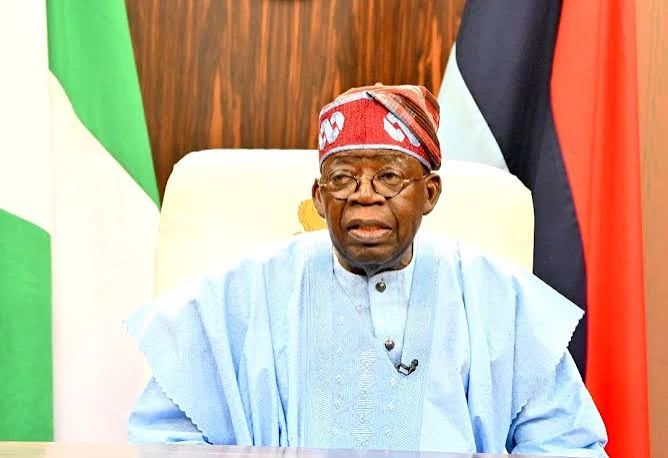
This same pattern is at play in his response to Mr. Peter Obi’s call for the resignation of President Ahmed Tinubu. In restricting the concept of resignation strictly to parliamentary systems of government, Bayo Onanuga was at his weakest. An experienced spokesperson would first have checked the meaning of resignation, how it is deployed in constitutional practice, and whether it is contemplated within the Nigerian constitutional framework and the reasoning behind it. In his rush to roast any dissenting voice in a pot of acidic ink, he attacks impulsively, creating openings for counterarguments that continuously expose his own lack of depth. He makes us remember the golden and more mature era of the likes of Reuben Abati, Segun Adeniyi, and Femi Adesina.
Across the entire history of organised governance, one consistent preoccupation has defined political systems: how to control, constrain, or remove bad leadership when it becomes harmful to the public good. Whether in ancient societies or modern constitutional democracies, governments have always developed mechanisms – formal or informal – to ensure that leadership remains accountable and does not degenerate into tyranny, incompetence, or a loss of public trust. These mechanisms broadly fall into two categories: voluntary exit by the office-holder and structured removal processes defined by the system itself. Together, they represent humanity’s long-standing attempt to balance authority with accountability.
Voluntary exit, commonly understood as resignation or abdication, is the most direct form of leadership correction. It relies on the moral judgment of the office-holder or the political pressure surrounding them. In ancient and modern contexts alike, leaders have stepped down when they recognised a loss of legitimacy, declining public confidence, or an inability to govern effectively. This form of exit is rooted in the idea that power ultimately depends on consent, and when that consent weakens significantly, continuation in office becomes untenable. It is a rarefied moment where a leader recognises that the preservation of the state, or their own humanity, matters more than the perpetual grip on power.
Alongside this voluntary principle, societies developed institutionalised mechanisms of removal. One of the earliest structured examples is the Athenian practice of ostracism involving figures such as Aristides of Athens. In this system, citizens could vote to exile a public figure for ten years without a criminal conviction. Ostracism functioned not as a punishment for wrongdoing, but as a democratic safety mechanism designed to neutralise individuals whose growing influence, wealth, or political dominance threatened the balance of the state. It was, in essence, a preventive tool used to protect the political order from the concentration of power and potential authoritarian drift.
In modern constitutional systems, this logic evolved into more formal and legally defined procedures, most notably impeachment. While ostracism removed individuals through popular civic judgment without a criminal trial, impeachment introduces a structured judicial and political process for removing public officials accused of misconduct, abuse of office, or gross incompetence. Both mechanisms share the same underlying purpose: to provide a lawful pathway for removing leaders who have lost the trust or confidence required to govern.
In presidential democracies, impeachment serves as the institutional counterpart to ostracism. It transforms what was once a direct popular vote in ancient Athens into a constitutional process carried out by legislative and judicial institutions. Yet the principle remains unchanged: no leader is beyond removal when governance fails or public trust collapses.
Complementing impeachment is the mechanism of resignation, which represents the voluntary acknowledgment of political reality. It is the least disruptive form of exit, allowing a leader to step aside before institutional processes are triggered. In functioning democracies, resignation is often encouraged as a stabilising option when political pressure, ethical concerns, or governance failures become overwhelming.
Modern examples within presidential systems reinforce this framework of accountability. In the United States, Richard Nixon resigned in 1974. In Brazil, Fernando Collor de Mello resigned. In Peru, Pedro Pablo Kuczynski resigned under mounting political pressure. These cases demonstrate that presidential systems are not rigid structures immune to leadership exit but flexible constitutional orders with built-in correction mechanisms.
Taken together, resignation, ostracism, and impeachment represent different expressions of the same democratic instinct: the need to control bad leadership and preserve the integrity of governance. They differ in form but not in purpose. Each reflects a society’s attempt – across time and systems – to ensure that leadership remains accountable to the people it serves. It is therefore conceptually flawed to treat calls for resignation as foreign or hostile to presidential democracy. Whether through voluntary exit, legislative removal, or popular exclusion in ancient systems, the central principle remains constant: governance must retain the capacity to correct itself when leadership fails. Ultimately, no system of government is designed to preserve individuals in office at all costs. Every system, ancient or modern, carries within it the recognition that power is conditional and that accountability is essential to its legitimacy.
Now, on the specific question of the call for Tinubu to resign, what do we say about it?
Was the call ethical? Yes. In a democratic society, citizens are entitled to assess leadership performance and express dissatisfaction when governance outcomes fall short of public expectations. Ethical public discourse is not about remaining silent in the face of hardship; it is about demanding accountability, especially where economic distress, insecurity, and declining public confidence are widely experienced.
Was the call legal? Yes. It is legally recognised under the Nigerian Constitution. Section 39(1) of the 1999 Constitution of the Federal Republic of Nigeria (as amended) provides that: “Every person shall be entitled to freedom of expression, including freedom to hold opinions and to receive and impart ideas and information without interference.” This constitutional guarantee protects political speech, including criticism of government and calls for resignation. Furthermore, no provision of the Constitution criminalises or prohibits a citizen from calling for the resignation of an elected president; resignation itself is a political remedy within democratic practice, not a legal obligation imposed by courts.
Was the call constitutionally inconsistent with presidential democracy? No. Presidential systems are not insulated from accountability mechanisms. While presidents serve fixed terms, constitutional democracies still recognise impeachment, resignation, and other forms of leadership exit when legitimacy or governance effectiveness is questioned. Specifically, Section 306 of the Nigerian Constitution outlines the framework for resignation from office.
Was the call timely? Yes. National conditions are currently marked by crushing economic hardship, widespread insecurity, a rising cost of living, and deep public dissatisfaction. In such contexts, democratic pressure naturally increases, and calls for accountability—including resignation—become a vital part of legitimate civic engagement. Did you not witness how almost all Nigerians thrilled at having found a voice that called for the President to resign?
Was the call justified in democratic principle? Yes. Democracy is not merely a ritual of quadrennial elections; it requires continuous accountability. When citizens perceive a widening gap between governance promises and their lived reality, they are expected to demand corrective action, up to and including a reconsideration of leadership.
Was the call consistent with comparative democratic practice? Yes. Even within presidential systems, resignation remains a recognised and honourable outcome in moments of existential crisis. This reinforces the principle that leadership legitimacy is not only legal but also moral and political. When that legitimacy is broken, resignation remains a valid democratic path.
To view a call for resignation as an act of subversion or an alien concept is to misunderstand the very fabric of democratic governance. Resignation is not an admission of weakness, nor is it exclusive to any political system; it is an expression of political accountability and responsibility to the people. When a media team resorts to petulant insults instead of addressing the stark realities of a struggling nation, it reflects the intellectual weakness within the corridors of power. Nigeria cannot be governed by excuses, nor can the hardship and insecurity faced by millions be dismissed through press statements. True leadership listens, evaluates, and knows when the burden of failure requires stepping aside. Until the handlers of the Presidency understand this historic truth, they will continue to treat legitimate accountability as anathema, while the nation bears the consequences of that denial.
What Nigeria needs today is the resignation of PBAT. Intellectually and morally, he is not the best. He has proved that he is not made to be a pilot in Nigeria’s leadership storm. The condition of Nigeria justifies the call for resignation.
• Source: political economistng.com
Facebook Comments

GIPHY App Key not set. Please check settings