

By Our Reporter
A coalition operating under the banner of Concerned Citizens for Constitutional and Religious Freedom has criticised a provision in the Federal Road Safety Commission (FRSC) Amendment Bill 2026 that prescribes a ₦50,000 fine for preaching inside commercial buses, describing it as unconstitutional, discriminatory and a potential threat to religious liberty in Nigeria.
In a statement titled “Safety, Yes, Silencing No: The ₦50,000 Fine for Bus Preaching and the Question of Fairness in Constitutional and Religious Freedom in Nigeria,” the group urged President Bola Tinubu to withhold assent to the legislation unless the provision relating to preaching is removed.

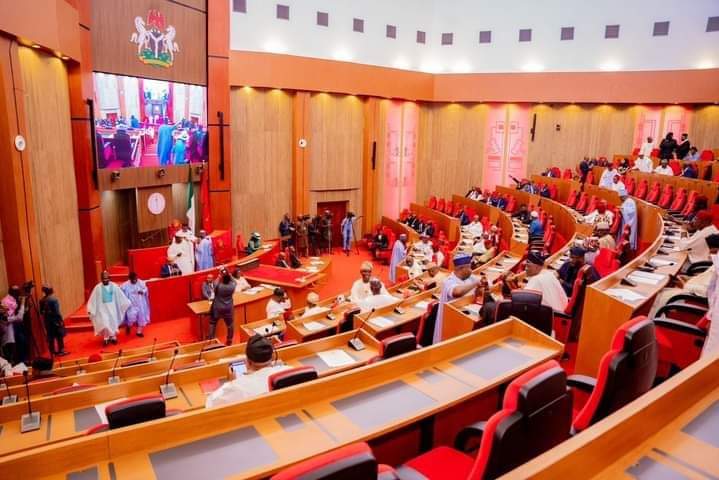
According to the group, the bill, reportedly passed by the Senate on July 16, 2026, places religious preaching in the same category as hawking and trading inside commercial vehicles under the guise of promoting road safety.
It argued that while ensuring safety on the nation’s roads is important, criminalising religious preaching amounts to an infringement on constitutionally guaranteed rights.
The group cited Sections 38, 39 and 42 of the 1999 Constitution, which guarantee freedom of religion, freedom of expression and protection against discrimination on religious grounds, insisting that citizens have the right to propagate their faith.
“The Constitution does not say those rights end inside a commercial bus,” the statement said, adding that any law inconsistent with the Constitution would be invalid.
Questioning what it described as selective enforcement, the group argued that if the objective of the legislation is genuinely to promote road safety, lawmakers should also address other activities that disrupt traffic.
It pointed to the temporary closure of roads in some cities during Friday Jumu’ah prayers, arguing that such disruptions also affect traffic flow and public safety.
“If road safety is the real reason for this law, why is road blockage on Fridays acceptable, but verbal communication in a bus attracts a ₦50,000 fine?” the statement asked.
The group further contended that the provision could create a dangerous legal precedent capable of extending beyond bus preaching to other forms of public religious expression, including open-air crusades, campus fellowships and street evangelism.
It also warned that any law empowering government to regulate religious speech could, in future, be applied against adherents of any faith.
Citing Nigeria’s obligations under the International Covenant on Civil and Political Rights (ICCPR) and the African Charter on Human and Peoples’ Rights, the group maintained that restrictions on religious expression must be necessary, proportionate and narrowly tailored, rather than amounting to a blanket prohibition.
While affirming its support for measures that enhance road safety, the organisation proposed that the law should instead target disruptive conduct, such as obstructing vehicle aisles, using loud amplification capable of distracting drivers and forceful solicitation of money, regardless of whether the offender is a preacher, hawker or entertainer.
The group called on religious leaders, civil society organisations and members of the National Assembly to engage the Presidency and seek the removal of the preaching provision before the bill is signed into law.
It also appealed to Nigerians to remain vigilant, insisting that “Nigeria can be both safe and free” without compromising constitutionally protected freedoms.
Facebook Comments

GIPHY App Key not set. Please check settings