

Political science professor says vote-buying, electoral violence, misinformation and weak institutions undermine democratic consolidation
By Chukwudi Abiandu
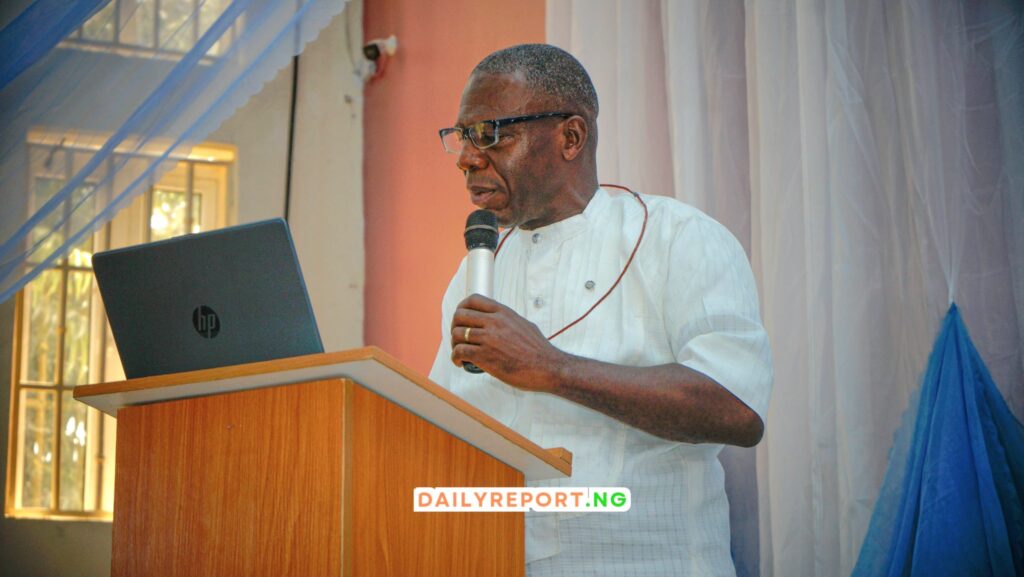
Nigeria’s democracy remains under serious pressure from electoral misconduct, vote-buying, insecurity, political violence and declining media accountability, Professor Robert Oghenedoro Dode has warned.

Dode, a Professor of Political Science and immediate past Deputy Vice-Chancellor (Academics) of Dennis Osadebay University, Asaba, Delta State, said the country’s continued civilian rule since 1999 had not automatically translated into quality democratic governance.
He argued that democracy must go beyond periodic elections to embrace political equality, constitutionalism, civil liberties, the rule of law, institutional accountability, citizens’ participation and peaceful transfers of political power.
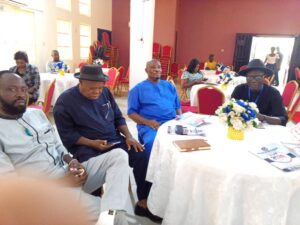
The political scientist delivered the warning in a lecture titled, “Democracy Under Pressure: Electoral Integrity, Security Challenges and Media Accountability in Nigeria,” at the 2026 Delta Online Publishers Forum (DOPF) Annual Conference and Lecture Series held in Asaba on Wednesday, October 21.
He identified electoral deficiencies, weak institutions, insecurity, vote-buying, political intimidation and the spread of unverified information as major factors undermining democratic consolidation and public confidence in political institutions.

According to him, credible elections depend not only on transparent electoral procedures but also on a secure environment, impartial electoral management, political competition on equal terms and the assurance that votes will count.
“Electoral integrity is a prerequisite for establishing legitimate, accountable and true representation,” he said, stressing that elections can contribute to democratic growth only when voters participate freely and electoral bodies operate independently.
Dode also cautioned that the growing practice of exchanging votes for money had turned politics into a transactional contest in which electoral victory was increasingly treated as a prize to be captured rather than a mandate freely granted by the electorate.
He warned that electoral violence, including intimidation, coercion, attacks on political opponents and destruction of electoral materials, had consequences beyond election day, gradually eroding democratic norms, public trust and the legitimacy of institutions.

Technology alone cannot guarantee credible elections
The professor acknowledged that technology had improved the potential for voter authentication, result computation and transparency in the electoral process.
He, however, maintained that its effectiveness depended on institutional capacity, reliable infrastructure, political impartiality and consistent implementation of electoral laws.
He called for the strengthening of the Independent National Electoral Commission (INEC) to ensure that it could discharge its responsibilities independently and conduct transparent, credible and inclusive elections.
According to him, the introduction of technological tools cannot, on its own, guarantee electoral integrity if the institutions responsible for implementing electoral laws lack the capacity or independence to perform their duties effectively.
Dode also traced Nigeria’s democratic experience through successive administrations since 1999, arguing that the country’s electoral history had been marked by significant setbacks as well as periods of reform.
He described the 1999–2007 period as one in which democratic practices fell short of fundamental democratic values, citing the widespread electoral malpractices associated with the election that brought the late President Umaru Musa Yar’Adua to power.
He said electoral reforms under President Goodluck Jonathan contributed to the political transition of 2015, when the then-ruling Peoples Democratic Party lost the presidential election to the All Progressives Congress, led by Muhammadu Buhari.
However, he argued that the change of government did not automatically resolve the democratic deficiencies associated with previous administrations.

Insecurity threatens voter participation
Dode identified terrorism, insurgency, banditry, kidnapping, communal conflicts, political violence and other security threats as major challenges capable of undermining electoral participation.
He explained that insecurity could prevent voters from reaching polling units, disrupt campaigns, expose electoral officials and observers to attacks and lead to the destruction of election materials.
The professor insisted that electoral integrity could not be separated from the security conditions prevailing in communities where elections were conducted.
He said democratic stability depended on the state’s ability to protect citizens while respecting their fundamental rights and freedoms.
He also warned against the excessive or politically motivated use of force by security agencies, noting that such practices could undermine democratic stability and public confidence in state institutions.
For him, the challenge was to develop a more professional, organised and politically neutral security framework capable of protecting electoral processes without intimidating voters or suppressing legitimate political participation.
Dode tasks media on accountability, responsible journalism
The university don assigned a central role to the media in safeguarding democracy, describing journalism as an essential instrument for public education, political communication and institutional accountability.
He said newspapers, radio, television and online news platforms had expanded political debate, mobilised citizens and provided channels through which government policies and public officials could be scrutinised.
However, he warned that the circulation of unverified information, sensationalism and partisan reporting was weakening public confidence in journalism.
He identified political ownership of media organisations, dependence on advertising revenue, government interference, financial constraints, legal restrictions, threats to journalists and difficulties associated with investigative reporting as obstacles to effective media accountability.
According to him, the media’s ability to perform its watchdog function depends substantially on editorial independence, professional training, access to information and freedom from political interference.

He urged journalists to uphold accuracy, fairness, balance, verification and independence, particularly as the country approaches the 2027 general elections.
Dode said responsible journalism remained a major component of efforts to address Nigeria’s democratic challenges, adding that the media must scrutinise government decisions, public expenditure, electoral developments and the performance of political institutions.
He also advocated stronger editorial review, corrections and apologies where necessary, professional disciplinary mechanisms, press councils, ombudsmen and independent fact-checking bodies as tools for promoting accountability.
He cautioned, however, that such mechanisms must not become instruments for government control or suppression of legitimate criticism.
Social media: Opportunity and danger
Dode said the emergence of platforms such as Facebook, X, WhatsApp, YouTube, TikTok and Instagram had transformed political communication by allowing politicians, journalists, civil society organisations and ordinary citizens to reach large audiences directly.

He noted that social media had reduced the cost of political communication, improved grassroots mobilisation and enabled voters to engage more directly with candidates and public officials.
Candidates could use the platforms to circulate manifestoes, speeches and policy proposals, while citizens could respond through comments, reposts and public debates.
He nevertheless warned that the same platforms could facilitate misinformation, propaganda, hate speech, impersonation, political manipulation and attempts to influence electoral behaviour through false narratives.
He called for improved digital and media literacy among citizens, stronger professional standards for journalists and political communicators, more effective fact-checking and greater transparency from digital platforms.
Dode stressed that the media’s growing influence would strengthen democracy only if it was matched by a corresponding commitment to responsible information gathering and dissemination.
Delta Secretariat incident highlights accountability concerns
The professor cited the reported maltreatment of a civil servant at the Delta State Secretariat, which preceded the death of a Deputy Director in the Ministry of Education, as an example of how digital communication could bring public accountability issues to wider attention.
He noted that the incident illustrated the capacity of digital platforms to draw public attention to matters of governance and institutional conduct.
He argued that effective democratic accountability required the combined efforts of a free press, professional journalism, transparent institutions, an active citizenry and a government responsive to public concerns.
Dode outlines way forward
In his concluding recommendations, the professor called for stronger electoral institutions, politically neutral security agencies and stricter adherence to professional ethics by media organisations and journalists.
He maintained that the challenges confronting Nigeria’s democracy were interconnected, with electoral integrity, security and media accountability reinforcing or weakening one another.
According to him, credible elections require a secure environment, while security arrangements during elections must remain open to transparency and public scrutiny. Similarly, media reporting must be accurate and balanced to enable citizens to make informed political decisions.
He said the government must strengthen INEC’s independence and capacity, while security agencies should adopt professional and politically neutral approaches to protecting the democratic process.
He also urged media organisations to intensify compliance with ethical standards, particularly accuracy, fairness, balance, verification and editorial independence.
Dode concluded that although Nigeria had sustained civilian rule since 1999, electoral misconduct, vote-buying, intimidation, insecurity, misinformation and weaknesses in media accountability continued to challenge democratic consolidation and public trust.
He emphasised that responsible journalism, supported by strong institutions, secure electoral environments and active citizen participation, remained essential to improving the quality of democratic governance in Nigeria.
Facebook Comments

GIPHY App Key not set. Please check settings