

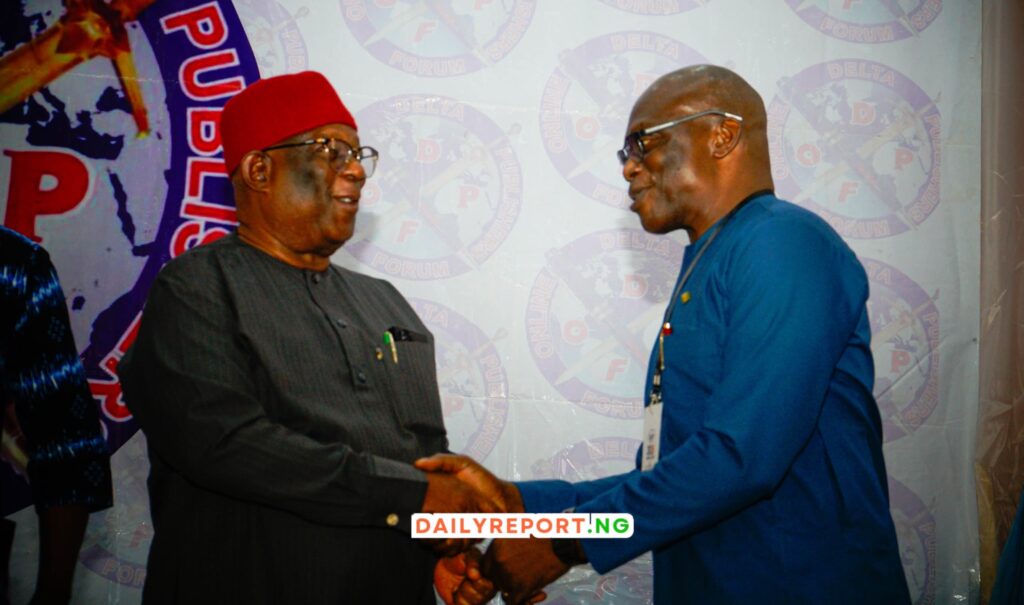
Ex-Delta information commissioner challenges DOPF to set professional standards for online publishers, warns AI-generated fakes threaten election credibility
By Our Correspondent
ASABA, Delta State: Dr. Festus Goziem Okubor, one time National Publicity Secretary of the defunct Grassroot Democratic Movement (GDM) and a former Delta State Commissioner for Information, has warned that Nigeria’s democracy is under heavy strain from weak electoral credibility, insecurity and irresponsible digital media, and challenged online publishers to adopt enforceable professional standards.

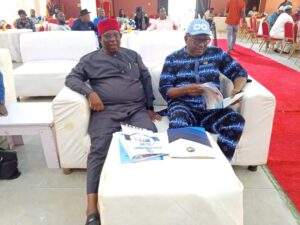
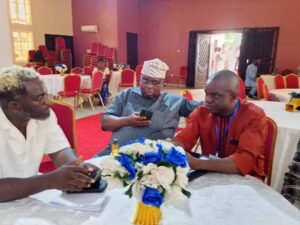
Okubor spoke as chairman of the Delta Online Publishers Forum (DOPF) 2026 Annual Conference and 6th Annual Lecture Series, themed “Democracy Under Pressure: Electoral Integrity, Security Challenges and Media Accountability in Nigeria.”
“The ballot, the bullet and the phone are interconnected”
He said the three pressures feed one another. “When elections lack credibility, public anger rises. When insecurity spreads, citizens become afraid. When journalism becomes careless, misinformation flourishes,” he said, adding that the resulting collapse of public trust is the gravest danger to democracy.
Elections: technology is not enough
Okubor acknowledged the introduction of BVAS and IReV to improve transparency but said technology cannot replace integrity. Electoral integrity, he said, must begin with credible party primaries and run through voting, collation, declaration and dispute resolution.



He faulted politicians who celebrate victory as the will of the people but call defeat a threat to democracy. “Democracy is not simply about holding elections,” he said. “It is about holding elections whose outcomes citizens can believe in, including those whose preferred candidates lose.”
He also criticised party primaries whose outcomes are known before delegates arrive, and politicians who defect after losing tickets while citing “extensive consultations” and “the overriding interest of my people.”
Security: a frightened voter cannot be free
Okubor said electoral integrity is impossible without security. A voter who cannot safely reach a polling unit is effectively disenfranchised, an intimidated electoral official cannot act independently, and a threatened journalist cannot hold power to account, he said.
“Security agencies must protect democracy, not determine its beneficiaries,” he said, calling for an environment where voters vote freely, journalists report safely and politicians lose peacefully.
Smartphone journalism and the AI threat
Turning to the media, Okubor said technology has democratised communication but not truth. He criticised the spread of unverified information on social media, including the habit of forwarding rumours with the line “I don’t know how true this is, but please forward widely.”
He warned that artificial intelligence, while useful for research, transcription, translation and investigative reporting, can also produce convincing fake voices, photographs and videos. He described a scenario in which a fabricated video of a leading candidate withdrawing from a race circulates on the eve of an election, and called that “a genuine threat to electoral credibility.”
He urged Nigerians to “pause before forwarding,” saying that sharing information is itself an exercise of power.
Accountability cuts both ways
Citing Sections 22 and 39 of the Constitution, which recognise the media’s accountability role and protect freedom of expression, Okubor said press freedom must come with responsibility. Journalism, he said, is “verification, fairness, context, attribution, editorial judgement and correction,” not merely publishing.
He urged journalists to ask whether allegations were verified, whether the accused was contacted and whether sponsored material was identified, and cautioned against sensational headlines that manufacture alarm. He said politicians, for their part, must answer legitimate questions and tolerate criticism.
Drawing on his experience in politics and government, he said politicians often welcome independent journalism only when it agrees with them, while journalists sometimes resist scrutiny of their own conduct.
Challenge to DOPF
Okubor challenged the forum to champion professional standards for online publishers, including verification, corrections, disclosure of sponsored content and responsible use of AI. “Let online publishing become a profession of distinction,” he said, “not merely an occupation for anybody whose phone battery is above 20 per cent.”
He called for stronger institutions, saying Nigeria does not lack laws, intelligent people or opinions. Politicians must remember that power is temporary, electoral officials that credibility is their greatest asset, and security agencies that they must protect without discrimination, he said.
Keeping the audience entertained, he suggested INEC introduce a course titled “How to Lose an Election Without Losing Your Mind,” and urged delegates to settle disagreements with ideas rather than force, noting that “ideas do not require police bail.”
He urged participants to keep discussions frank and arguments grounded in facts, and prayed for the Federal Republic of Nigeria.
Facebook Comments

GIPHY App Key not set. Please check settings