


By Chukwudi Abiandu
Nigeria’s democracy is passing through one of its most dangerous seasons. Not because the nation lacks institutions, but because the men and women elected to protect those institutions have surrendered their constitutional responsibility on the altar of personal ambition, political survival and blind loyalty to executive power.
The tragedy of the present National Assembly, both the Senate and the House of Representatives, is not merely that it has become weak. The greater tragedy is that it has willingly embraced weakness and turned itself into an extension of the Presidency rather than a check on executive excesses.

The lawmakers who were elected to represent the hopes and aspirations of Nigerians were expected to make good laws that would deepen democracy, strengthen justice, uphold equity and fairness, and build a nation founded on sound moral values. Nigerians expected patriots. What they got instead were legislators who chose to become rubber stamps.
At virtually every critical moment since President Bola Ahmed Tinubu assumed office, the National Assembly has behaved less like an independent arm of government and more like a choir singing rehearsed praises before the emperor.
Nothing captured this shameful surrender better than that infamous joint session of the National Assembly where lawmakers openly chorused: “On President Bola Tinubu’s mandate we shall stand.” It was a shocking moment in the history of parliamentary democracy. Legislators sworn to defend the Constitution publicly abandoned allegiance to the Nigerian people and transferred loyalty to one man. That singular moment exposed the moral collapse of the legislature.
The President, obviously pleased by the display of servility, assured them that they would all return to the National Assembly in 2027. Many of them believed him. They mistook political convenience for political covenant. Today, reality has arrived with brutal force. One after another, many of those same lawmakers are discovering that power has no permanent friends, only permanent interests.
Now the tears are flowing. Many senators and members of the House of Representatives who enthusiastically endorsed every executive proposal are finding themselves politically abandoned, displaced and denied return tickets. The same political machinery they defended is now consuming them. It is the classic case of being hoist with their own petard.
Take the hurried moves around amendments to the Electoral Act targeted at restricting post-primary defections by aspirants dissatisfied with manipulated party primaries. Though clothed in legal language, many Nigerians saw the underlying political calculation: to block the growing political movement around Mr. Peter Gregory Obi, whose rising popularity continues to unsettle the ruling establishment.
The fear of Obi within the corridors of power has become increasingly obvious. From propaganda attacks to political scheming, from attempts at coalition sabotage to legislative maneuvering, the obsession with stopping one man reveals not strength but insecurity. Rather than focus on governance and the worsening suffering in the land, energy is being expended on political containment strategies.
Sadly, lawmakers who ought to interrogate executive motives rushed such proposals with lightning speed, often without robust public debate or adequate scrutiny. Bills affecting the future of democracy were treated like emergency executive memos requiring immediate approval. Meanwhile, legislation that could directly improve the lives of ordinary Nigerians continues to gather dust.
Where was the urgency when insecurity escalated across Benue, Plateau, Zamfara, Kaduna and parts of the South-East? Where was the legislative courage when terrorists and bandits turned communities into killing fields?Where was the outrage when Nigerians became refugees in their own country? The National Assembly that moves at supersonic speed whenever the Presidency sneezes suddenly becomes sluggish whenever the suffering masses cry.
Even more disgraceful was the treatment meted out to Senator Natasha Akpoti-Uduaghan. Regardless of political disagreements, the humiliation she endured from her colleagues exposed a legislature more interested in power games than institutional dignity. Her suspension and the withdrawal of her security details sent a disturbing message about intolerance, vindictiveness and the suppression of dissent within the legislative institution itself. Recall also the despicable approval given for the suspension of Governor Sim Fubara of Rivers State. That state is yet to recover as social and political life and wellbeing has been riotously decimated.
Rather than defend fairness and due process, many lawmakers joined in endorsing actions that appeared punitive and excessive. In doing so, they weakened the moral authority of the Senate further before Nigerians and the international community.
Yet this is the same Assembly that rarely summons the courage to confront the executive over mounting insecurity, economic hardship, inflation, unemployment and the collapsing purchasing power of citizens.
The same lawmakers who found their voices against one of their own conveniently lose their voices when Nigerians are slaughtered daily.
Even more troubling are allegations and complaints surrounding legislative manipulations after passage of bills, situations where provisions reportedly passed by lawmakers do not accurately reflect in official gazettes or final executive implementations. Such concerns strike at the heart of legislative integrity. A parliament that cannot guarantee the sanctity of its own legislative outputs has no moral standing to speak about transparency or accountability.
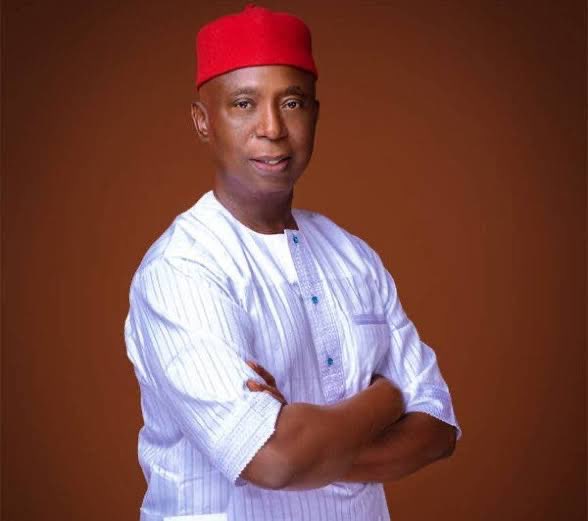
But perhaps the greatest irony of all is that many of these lawmakers are now tasting the bitter fruit of political betrayal. Senator Ned Nwoko and others who now lament political marginalization are victims of the very system they helped strengthen. They empowered executive dominance when they should have defended institutional independence. They surrendered oversight responsibilities when they should have asserted constitutional authority. They applauded power when they should have questioned it. Now power has moved on without them.
There is an eternal lesson here: democracy dies not only because of dictators, but because of weak institutions populated by men unwilling to defend principle.
The Bible warned long ago: “Put not your trust in princes, nor in the son of man, in whom there is no help.” Political promises are often written on water. Those who abandon conscience in pursuit of temporary advantage usually discover too late that political loyalty is rarely rewarded permanently. Today, many legislators are learning that painful lesson.
Nigerians are watching with a mixture of anger and irony. There is little public sympathy because citizens believe these lawmakers failed to protect democracy when they had the opportunity. They neglected what they ought to have done and enthusiastically did what they ought not to have done.
The National Assembly could have stood as a courageous defender of the people. It could have insisted on accountability. It could have resisted executive overreach. It could have become the moral backbone of democratic governance.
Instead, too many lawmakers chose the easier path of sycophancy. And now, abandoned by the same power they worshipped, they are discovering that political slavery never guarantees political survival.
As one writer fittingly said: “I wish them better luck next time.”
Facebook Comments

GIPHY App Key not set. Please check settings