

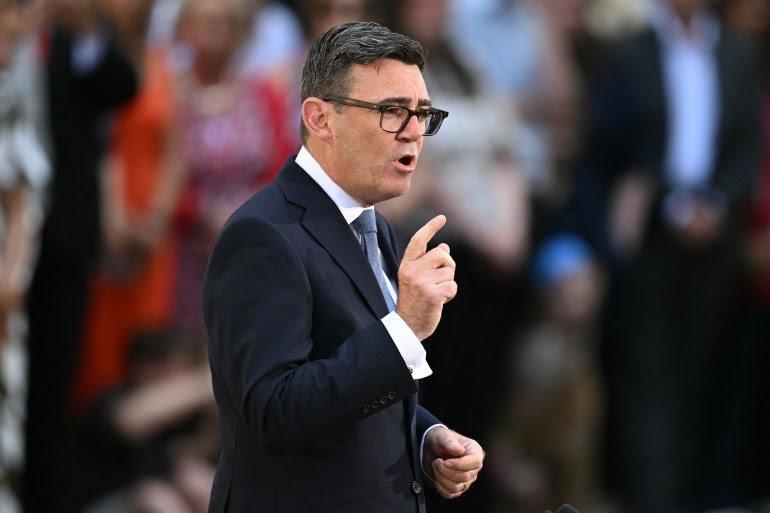
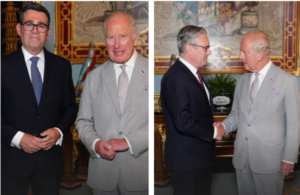
LONDON — Andy Burnham was officially appointed Britain’s new Prime Minister on Monday after King Charles III accepted the resignation of Keir Starmer and invited the Labour Party leader to form a new government.
Buckingham Palace confirmed the appointment in a statement, saying Burnham “accepted The King’s offer and kissed hands upon his appointment as Prime Minister,” adding that King Charles III had asked him to form the next government.
Burnham assumed office shortly after Starmer formally tendered his resignation to the King at Buckingham Palace, bringing an end to his tenure as prime minister.

The new Labour leader, who emerged as party leader on Friday, becomes Britain’s fifth prime minister in four years. Following his audience with the King, Burnham headed to 10 Downing Street, where he was expected to deliver his inaugural address as prime minister before commencing the formation of his cabinet.
In his farewell speech outside No. 10 Downing Street before departing office, Starmer said he was leaving “with good grace” and “a smile,” declaring that his “work is done.”
Burnham is expected to begin appointing and dismissing ministers later on Monday as he sets out the priorities of his new administration.
His appointment has already drawn reactions from leaders of Britain’s major political parties.
Reform UK leader Nigel Farage argued that Burnham “cannot be allowed to make the biggest changes in politics for 40 years without a mandate,” and called for a fresh general election.
Liberal Democrat leader Sir Ed Davey expressed disappointment that Burnham did not address issues such as social care, relations with Europe, or environmental policy in his first speech, saying Britain could not afford further delays on those matters.
Conservative Party leader Kemi Badenoch congratulated Burnham on his appointment and wished him success, while pledging that the opposition would hold his government accountable. She also urged the new prime minister to ensure that every policy announcement is properly funded and offered to work with the government “in the national interest” to identify savings in the welfare budget.
Green Party leader Zack Polanski said his party would judge Burnham’s administration by its ability to tackle the cost-of-living crisis, inequality and climate change. He also called on the new prime minister to introduce a wealth tax and formally recognise what he described as a genocide in Gaza.
Burnham now faces the immediate task of assembling his government and outlining his policy agenda as he begins his tenure at a time of significant political and economic challenges for the United Kingdom.
Facebook Comments

GIPHY App Key not set. Please check settings